

Modern Pool Design: Clean Lines, Low-Profile Hardware, and Color/Finish Choices
Modern pool design depends on clean geometry, restrained materials, low-profile hardware, coordinated colors, and early cover planning. The most refined pools do not treat covers, tracks, housings, coping, and deck finishes as afterthoughts. They integrate those details from the beginning so the pool area feels intentional, practical, and visually calm.
Who this is for
- Homeowners and pool buyers planning a modern backyard pool, luxury pool, or minimalist outdoor living space.
- Pool builders, designers, and landscape architects coordinating pool shape, coping, decking, cover hardware, and finish choices.
- Buyers comparing a low-profile automatic safety pool cover, S-LIDE sliding deck pool cover, a slatted S-ROLL automatic cover, a trackless B-COVER safety cover, or an N-CLOSURE retractable pool enclosure from Cover Dream premium pool cover systems.
Quick Answer — What Makes a Pool Design Look Modern?
A modern pool design usually depends on simple geometry, clean edges, disciplined materials, subtle hardware, coordinated colors, and good planning. The pool should feel like part of the architecture, not a separate feature added to the yard.
The most successful modern pools usually share a few traits:
- Clear pool shape and waterline geometry
- Minimal visual clutter around the edge
- Coordinated deck, coping, and cover hardware colors
- Low-profile or concealed cover components
- Practical surface choices that are cleanable and appropriate for wet areas
- Thoughtful lighting, drainage, and furniture layout
- Cover planning before the pool and deck are finalized
For homeowners still comparing cover types, it may also help to review Cover Dream’s guide to premium pool covers and the broader pool cover blog. These supporting resources help connect modern design decisions with practical cover choices, safety considerations, maintenance expectations, and long-term outdoor-living goals.
For a luxury project, the pool cover matters because hardware can either support the design or interrupt it. A bulky housing, mismatched track, or late-stage cover decision can weaken an otherwise clean modern pool.
Modern Pool Design Decision Table
| Design choice | Why it matters | Best-fit cover strategy | What to ask | Cover Dream match |
|---|---|---|---|---|
| Clean lines and simple geometry | Simple pool shapes make the design feel calm, intentional, and architectural | Plan the cover path and housing location before construction | “Will the cover hardware interrupt the pool’s clean edges?” | Cover Dream premium pool cover systems |
| Low-profile hardware | Visible bulky equipment can distract from a minimalist design | Choose a low-profile automatic cover where safety-oriented daily closure is the goal | “How visible will the housing, track, and mechanism be?” | Coverseal automatic safety pool cover |
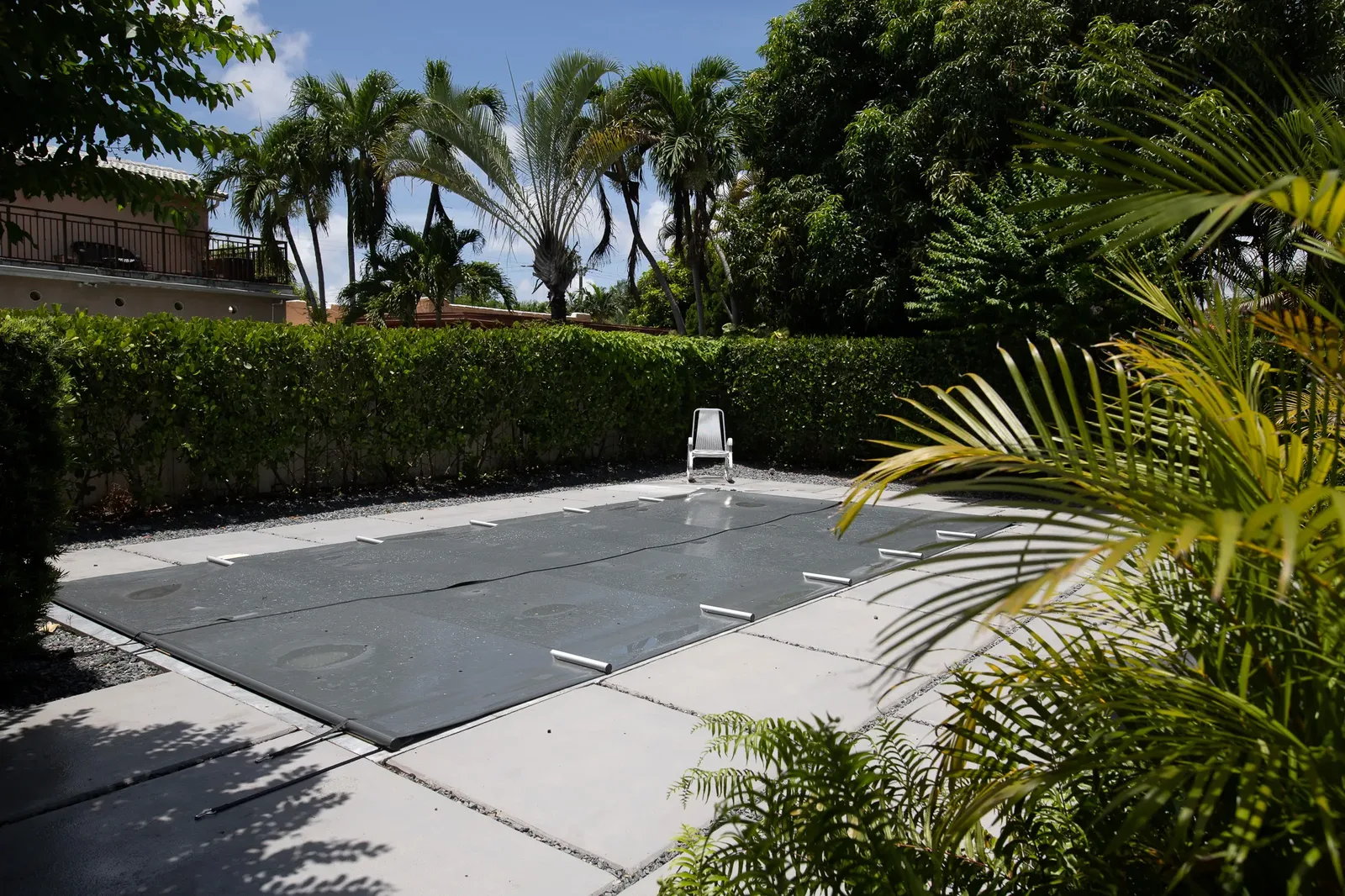
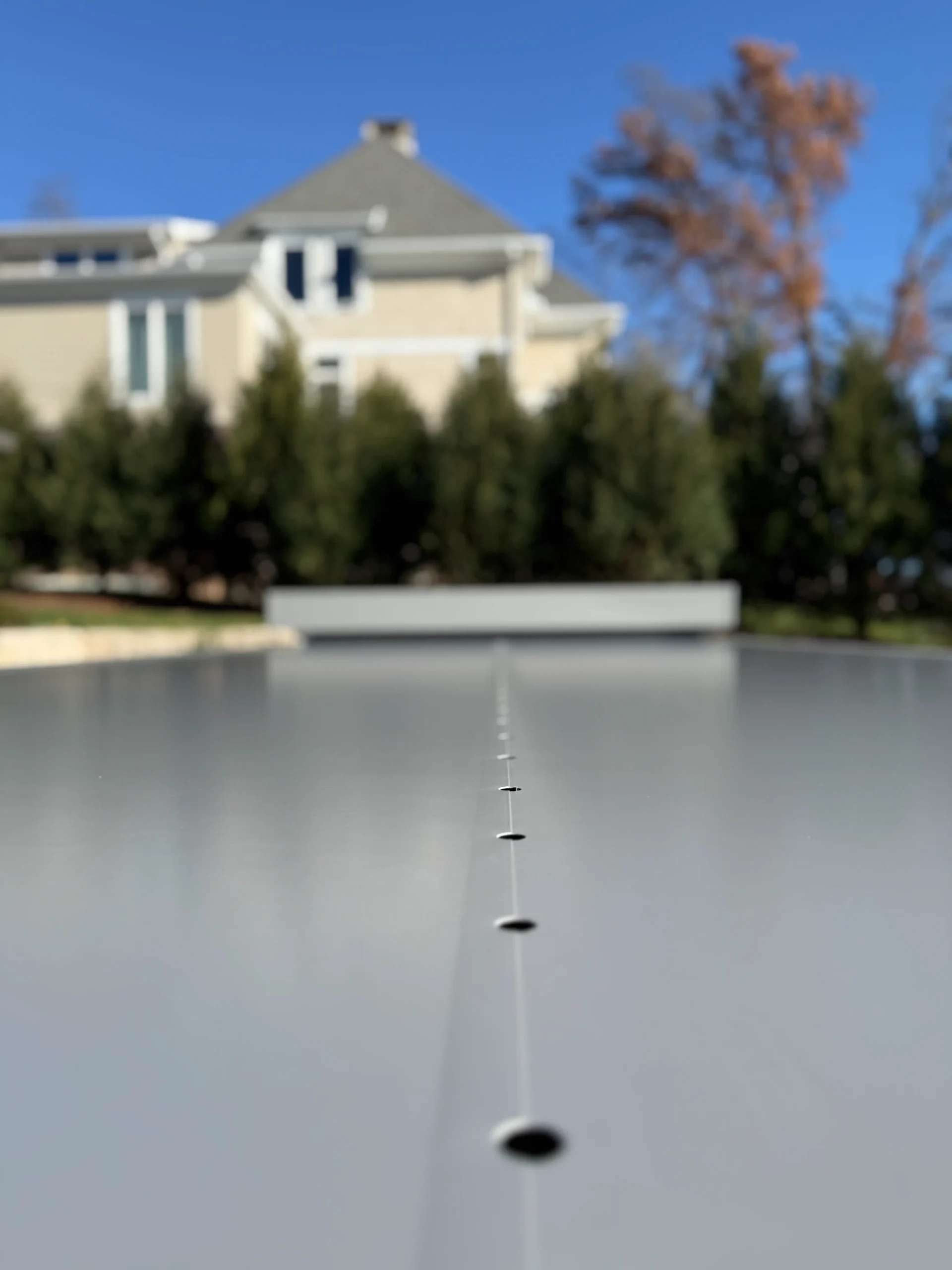
| Zero visible track | Some minimalist pools cannot tolerate any deck-mounted track line | Choose a manual cover that removes the track altogether | “Can the safety cover work without a permanent track?” | B-COVER manual trackless safety cover |
| Concealed or integrated tracks | Track placement affects how refined the pool edge looks | Consider recessed or under-track planning where appropriate for the project | “Can the track be recessed, minimized, or integrated?” | Coverseal case-by-case design review |
| Color-matched housing | Hardware that clashes with the deck, coping, or furniture can look added-on | Coordinate housing color with the deck, coping, or architectural palette | “What housing and membrane colors are available?” | Coverseal |
| Deck material continuity | Modern designs often rely on uninterrupted deck surfaces | Consider a deck-style cover when the cover should become part of the architecture | “Can the covered pool become usable deck or patio space?” | S-LIDE sliding deck pool cover |
| Compact backyard space | Small yards need every square foot to work harder | Use a pool-to-patio strategy where the pool footprint needs to become usable space | “Where does the cover move when the pool opens?” | S-LIDE |
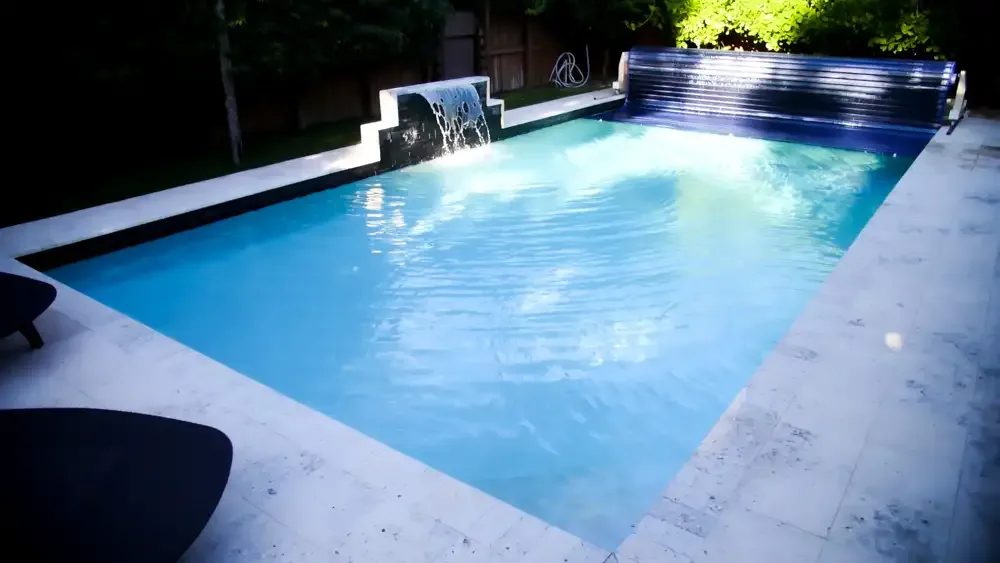
| Slatted automatic operation with color options | Some projects want automatic operation but also want the cover itself to be a considered design element | Use a slatted automatic cover made to order for the pool’s exact shape | “What slat colors are available, and is passive solar heating an option?” | S-ROLL slatted automatic pool cover |
| Comfort/weather protection | Some projects need a visible architectural solution for debris, weather, and comfort | Use a retractable enclosure when the goal is to protect the pool environment | “Will an enclosure enhance or overpower the design?” | N-CLOSURE retractable pool enclosure |
| Safety-oriented closure | Safety and design must be planned together, not treated separately | Choose a cover designed for safety-oriented use and follow manufacturer instructions | “What safety standard or manufacturer guidance applies?” | Coverseal or B-COVER |
Clean Lines: Start with Pool Shape, Coping, and Edge Details
Clean line pool design begins with the pool’s geometry. Rectangular pools, linear lap pools, narrow plunge pools, and simple geometric layouts often work well in modern outdoor spaces because they create a clear visual order.
That does not mean every modern pool must be rectangular. A freeform or custom pool can still feel modern if the surrounding materials, edges, and hardware are controlled. However, the more complex the shape, the more important it becomes to plan the cover, coping, drainage, and deck transitions early.
For buyers planning non-standard shapes, narrow yards, or custom layouts, Cover Dream’s guide to complex pool cover systems can be used as a supporting resource if the page is already published. It helps connect the design discussion with real cover-planning challenges around shape, access, and system selection.
Key design elements include:
- Pool shape
- Waterline clarity
- Coping profile
- Deck transition
- Edge detail
- Track visibility
- Cover housing location
- Drainage direction
- Lighting placement
- Furniture layout
A modern pool can lose its clean look when too many details compete for attention. For example, a sharp pool shape with mismatched coping, visible bulky hardware, unrelated deck materials, and exposed equipment may technically function well but feel visually disjointed.
The cover system should be part of the design conversation before the pool shell, coping, and deck are finalized. This is especially important for automatic covers, sliding deck systems, slatted covers, trackless manual covers, and enclosures because each system affects space, hardware, and visual weight differently.
Low-Profile Hardware: The Detail That Protects the Design
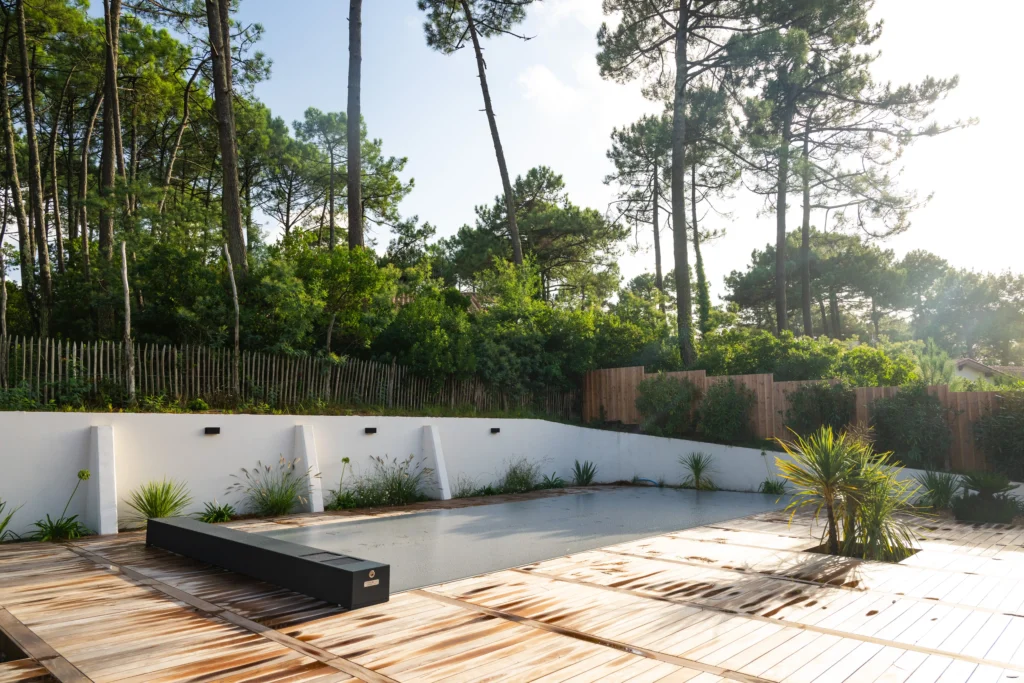
Low-profile hardware is one of the most important details in modern pool design. A beautiful pool can quickly look unfinished if the cover box, track, or mechanism feels bulky or visually disconnected from the deck.
For modern projects, the goal is not always to hide every component completely. The goal is to make the cover hardware feel intentional, proportionate, and coordinated with the surrounding architecture.
Cover Dream match: Coverseal automatic safety pool cover
Cover Dream’s Coverseal automatic safety pool cover is the strongest Cover Dream match when the buyer wants a low-profile automatic cover with safety-oriented function and refined visual integration.
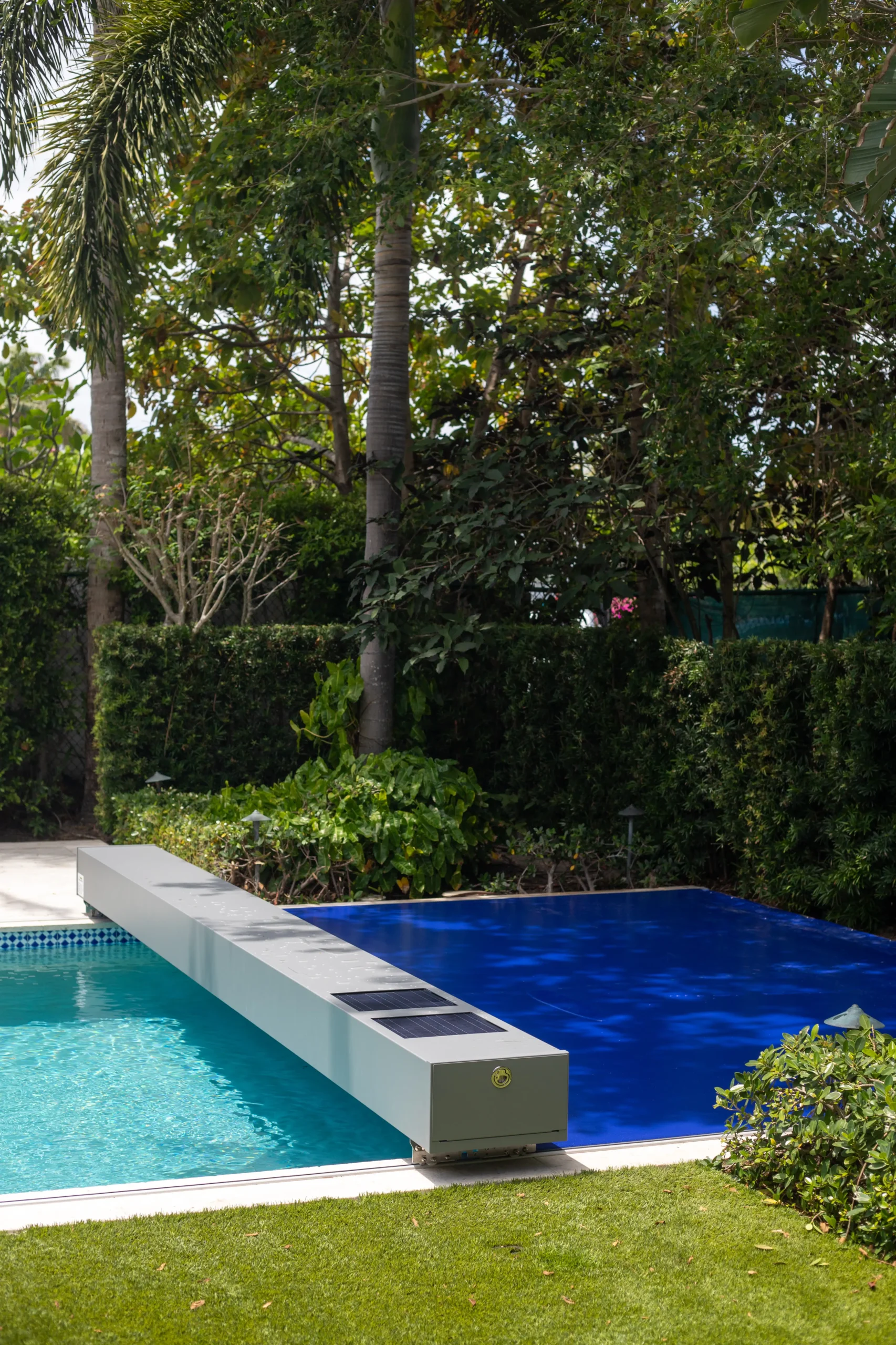
Cover Dream states that Coverseal includes a concealed mechanism with a low-profile housing measuring 13 inches high by 16 inches deep. The housing is polyester powder-coated aluminum with a matte finish, available in standard RAL 7037 or 215 RAL colors as an option. Cover Dream also states that Coverseal can open or close in 60 seconds for a 20′ × 40′ pool.
For modern pool design, those details matter because the cover hardware can be coordinated with the deck, coping, furniture, or surrounding architecture. Instead of treating the cover housing as a necessary visual compromise, the project team can make it part of the finish palette.
If you are comparing low-profile hardware with overall project budgeting, Cover Dream’s guide to automatic pool cover cost is a useful supporting resource. It explains how pricing can be affected by pool size, installation type, cover system, safety requirements, and design expectations.
For buyers who want a deeper explanation of why automatic covers are often selected for daily protection, Cover Dream’s article on safety pool cover provides additional context.
Coverseal is especially relevant when the buyer wants:
- A low-profile automatic pool cover
- Safety-oriented daily closure
- A cleaner visual appearance
- Custom housing color options
- A matte, architectural finish
- Fast opening and closing
- Minimal design disruption around the pool
Recessed and under-track concepts
For new pool construction, track planning can also affect the final appearance. Latham’s automatic safety cover guidance explains that under-track systems can be embedded in the pool wall or hidden below coping for a seamless, integrated appearance, while recessed top tracks can be installed flush with the deck during construction: Latham automatic safety covers.
That does not mean every project can use the same track strategy, and it does not mean Cover Dream uses Latham’s systems. The design principle is simply that early track planning can help reduce visual clutter and support a cleaner pool edge.
Cover Dream match: B-COVER manual trackless safety cover
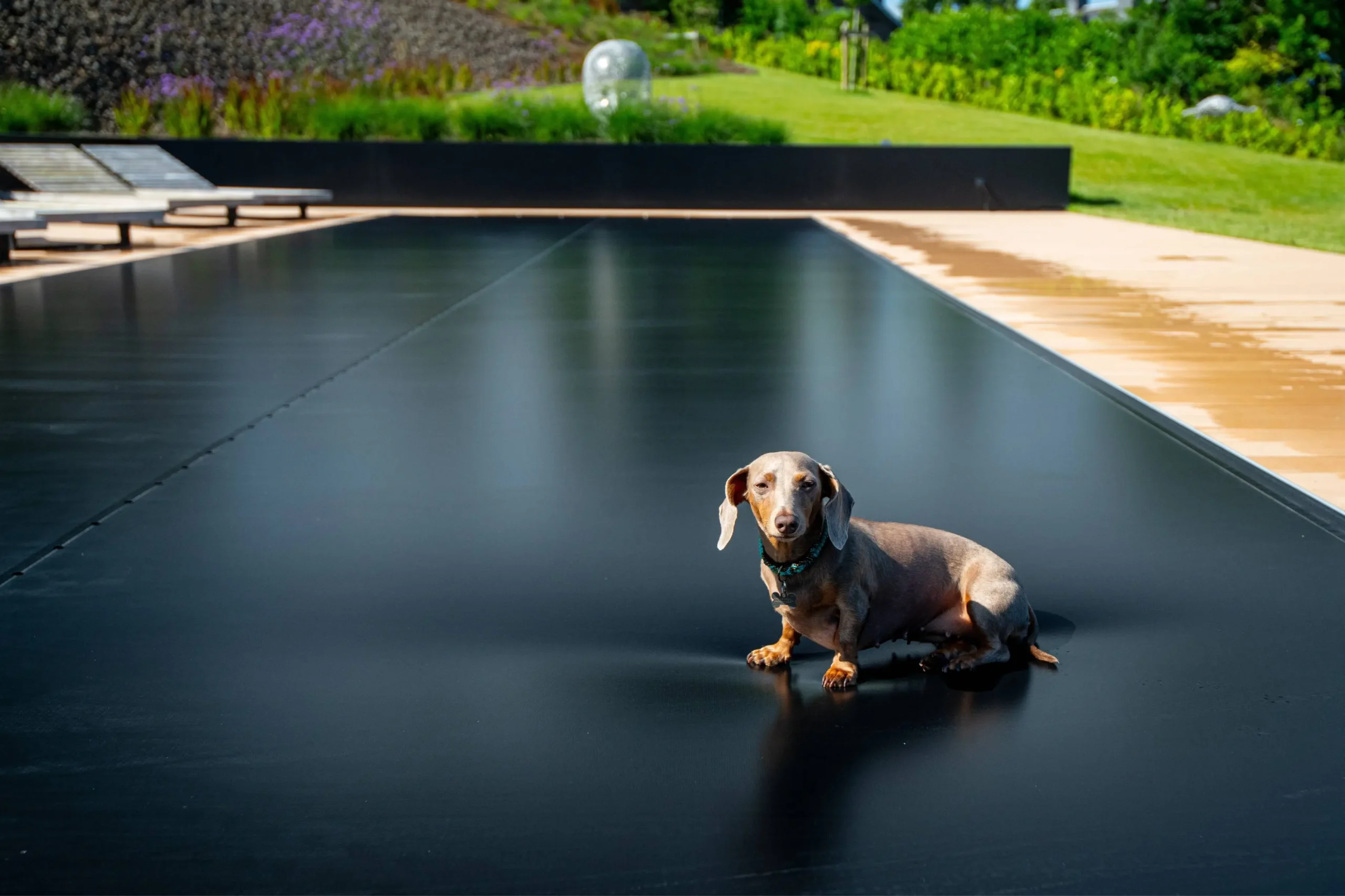
Some minimalist projects do not want any permanent track line at all, even a low-profile or recessed one. For those pools, Cover Dream’s B-COVER manual trackless safety cover removes the track altogether. Because the cover is manually deployed rather than motor-and-track driven, there is no permanent hardware line to coordinate into the coping or deck design, and Cover Dream rates the system to support over 500 lbs.
B-COVER can be the better modern-design match when the buyer wants:
- A safety cover with zero visible track
- A simpler, lower-hardware installation
- A cover that will not compete visually with a minimalist coping or deck detail
- A manual system rather than an automatic, motorized one
Protect your loved Ones!
A pool cover is the most efficient barrier against accidental drownings. Get your pool covered.
Color and Finish Choices: How to Keep the Pool Looking Intentional
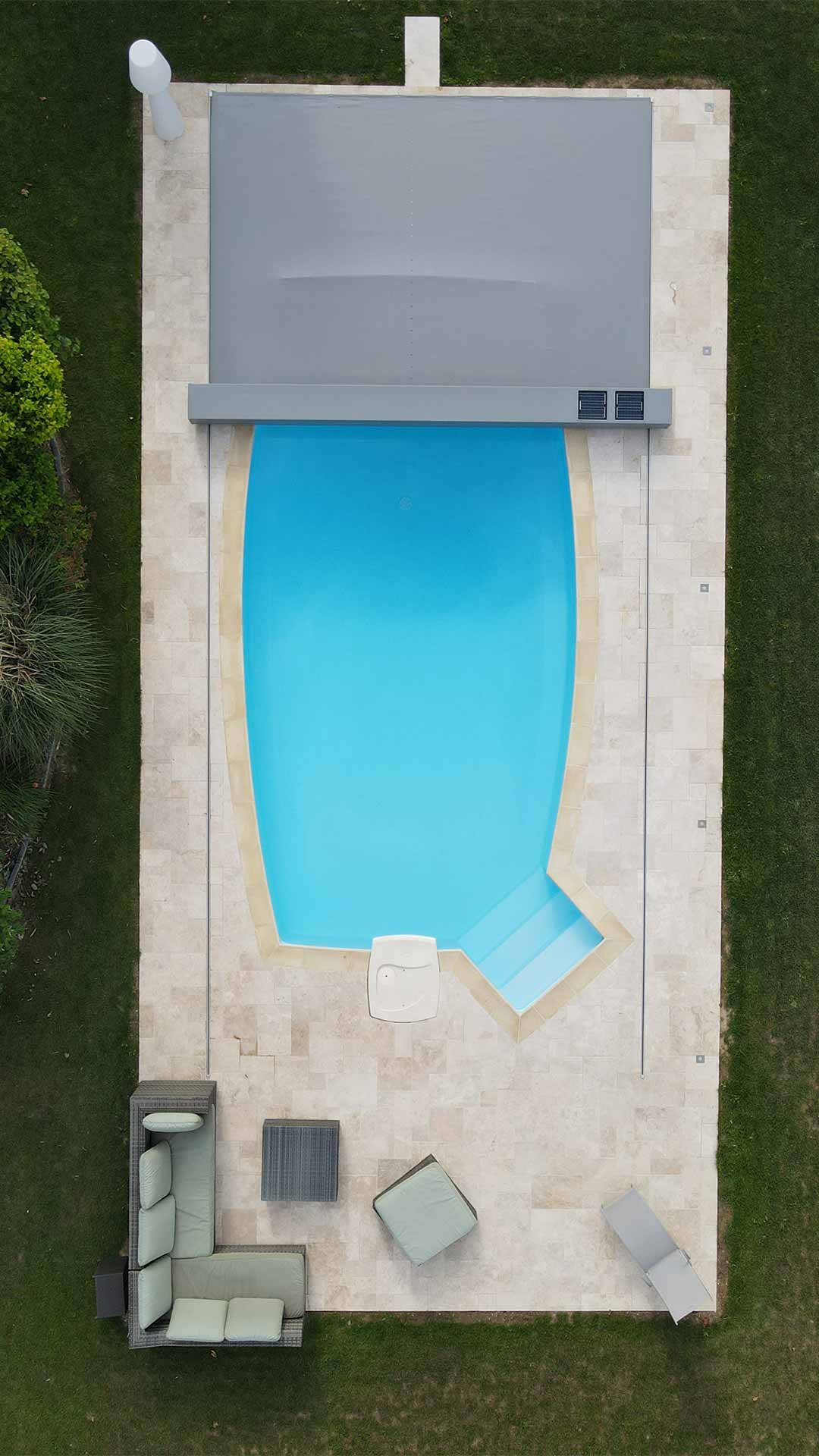
Modern pool finishes work best when the palette is disciplined. A pool area can include stone, concrete, aluminum, wood tones, tile, water, furniture, lighting, and cover hardware. If every element competes, the design can feel busy.
A strong modern palette usually uses one of two approaches.
1. Match the features to the surroundings
This approach makes the cover housing, tracks, and visible components recede. For example, a grey housing may blend with concrete pavers, neutral coping, or contemporary outdoor furniture.
This is often the best direction when the pool cover should be visually quiet.
2. Use intentional contrast
Sometimes contrast works better. A darker housing against a light deck or a crisp aluminum detail against warm stone can look deliberate if the same contrast appears elsewhere in the project.
This is usually best when the hardware is treated as a design element rather than something to hide.
Finish decisions to coordinate
Before finalizing a modern backyard pool design, coordinate these elements:
- Pool interior finish
- Waterline tile
- Coping color
- Deck color
- Deck texture
- Cover housing color
- Cover membrane color
- Track visibility
- Furniture finish
- Shade structure or pergola color
- Outdoor kitchen or wall materials
- Lighting temperature
Warm vs cool neutrals
Warm neutrals, such as beige, sand, taupe, and warm stone, can create a softer resort-style feel. Cool neutrals, such as grey, charcoal, black, and white, often feel more architectural and minimal.
The key is consistency. A warm travertine deck, cool grey housing, bright blue tile, black furniture, and bronze lighting can work together only if they are intentionally balanced. Without a plan, the pool may feel assembled rather than designed.
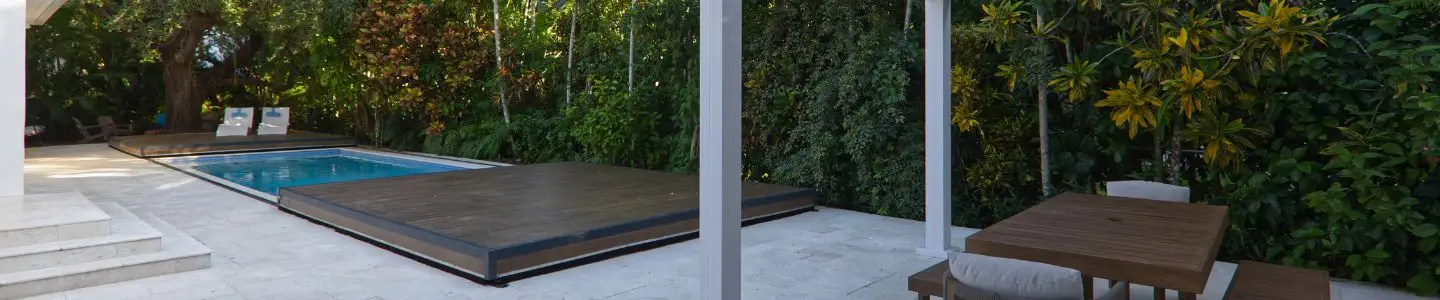
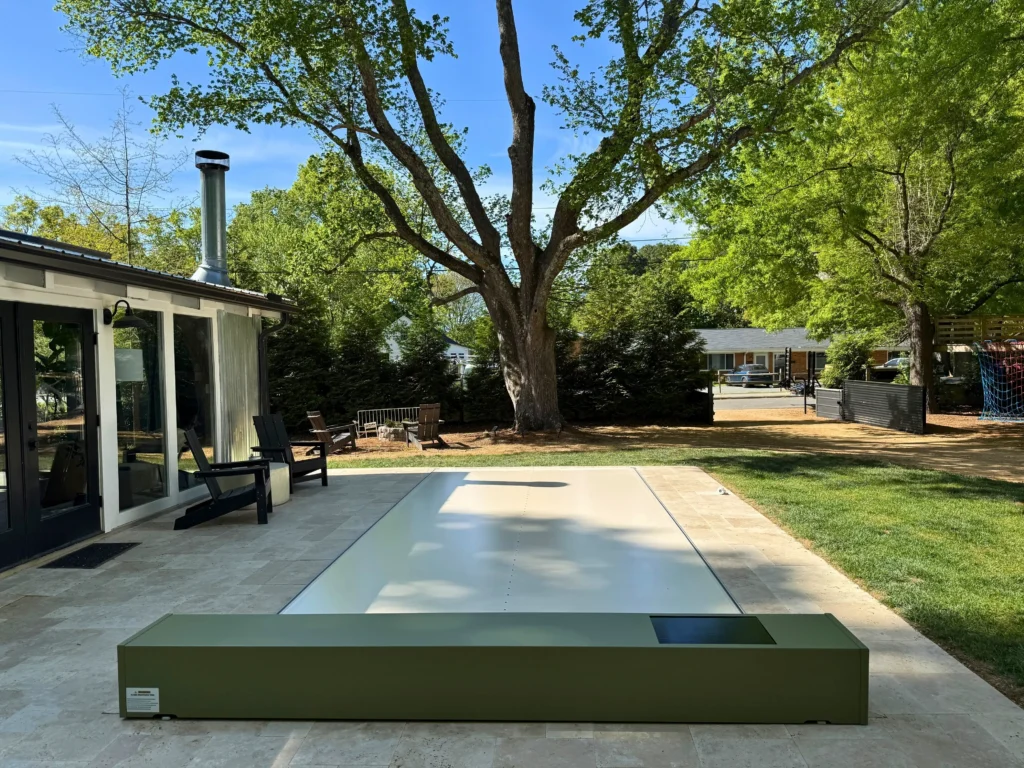
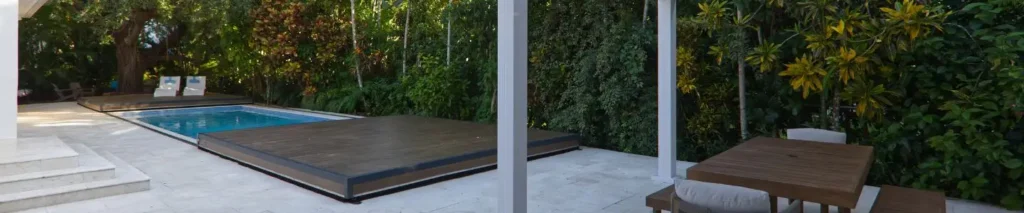
A sliding deck pool cover is different from a low-profile automatic cover. Instead of trying to disappear, it can become part of the architecture.
For modern homes, this can be powerful. The pool can be open when used and then become a usable deck or patio surface when closed. This is especially valuable in compact luxury yards, urban courtyards, plunge pool settings, or outdoor living areas where space is limited.
For readers who want to understand the lifestyle and space-saving value of a movable deck, Cover Dream’s article on covering a pool with a deck is the most relevant supporting blog link. It reinforces the idea that a sliding deck is not only a cover; it can help turn the pool area into a more flexible outdoor living space.
If cost planning is part of the design conversation, the guide on sliding deck pool cover cost can help explain how motors, structure, decking choices, and layout affect the final quote.
Sliding Deck Pool Covers: When the Cover Becomes Part of the Architecture
Cover Dream match: S-LIDE sliding deck pool cover
Cover Dream’s S-LIDE sliding deck pool cover is positioned as a two-in-one sliding pool cover, patio, and deck solution that makes the most of pool-area square footage.
Cover Dream states that S-LIDE supports high loads, can accommodate patio furniture, and creates an appealing area for hosting guests. It also states that the motorized pool deck retracts at the push of a button and is available in various layouts to suit nearly any pool.
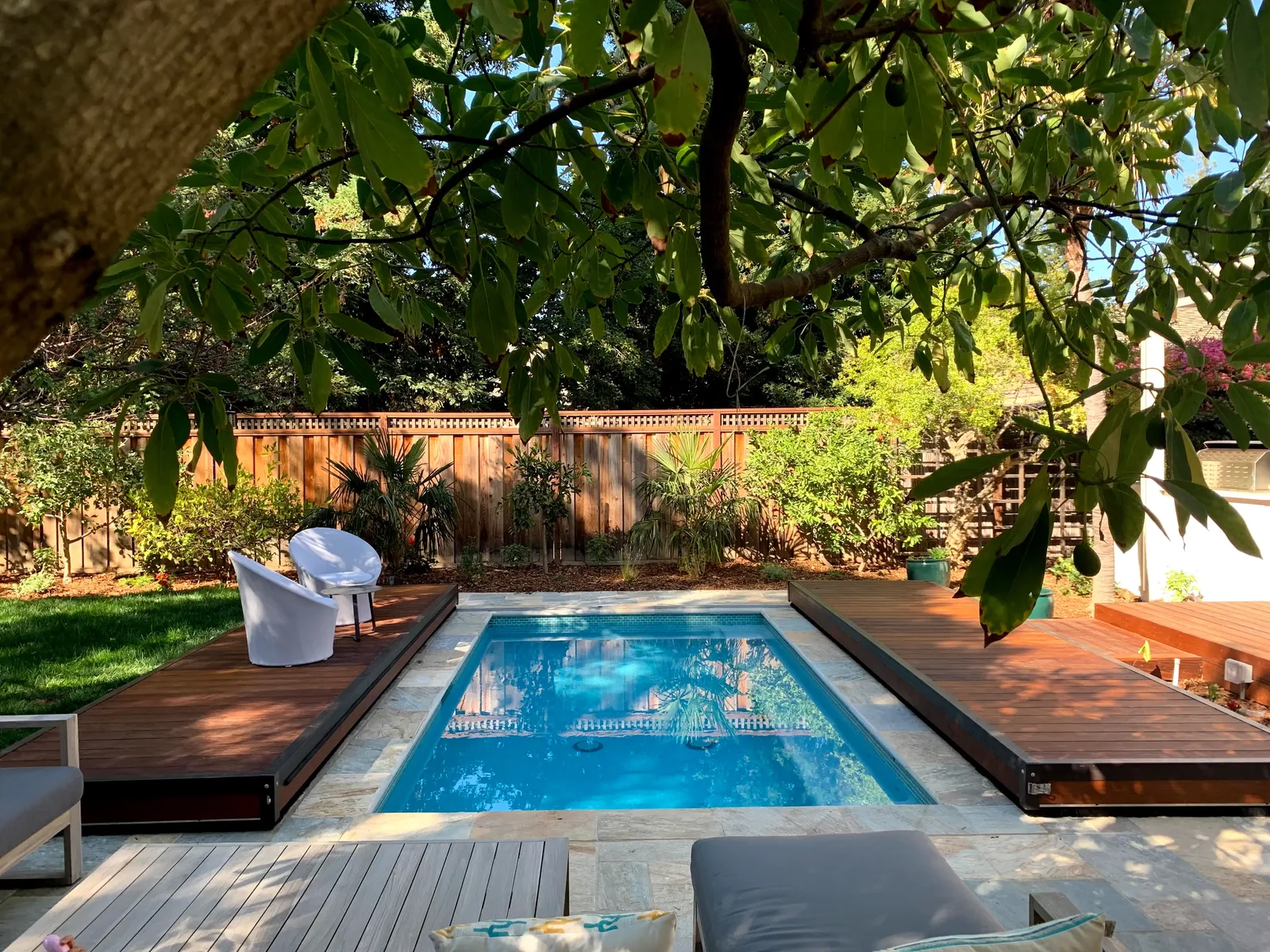
From a modern design perspective, S-LIDE is not just a cover. It is a way to make the pool footprint flexible. It can be useful when the goal is:
- Pool-to-patio functionality
- Compact-yard flexibility
- A clean deck surface when the pool is closed
- A usable outdoor living area
- Patio furniture compatibility
- A premium architectural feature
- Reduced visual clutter from traditional cover hardware
Cover Dream also states that S-LIDE uses a 100% aluminum structure and stainless steel fasteners. If furniture use is part of the design goal, the supporting guide on pool deck cover with furniture gives homeowners a more detailed explanation of load capacity and furniture placement.
What to plan early
A sliding deck cover needs a movement path. It must slide somewhere when the pool opens. That means the layout should be coordinated with furniture placement, walls and fences, planters, outdoor kitchens, drainage, deck levels, pool shape, access paths, lighting, and seating zones.
A sliding deck can look extremely modern when planned early. If added late, it may conflict with furniture, walls, landscaping, or circulation paths.
Slatted Automatic Covers: Design Flexibility Without Losing Automation
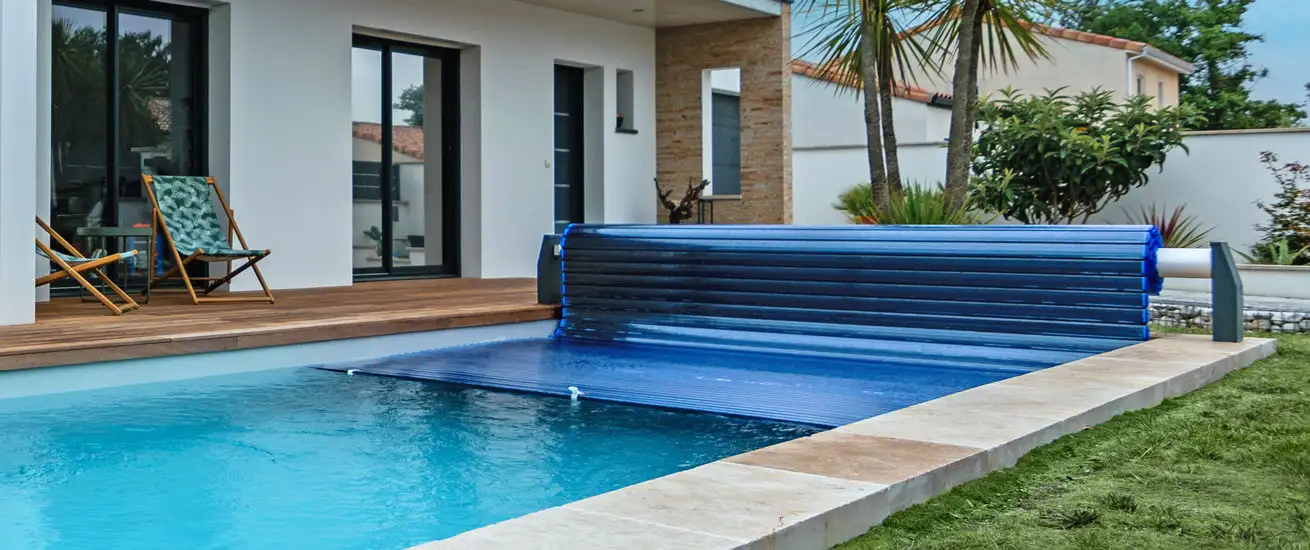
Some modern projects want the convenience of automatic operation but also want the cover itself to read as a considered design element rather than a purely functional afterthought. A slatted automatic cover can meet both goals at once.
Cover Dream match: S-ROLL slatted automatic pool cover
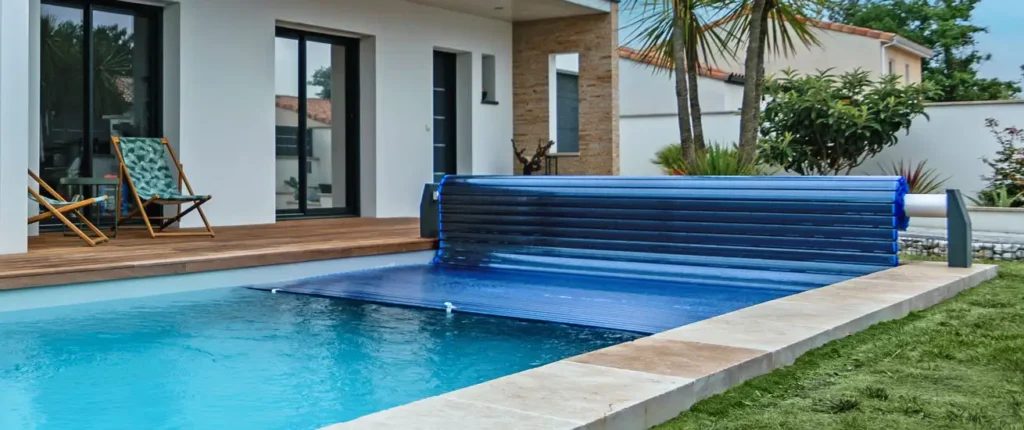
Cover Dream’s S-ROLL slatted automatic pool cover is made to order for the pool’s exact shape, so the slats follow the true geometry of the pool rather than a generic rectangular footprint. A cover built to the pool’s actual lines will always look more intentional than a system that has to be adapted after the fact.
S-ROLL is available in a range of slat colors, which lets the cover be coordinated with the same warm or cool palette used across the deck, coping, and furniture. Cover Dream also notes that a passive solar heating option can be built into the slats, adding a functional benefit without adding visible equipment.
S-ROLL can be the right modern-design match when the buyer wants:
- Automatic, motorized operation
- A cover shaped to a custom or freeform pool
- Slat color options that coordinate with the finish palette
- Passive solar heating without extra visible hardware
- A cover that reads as a design feature rather than a utility box
Retractable Enclosures: When Visibility Is a Feature, Not a Flaw
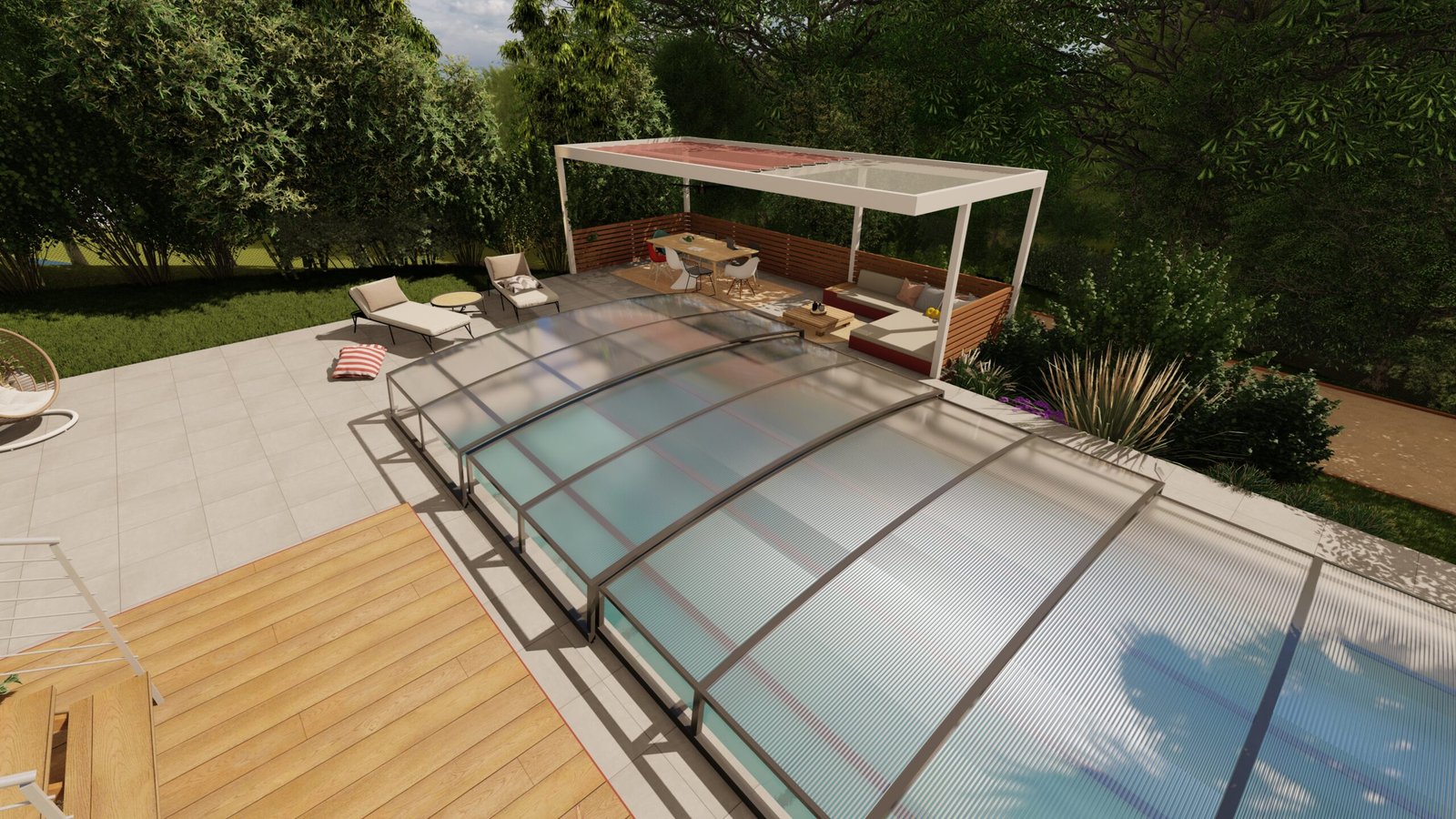
A retractable pool enclosure is more visible than a low-profile cover. That can be a disadvantage in some minimalist designs, but it can also be a strength when the goal is comfort, weather protection, debris control, and a defined pool environment. The key is to treat the enclosure as architecture, not as an accessory.
Cover Dream match: N-CLOSURE retractable pool enclosure
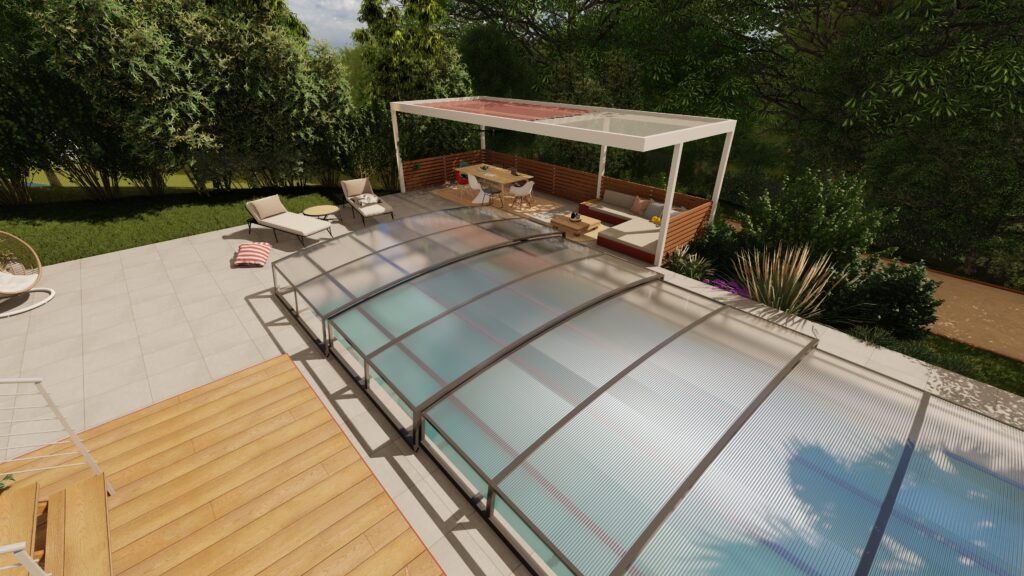
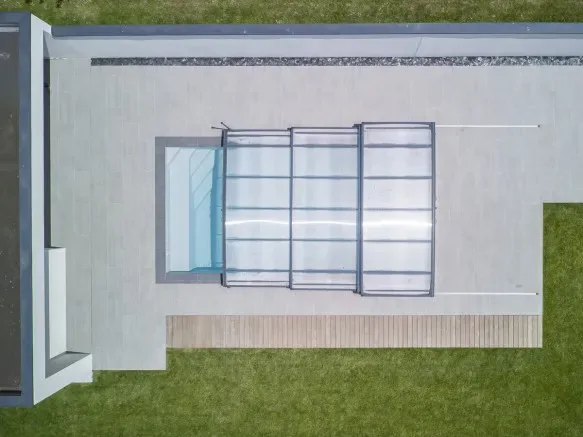
Cover Dream’s N-CLOSURE retractable pool enclosure is described as a telescopic pool enclosure that can cover or uncover one module of the pool at a time or the entire pool. Cover Dream states that it uses a nested design, a solar-powered motor, and can be handled easily by one person.
Cover Dream also states that the system protects the pool from weather and debris while remaining stylish and lightweight. It allows comfortable swimming underneath and supports a more protected pool environment.
N-CLOSURE may be the better modern design choice when the buyer wants:
- Weather protection
- Debris control
- A covered pool environment
- More comfortable swimming conditions
- A visible architectural pool feature
- Easy handling
- A defined outdoor room effect
The tradeoff is visual presence. If the design goal is absolute minimalism, a low-profile automatic cover or a trackless manual cover like B-COVER may be a better fit. If the design goal includes comfort, enclosure, and year-round usability, N-CLOSURE may support the lifestyle better.
Safety, Surfaces, and Practical Design Choices
A modern pool should not only look clean. It should also be practical, maintainable, and safe to use.
For more safety-focused reading, see Cover Dream’s guide on pool safety and the article explaining the ASTM F1346 pool cover standard.
Slip-resistant and cleanable surfaces
The 2024 International Swimming Pool and Spa Code states that decks, ramps, coping, and similar step surfaces should be slip resistant and cleanable (2024 ISPSC Section 306.2).
Surface choices should be evaluated for:
- Slip resistance
- Cleanability
- Heat underfoot
- Texture
- Drainage
- Maintenance
- Stain resistance
- Compatibility with pool chemistry
- Comfort for bare feet
Safety cover considerations
ASTM F1346 establishes requirements for safety covers for swimming pools, spas, hot tubs, and wading pools. ASTM states that when correctly installed and used according to manufacturer instructions, the specification is intended to reduce drowning risk by inhibiting access of children under five to the water (ASTM F1346).
This wording matters. A safety cover, whether an automatic system like Coverseal, a slatted system like S-ROLL, or a manual trackless system like B-COVER, should not be described as eliminating risk. It is a safety-oriented layer that must be correctly installed, maintained, and used as intended.
What Ruins a Modern Pool Design?
Modern pool design is often damaged by small details added too late. These details may seem minor during construction, but they become highly visible after the project is complete.
Cover hardware added too late
If the cover is selected after the coping and deck are finished, the available options may be more visible, less integrated, or more expensive to adapt. For buyers still comparing cover types, Cover Dream’s premium pool covers guide can help frame the cover as part of the full outdoor-living design.
Mismatched housing color, bulky equipment, and too many materials
A housing color that does not relate to the deck, coping, furniture, or architecture can make the cover look like an afterthought. Large exposed boxes and cluttered utility zones weaken the pool’s clean look, and a palette with too many competing materials can feel busy rather than designed.
Poor drainage, slip resistance, and furniture conflicts
Water pooling on the deck creates maintenance problems, smooth surfaces can perform poorly around wet areas, and furniture that blocks circulation or cover movement (especially with S-LIDE or any moving cover system) undermines the layout.
Cover movement path not planned, and lighting left as an afterthought
A sliding deck or enclosure needs room to move, and the most elegant design can fail if walls, planters, steps, or furniture block the system. Lighting should support edges, steps, pathways, and cover operation zones, not only look decorative.
Modern Pool Design Checklist Before Requesting a Quote
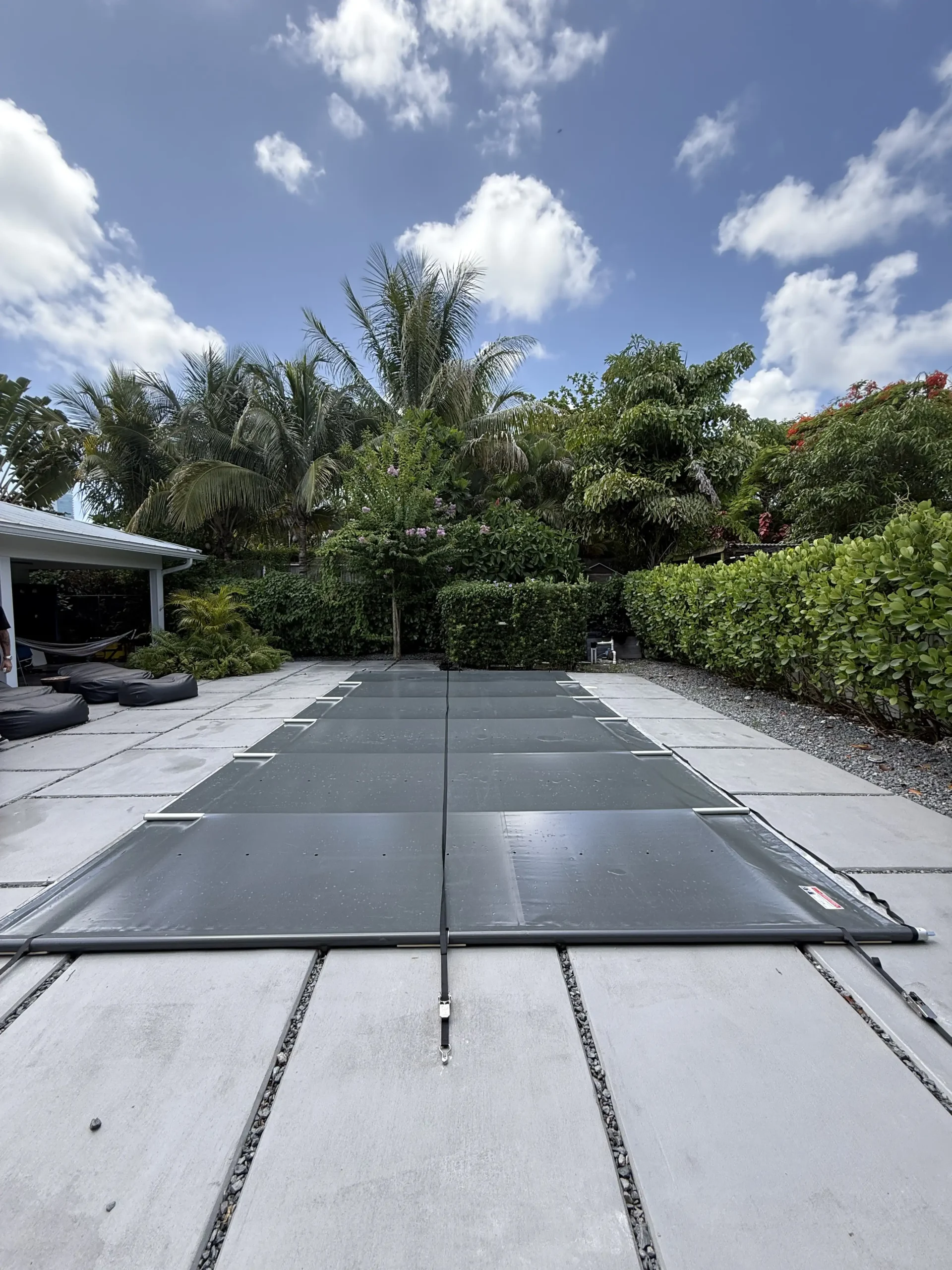
Before requesting a quote, prepare the following design details.
Pool, deck, and finish details
- Pool shape and dimensions
- Edge or coping style, including flush-edge, raised-edge, or traditional preference
- Waterline tile preference
- New build or retrofit status
- Deck material, color, and texture
- Pool interior finish and furniture finish
Cover hardware preferences
- Housing and track visibility preference
- Cover membrane or slat color preference
- Low-profile vs architectural feature preference
- Desired operation method: automatic (Coverseal, S-ROLL), manual trackless (B-COVER), sliding deck (S-LIDE), or enclosure (N-CLOSURE)
Practical, safety, and layout details
- Safety priority, and children or pets in the home
- Slip resistance, drainage, lighting, and maintenance expectations
- Furniture layout and walking paths
- S-LIDE movement path if considering a sliding deck
- N-CLOSURE module space if considering an enclosure
- Photos, pool plans, finish inspiration, budget range, and timeline
Before requesting a quote, also review these related planning guides: automatic pool cover cost, ASTM F1346 pool cover standard, covering a pool with a deck, pool safety, pool cover reduce evaporation, and spa and plunge pool cover options.
Conclusion — Modern Pool Design Works Best When the Cover Is Planned Early
Modern pool design works best when the pool shape, coping, deck finish, cover hardware, color palette, drainage, and movement path are planned together. Clean lines and finishes matter, but the cover system can either protect the design or disrupt it.
If the priority is low-profile hardware, clean automatic operation, color-matched housing, and safety-oriented closure, compare Coverseal automatic safety pool cover.
If the priority is deck continuity, pool-to-patio functionality, and a cover that becomes part of the architecture, compare S-LIDE sliding deck pool cover.
If the priority is automatic operation with a made-to-order fit and slat color options, compare S-ROLL slatted automatic pool cover.
If the priority is a safety cover with zero visible track and a simpler manual installation, compare B-COVER manual trackless safety cover.
If the priority is comfort, debris protection, weather protection, and a defined pool environment, compare N-CLOSURE retractable pool enclosure.
A restrained next step is to request a quote and provide pool plans, finish goals, hardware preferences, color direction, movement-path requirements, and design priorities. For broader planning, readers can also explore Cover Dream’s pool cover blog and guide to premium pool covers.
FAQs
A modern pool design usually depends on clean geometry, simple edges, restrained materials, coordinated finishes, subtle hardware, and good planning. The pool, deck, coping, cover system, furniture, and lighting should feel intentionally connected rather than added separately.
The best modern pool cover depends on the design goal. Coverseal fits low-profile automatic coverage, S-ROLL fits automatic operation with a made-to-order slatted design, B-COVER fits a zero-track manual installation, S-LIDE fits pool-to-patio architecture, and N-CLOSURE fits comfort and weather protection. The best choice depends on hardware visibility, space, safety, and lifestyle.
Yes, if the cover system is designed with low-profile housing, discreet tracks, and coordinated colors. Cover Dream’s Coverseal includes a concealed mechanism, low-profile housing, matte powder-coated aluminum, and optional RAL housing colors for design integration.
Pool cover hardware should either match the surrounding deck/coping palette or contrast intentionally with other architectural elements. Neutral colors such as grey, charcoal, black, white, taupe, or warm metallic tones often work well when repeated elsewhere in the design.
Both can work. Matching helps hardware recede, which is often ideal for minimalist pools. Contrast can work if the color appears elsewhere, such as furniture, pergolas, outdoor kitchens, window frames, or lighting details. Avoid accidental contrast.
Yes, a sliding deck pool cover can be excellent for modern design when the goal is surface continuity and flexible outdoor living. Cover Dream’s S-LIDE can turn the pool into usable deck space and supports high-load patio use.
Yes, a slatted automatic cover like S-ROLL can suit modern design well when the buyer wants automatic operation without giving up a custom fit. Because S-ROLL is made to order for the pool’s exact shape and offered in a range of slat colors, it can be coordinated with the finish palette rather than treated as a generic add-on, and a passive solar heating option can add function without adding visible hardware.
A trackless manual safety cover, such as Cover Dream’s B-COVER, removes the permanent track line altogether, which can be the right choice for minimalist projects that do not want any visible hardware around the pool edge. It is rated to support over 500 lbs. Choose it over an automatic system like Coverseal or S-ROLL when a simpler, lower-hardware installation and a completely clean edge matter more than push-button automatic operation.
They can be modern-looking when treated as part of the architecture. A retractable enclosure is more visible than a low-profile cover, but it may be the right design choice when the buyer wants comfort, debris protection, weather protection, and a defined pool environment.
Modern pool finishes often use restrained palettes, clean coping, large-format deck materials, matte metals, neutral colors, and simple waterline tile. The best finish should also be practical: slip resistant, cleanable, comfortable underfoot, and compatible with wet outdoor conditions.
Plan the pool shape, coping, deck material, cover housing location, track visibility, cover color, furniture layout, drainage, lighting, and daily-use routine. If the cover is selected too late, the final result may look less integrated.
Start with the design goal. For low-profile automatic coverage, compare Coverseal. For automatic operation with a made-to-order slatted fit, compare S-ROLL. For a zero-track manual installation, compare B-COVER. For pool-to-patio functionality and deck continuity, compare S-LIDE. For comfort, debris control, and a visible architectural enclosure, compare N-CLOSURE.
Ready to plan your modern pool cover? Request a quote from Cover Dream and compare Coverseal, S-ROLL, B-COVER, S-LIDE, and N-CLOSURE for your project.
