

Best Pool Cover Type for Your Goal: Safety vs Heat vs Debris vs Space (Decision Table)
Choosing the best pool cover type becomes straightforward when you start with your primary goal: safety, heat/energy savings, debris control, or reclaiming space. Each goal favors a different cover category, with real tradeoffs in convenience, aesthetics, maintenance, and cost. This guide provides a decision table first, then walks you through each goal with a practical selection checklist.
Who this is for
- Homeowners compare types of pool covers and try to make a confident decision without marketing noise.
- Buyers who need a clear choice between a pool cover for safety, pool cover for heat retention, pool cover for leaves, or a pool cover for small backyard space constraints.
- Anyone considering premium options from Cover Dream premium pool covers and wanting to match the right system to the right goal.
If you already know you want a premium solution, the fastest way to orient yourself is to review Cover Dream’s three core systems—an automatic safety pool cover , a retractable pool enclosure , and a sliding deck pool cover (https://cover-dream.com/sliding-deck-pool-cover/)—then use the decision table below to select by goal.
Decision Table – Choose the Best Pool Cover Type in 60 Seconds
Use this table as your primary decision tool. It is deliberately goal-first and tradeoff-aware so you can make a defensible choice.
Cover type | Best for (goal) | Pros | Tradeoffs | Typical homeowner fit | Cover Dream match (if applicable) |
Automatic safety cover | Safety + everyday convenience | Barrier-style closure; helps keep debris out; can reduce evaporation and stabilize temperature when used consistently | Premium category; installation scope matters; safety depends on correct use/installation | Families prioritizing daily safety and a clean, consistent pool routine | |
Retractable pool enclosure | Season extension + debris control | Covers/uncover sections; swim under it; helps cleanliness; can improve comfort and temperature | More visible structure; needs space for modules and rails (design-dependent) | Cooler climates, windy/dusty zones, owners who want more “protected pool time” | |
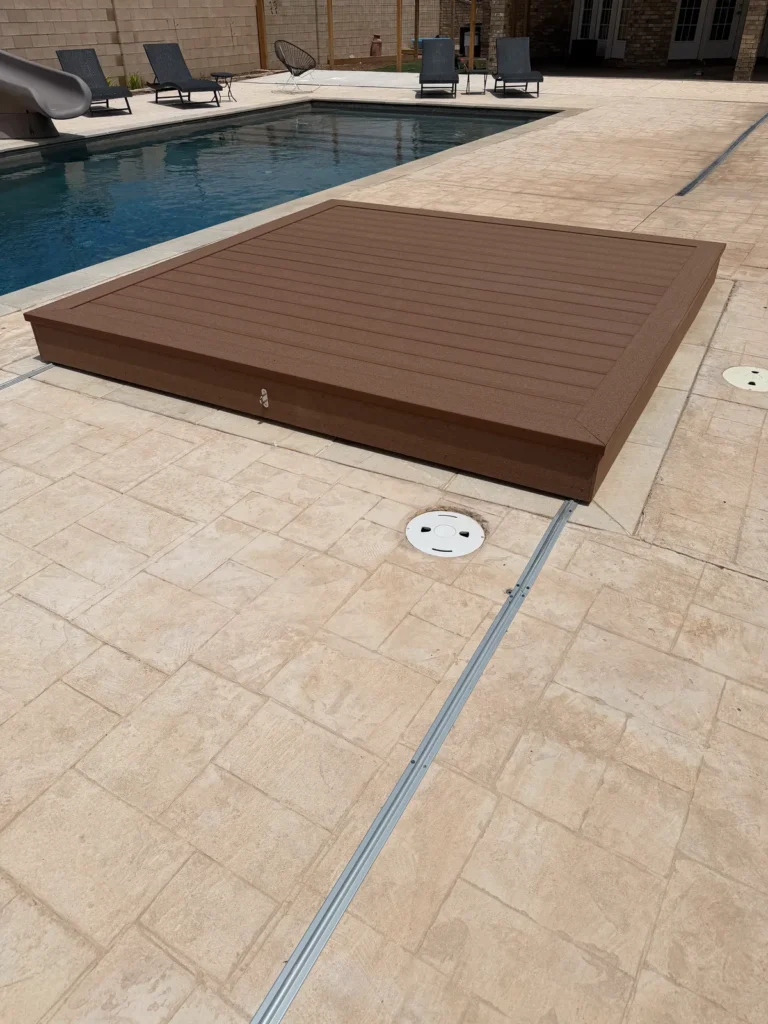
Sliding deck pool cover | Reclaim space (small yard / lifestyle) | Converts pool area into usable patio/deck; supports high loads; can reduce evaporation while covered | Premium category; requires layout planning; not the right choice if your primary goal is “simple heat blanket” | Pool cover for small backyard constraints; homeowners who want usable square footage back | |
Solar blanket (bubble cover) | Heat retention at lower cost | Effective evaporation barrier when used; can improve heat retention and reduce heat loss | Manual handling/storage; not a safety barrier; can be inconvenient day-to-day | Budget-focused owners who will actually deploy it consistently | — (Use as an educational comparator; not a Cover Dream product claim) |
Winter/seasonal cover | Off-season protection | Helps protect pool during closure; reduces debris load in off-season | Not an everyday convenience solution; can still require maintenance and pumping | Seasonal climates, pools closed for winter | — (Educational comparator) |
Leaf net | Leaves/debris only (short-term) | Quick debris control in leaf season | Not for heat; not for safety; not for evaporation control | Heavy trees nearby; transitional seasons | — (Educational comparator) |
How to read the table:
- If your top priority is child/pet safety, start with the safety section and ASTM framing.
- If your top priority is heat and operating costs, focus on evaporation and cover-consistency.
- If your top priority is debris and cleaning time, assess “sealed coverage” vs “partial protection.”
- If your top priority is space, a deck solution is usually the only option that truly changes how you use your backyard.
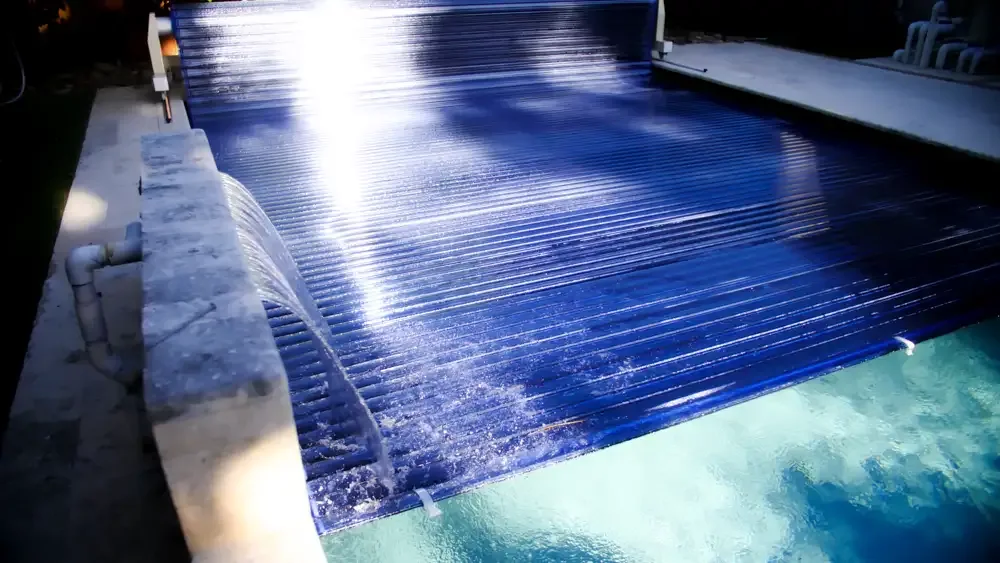
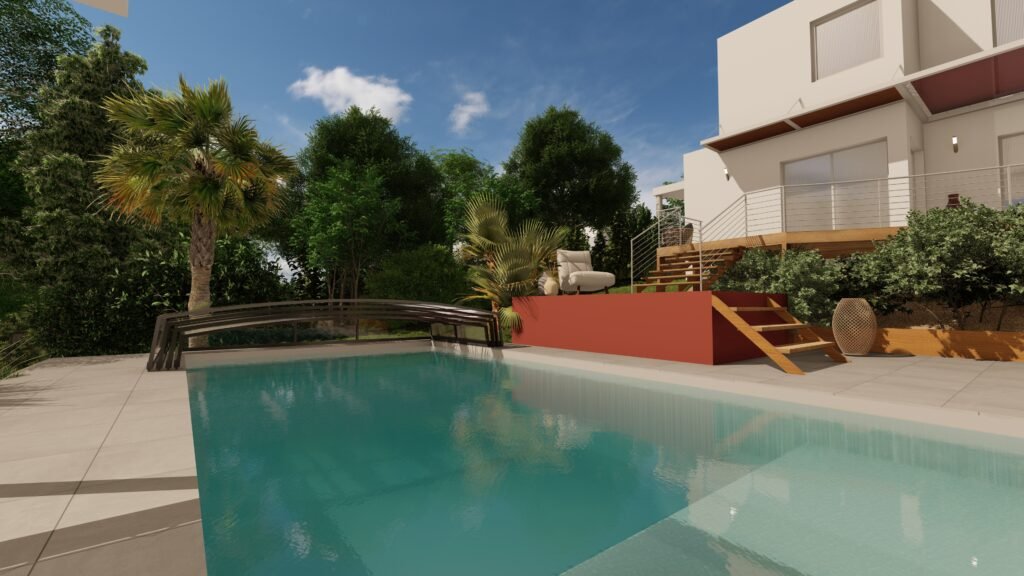
Goal 1 – Safety (What actually counts as a “safety cover”?)
If your goal is safety, the first decision is not “automatic vs manual.” The first decision is: Does the product meet a safety standard intended to inhibit access to the water?
ASTM F1346
ASTM F1346 is a performance specification for safety covers. In its scope statement, ASTM explains that – when correctly installed and used according to the manufacturer’s instructions – the standard is intended to reduce drowning risk by inhibiting access of children under five to the water.
This is the right mindset: standard-based safety depends on proper installation and correct use. It is a layer of protection, not a replacement for supervision or other barriers.
Why some covers are not “safety” even if they cover the pool
Many covers can reduce evaporation or keep debris out. That does not make them safety barriers. A solar blanket, for example, can be an effective vapor barrier for heat retention, but it is not inherently designed to inhibit child access. DOE notes that a cover can be as simple as plastic acting as a vapor barrier, but convenience and durability become practical limitations.
If safety is your goal, your decision should be anchored on products marketed and built as safety covers (and installed accordingly), not simply “anything that covers the surface.”
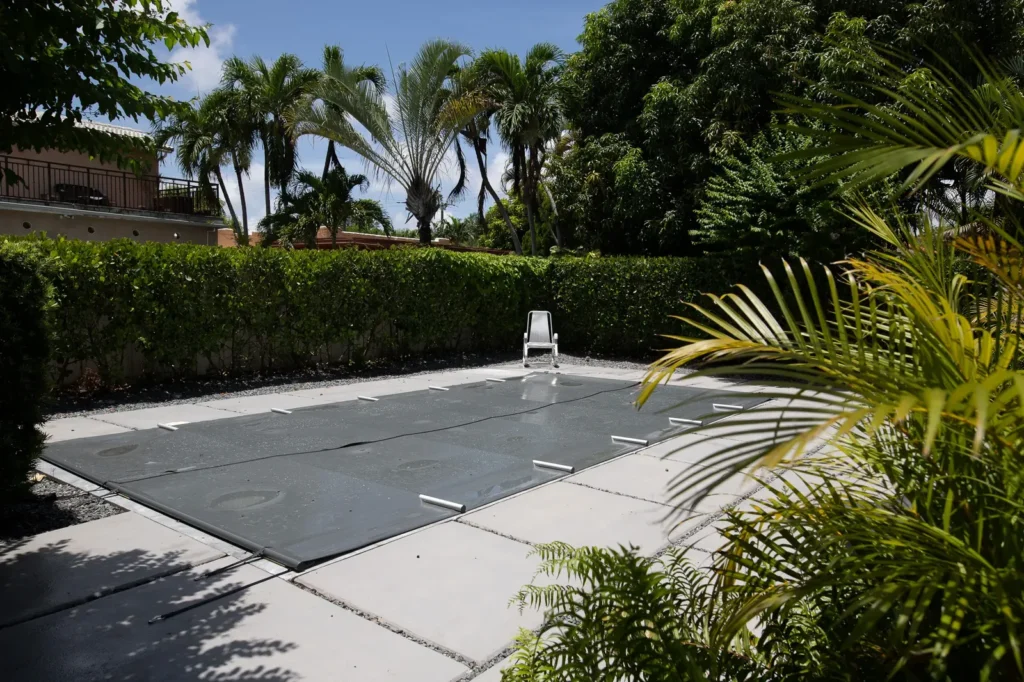
Cover Dream match: Coverseal™ automatic safety pool cover
Cover Dream’s Coverseal™ automatic safety pool cover is explicitly positioned as an automatic safety pool cover whose membrane supports the weight of individuals (including children and pets) and states it meets safety standards including ASTM F1346.
Practical selection guidance (safety goal):
- Ask what standard the cover is intended to meet (ASTM F1346 scope is the key reference for safety covers).
- Confirm that the cover is designed to be securely closed and used consistently as a barrier.
- Ensure your installer’s plan matches your pool geometry and deck layout (edge conditions matter in the real world).
Goal 2 – Heat + Energy Savings (Stop losing heat to evaporation)
If your goal is heat and energy savings, the core concept is simple: evaporation is the main driver of heat loss. Covering your pool reduces evaporation; reducing evaporation improves heat retention.
The U.S. Department of Energy states that covering a pool when it is not in use is the single most effective way to reduce pool heating costs, and that 50%–70% savings are possible.
This is why “best pool cover type” for heat is often less about the cover category and more about whether you will actually keep it covered. Any solution that is too inconvenient tends to underperform in real life because it stays off the pool.
Water, evaporation, and cost: EPA’s practical numbers
EPA WaterSense notes that pool covers can prevent up to 95% of pool water evaporation. EPA also highlights practical benefits beyond evaporation: reduced cleaning requirements, reduced chemical use, and a measure of safety.
Interpretation for buyers:
- Heat retention improves when evaporation is minimized.
- Operating costs improve when water loss decreases and chemical demand stabilizes.
- The “best” choice is the one you will use consistently.
Cover Dream match for heat: Coverseal™ and N-CLOSURE
Cover Dream presents two premium options that map to heat and comfort in different ways:
- Coverseal™ automatic safety pool cover includes an insulation-focused section that positions it as a 4-season safety cover, noting reduced evaporation and stabilized water temperature (as described on the product page).
- N-CLOSURE retractable pool enclosure positions itself as an enclosure that can fully cover or uncover the pool in modular sections, with an insulation section that states it “raises the water temperature by 12.6°F.”
How to choose between them (heat goal):
- Choose an automatic cover when you want fast daily coverage with a low-profile system that supports a consistent “cover when not in use” routine.
- Consider an enclosure when you want more protected, comfortable swim time and a structure that changes the pool environment (especially in cooler or windier conditions).
Goal 3 – Debris + Maintenance (Leaves, dust, and cleaning time)
If your goal is debris and maintenance reduction, you are solving for three practical problems:
- Leaves and wind-driven debris
- Dust and airborne particulates
- Water quality stability (less contamination, fewer swings, easier cleaning)
EPA notes that pool covers can reduce cleaning requirements and chemical use, and provide additional benefits when applied consistently and appropriately.
Which cover types help most (and why)
- Enclosures are strong for debris control because they physically separate the pool from wind-driven inputs and allow you to operate the pool in a more protected environment. N-CLOSURE emphasizes cleanliness and “comfortable swimming underneath,” plus modular opening/closing.
- Automatic covers help keep debris off the water when closed. Cover Dream’s Coverseal page includes a water quality section that mentions keeping debris and leaves away from the pool and reducing cleaning and maintenance interventions (as a benefit claim on the product page).
- Leaf nets can be useful as a low-cost, seasonal tool, but they do not solve heat retention, evaporation, or safety and should be treated as narrow-purpose.
Cover Dream match for debris/maintenance: Coverseal™ and N-CLOSURE
- Coverseal™ is positioned to keep debris/leaves away and reduce maintenance interventions, with an emphasis on water quality and stable pH indicators (as described on the product page).
- N-CLOSURE is positioned as a modular enclosure that enhances pool cleanliness and can be handled easily, with features designed for durability and replaceable polycarbonate sheets.
Selection guidance (debris goal):
- If your debris is seasonal and manageable, a simple seasonal tool may be enough.
- If debris drives constant cleaning and poor usability, you likely need a premium solution that changes the routine—automatic daily closure or a protected enclosure environment.
Find the Best Pool Cover for Your Main Goal
Compare pool cover options based on what matters most to you safety, heat retention, debris control, or reclaiming backyard space.

Goal 4 – Reclaim Backyard Space (Turn pool area into usable space)
If your goal is space, you are no longer selecting a cover as an “accessory.” You are selecting a system that changes the function of your yard.
This is the most important point: only a deck solution truly converts pool footprint into usable square footage.
The sliding deck concept (who should choose it)
A sliding deck pool cover is ideal when you have:
- A pool cover for small backyard constraints (limited patio space, tight entertaining footprint)
- A desire to use the pool area as a true patio surface when the pool is not in use
- A preference for a system that is lifestyle-oriented rather than purely “thermal” or “seasonal”
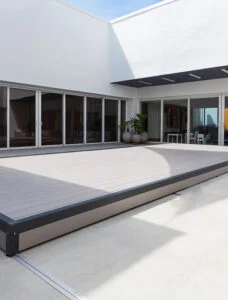
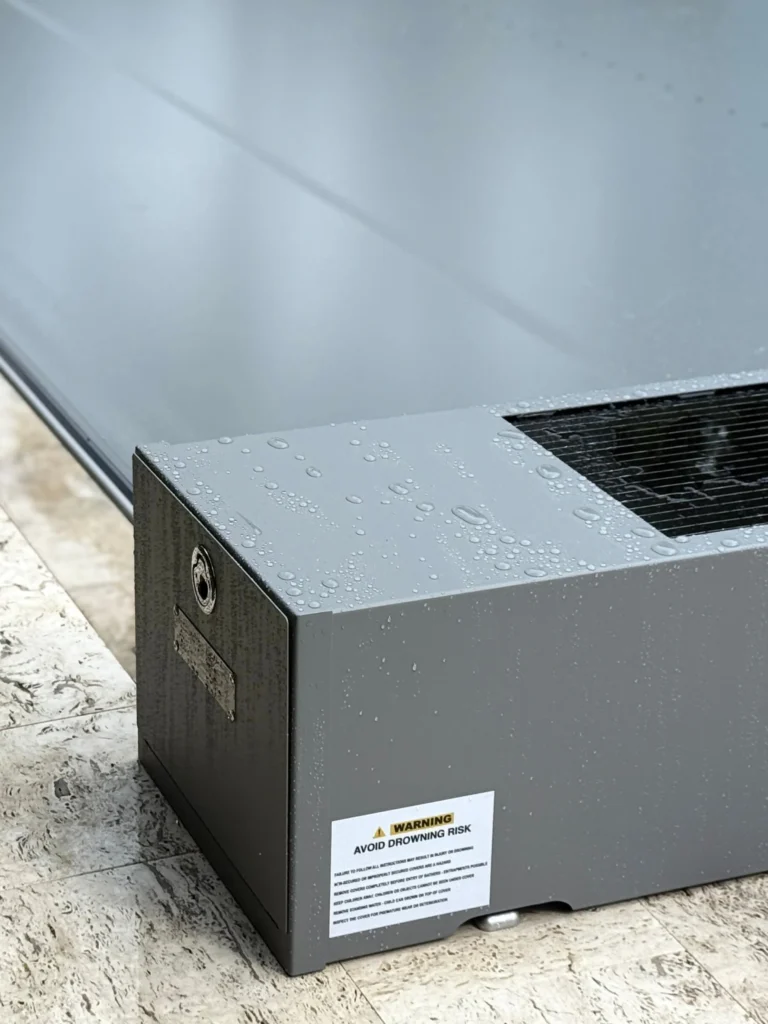
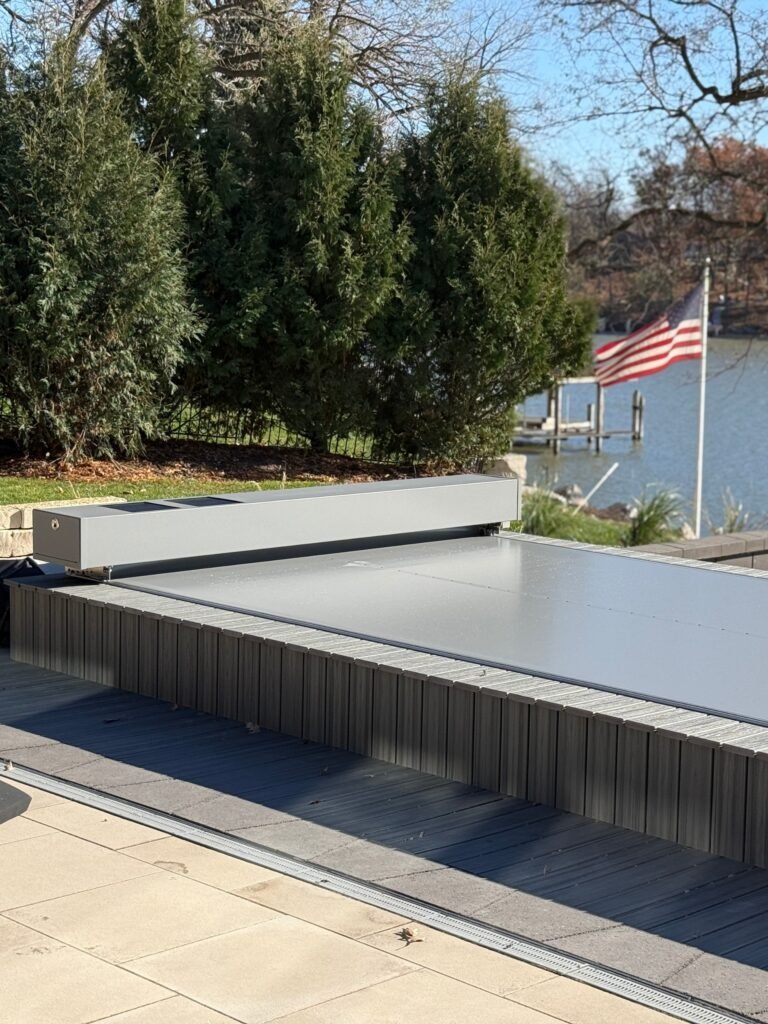
Cover Dream match: S-LIDE sliding deck pool cover
Cover Dream’s S-LIDE sliding deck pool cover is positioned as a “2-in-1 sliding pool cover, patio and deck solution” focused on space optimization. It states that the deck supports high loads and can turn the pool into deck space for children/pets and entertaining, with motorized retraction “at the touch of a button.”
It also emphasizes sustainability via reduced evaporation while covered.
Selection guidance (space goal):
- If your primary objective is “more patio,” a deck system is typically the most direct match.
- If your primary objective is safety or heat retention, start with safety or heat sections; a deck can be valuable, but the goal priority should lead the choice.
The Tradeoff Section – What You Give Up With Each Choice
Every option solves something and sacrifices something. Use this section to pressure-test your decision.
- Cost: Premium solutions (automatic safety covers, enclosures, sliding decks) are larger investments than seasonal covers and nets.
- Daily convenience: The best-performing heat and maintenance solutions are the ones you will use consistently; inconvenience reduces real-world savings.
- Aesthetics: Low-profile vs visible structure is a real decision. Cover Dream positions its systems as design-forward, but you should still choose the category that fits your space.
- Maintenance: Some covers require handling, storage, or pumping; enclosures and premium systems shift maintenance into different tasks.
- Safety expectations: Only covers designed and installed as safety barriers should be treated as a safety layer; ASTM F1346 scope language reinforces correct installation and use.
How to Get a Better Quote (What to measure and what to ask)
Whether you select an automatic safety cover, a retractable pool enclosure, or a sliding deck pool cover, better quotes come from better inputs.
Quote checklist (copy/paste)
- Pool shape and dimensions: length, width, and any curves
- Deck layout: material (concrete, pavers, tile), thickness, and condition
- Your primary goal priority: safety vs heat vs debris vs space (rank them 1–4)
- Access constraints: narrow gates, tight side yards, existing landscaping
- Timeline: new build vs retrofit; desired install window
- Usage pattern: heated pool or not; frequency; seasonal closure expectations
- Aesthetic preference: low-profile look vs acceptance of visible structures
What to ask (so quotes are comparable)
- What assumptions are you making about deck work and restoration?
- How does the system handle evaporation and everyday coverage?
- What user actions are required for safe and consistent use?
Conclusion – The best pool cover type depends on your goal
There is no universal “best pool cover type.” The best choice is the one aligned with your dominant goal:
- If safety is primary, choose a safety cover approach grounded in ASTM F1346’s intent and installed/used correctly; premium options include an automatic safety pool cover like Coverseal™.
- If heat/energy savings is primary, prioritize consistent coverage; DOE states covering a pool when not in use is the most effective way to reduce heating costs, with 50%–70% savings possible.
- If debris/maintenance is primary, choose the category that truly reduces inputs—automatic closure or an enclosure environment; EPA notes covers reduce cleaning requirements and chemical use.
- If space is primary, select a lifestyle solution that converts footprint into usable patio—most directly, a sliding deck such as S-LIDE™.
Next step (restrained): If you want a premium solution matched to your goal, start with Cover Dream’s automatic safety pool cover page and request a quote based on your pool shape, deck layout, and top priority.
FAQs
A true safety-oriented choice is a cover designed and installed to function as a barrier. ASTM F1346 states that, when correctly installed and used according to instructions, safety covers are intended to reduce drowning risk by inhibiting access by children under five.
No. A solar blanket can be useful for evaporation control and heat retention, but it is not typically designed or installed as a child-access barrier. Safety claims should be evaluated against the intent and scope described in ASTM F1346 for safety covers.
EPA WaterSense notes that using a pool cover can prevent up to 95% of pool water evaporation. It also reports that uncovered pools can lose 12,000–31,000 gallons per year to evaporation depending on location, making consistent cover use a meaningful water-saving practice.
Yes, often. EPA explains that pool covers can provide benefits such as reducing cleaning requirements and reducing chemical use, especially when applied consistently and appropriately. Fewer contaminants entering the water typically reduces the need for corrective chemical adjustments over time.
For heavy, frequent debris, the best approach is typically a solution that provides strong environmental separation when closed. Enclosures and well-sealed automatic covers can reduce daily debris inputs more effectively than a leaf net, which is mainly a seasonal surface tool.
ASTM F1346 is a performance specification for safety covers for pools, spas, and hot tubs. ASTM states the specification is intended—when correctly installed and used according to instructions—to reduce drowning risk by inhibiting access by children under five to the water.
If the core issue is usable space, a sliding deck pool cover can convert the pool footprint into functional patio area when closed. Cover Dream’s S-LIDE is positioned as a 2-in-1 deck and cover solution designed to regain backyard space and support high loads for patio use.
They can be, particularly in cooler, windy, or debris-prone environments where comfort and cleanliness drive real usage. Cover Dream’s N-CLOSURE is positioned as a modular enclosure you can partially or fully open, with comfort and insulation benefits described on the product page.
Yes. DOE states that covering a pool when it is not in use is the single most effective way to reduce pool heating costs, and that 50%–70% savings are possible. Covers also reduce evaporation, which is a primary mechanism of heat loss.
Both matter, but frequency of use strongly affects results. DOE and EPA emphasize benefits tied to minimizing evaporation and covering when not in use; an inconvenient cover often underperforms because it stays off the pool. Choose the type you will use consistently.
