

Sliding Deck Pool Cover Cost: Motors, Structure, Decking Choices, and Design Options
A sliding deck pool cover cost depends on more than pool size. Public market examples often place residential sliding deck pool covers around $25,000–$75,000+, but final pricing is project-specific. Motors, structural load, decking choices, rail/movement systems, layout, site access, and installation scope all affect the quote.
Who this is for
- Homeowners compare a premium space saving pool cover before requesting pricing.
- Pool buyers, builders, and landscape architects evaluating a S-LIDE sliding deck pool cover from Cover Dream premium pool cover systems.
- Buyers who want to compare a sliding deck with an automatic safety pool cover or retractable pool enclosure before choosing the right system.
What Does a Sliding Deck Pool Cover Cost?
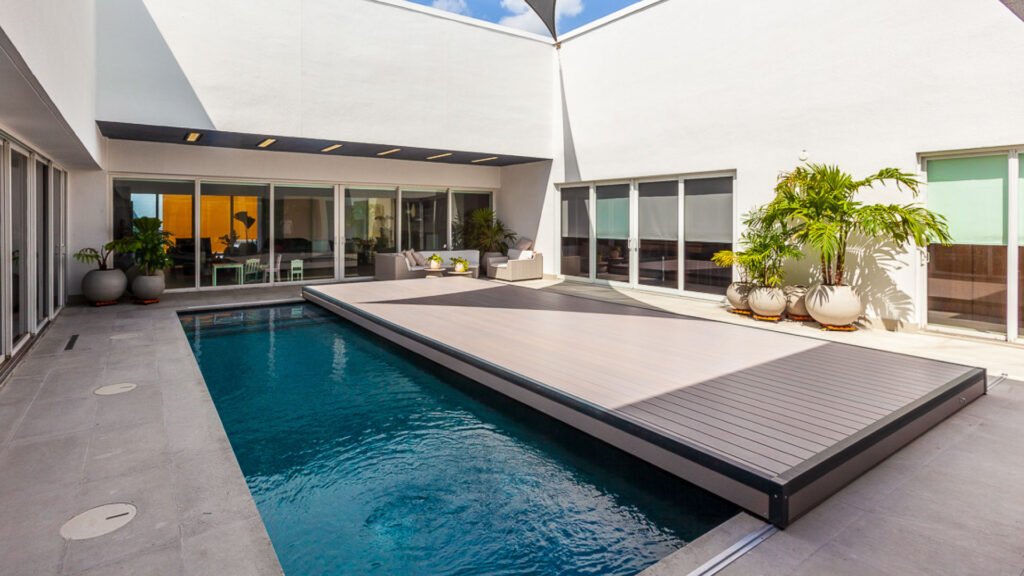
A sliding deck pool cover is a premium structural system, not a simple pool cover. Public industry examples often show residential sliding deck pool covers in the $25,000–$75,000+ range, especially for automatic sliding pool covers that can be walked on and support outdoor furniture. River Pools also notes that some sliding deck systems can cost more depending on the manufacturer, builder, pool size, and load requirements: River Pools sliding deck pool cover cost guide.
That range should be used as a planning benchmark, not a fixed quote. Your actual sliding deck pool cover price depends on how the system is designed, what it must support, how it moves, what surface you choose, and how difficult the site is to build around.
A useful way to think about it is this:
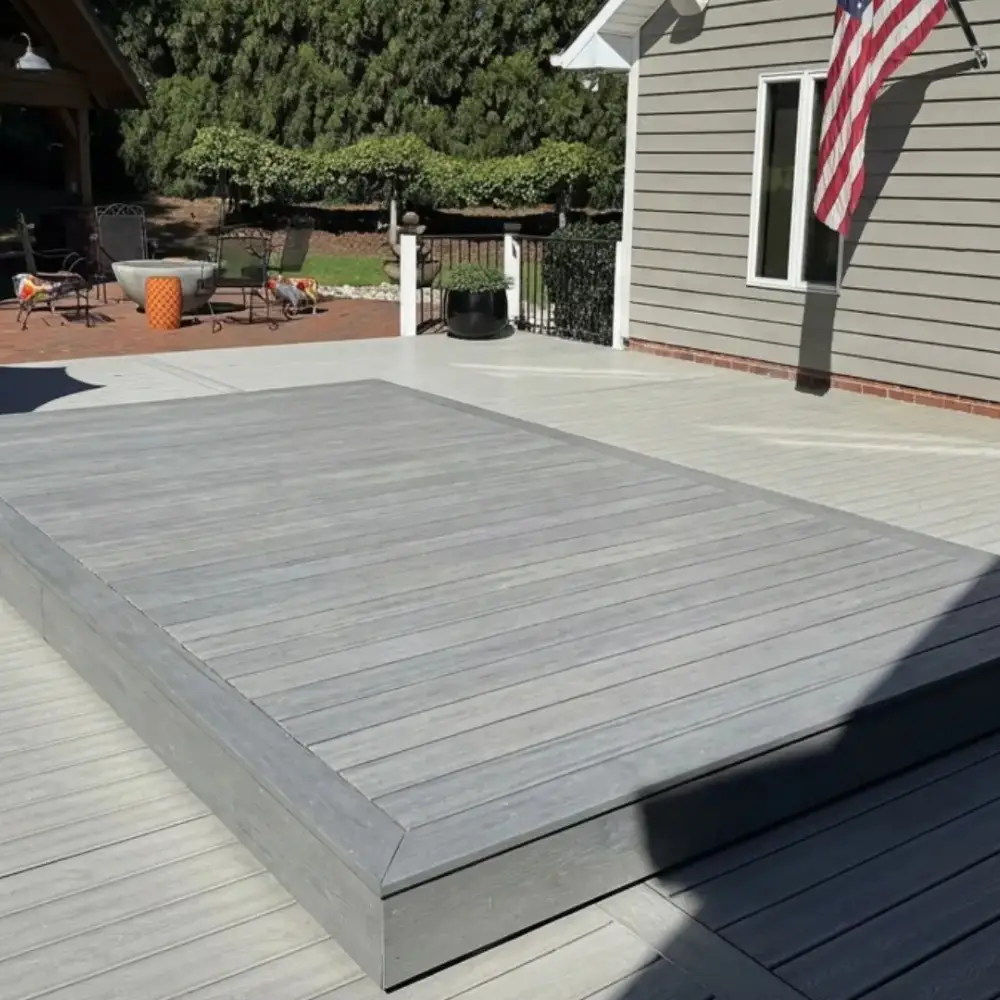
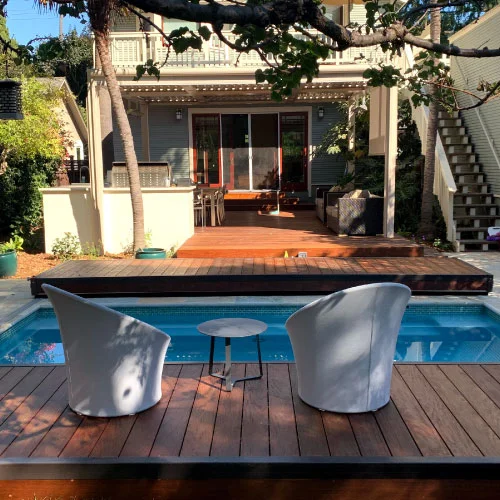
You are not buying a fabric cover. You are pricing a moving, load-bearing deck that also covers the pool.
That distinction explains why a rolling deck pool cover cost is often much higher than a standard pool cover.
Cost Driver Table – What Changes the Quote Most?
Cost driver | Why it affects cost | Lower-complexity scenario | Higher-complexity scenario | Buyer question to ask |
Pool size and span | Larger spans need more structure, support, and movement planning | Compact rectangular pool or plunge pool | Larger pool, long span, unusual shape | “How does my pool size affect structural design?” |
Structural load capacity | A walkable deck must support people and possible furniture | Light pedestrian use | Patio furniture, entertaining, heavier use | “What load is the deck designed to support?” |
Motorization and controls | Motors, power, controls, and safety logic affect cost | Manual or simpler operation | Motorized system with remote/control features | “What motor and control system is included?” |
Rail / movement system | The deck needs a precise path to open and close | Straight, unobstructed movement path | Tight yard, obstacles, complex movement | “Where does the deck move when the pool opens?” |
Decking surface choice | Finish affects appearance, comfort, maintenance, and integration | Basic ready-to-finish deck frame | Premium surface finish or custom visual integration | “What decking surface options are compatible?” |
Layout design | One-panel, two-panel, width-opening, or length-opening layouts affect engineering | Simple one-panel movement | Two-panel or custom layout around furniture/walls | “Which layout fits my yard best?” |
Site access | Installation depends on access for materials and equipment | Open access around pool | Narrow side yards, walls, landscaping, limited staging | “What access is needed for installation?” |
New build vs retrofit | New builds allow cleaner planning; retrofits may require modifications | Planned during pool design | Existing deck, landscaping, and finished surfaces | “What changes are needed for a retrofit?” |
Drainage and deck integration | The system must work with water, deck levels, and surrounding surfaces | Clear drainage and simple deck elevation | Drainage conflicts, grade changes, existing pavers | “How will drainage and deck height be handled?” |
Why Sliding Deck Covers Cost More Than Standard Pool Covers
A standard pool cover mainly covers the water surface. A sliding deck pool cover must do more.
It must function as:
- A pool cover
- A moving deck
- A walking surface
- A patio extension
- A structural element
- A space-saving design feature
- A mechanical system
That is why pool deck cover cost cannot be compared directly with a vinyl cover, solar blanket, or mesh seasonal cover.
A sliding deck must be engineered around load support, rail alignment, smooth movement, surface finish, electrical access, safety controls, and the surrounding deck. It also must look appropriate in the finished outdoor environment. For luxury homes, the visual result matters almost as much as the function.
This is also why two projects with similar pool dimensions can receive very different quotes. One project may need a simple straight movement path. Another may require a custom deck layout, tight installation access, furniture planning, surface coordination, and drainage work.
Cost Driver 1 – Motors and Automation
Motorization is one of the major differences between a simple manual deck and an automatic sliding deck pool cover.
A motorized system affects cost because it may involve:
- Motor selection
- Power access
- Control system
- Remote operation
- Security logic
- Wiring or solar support
- System calibration
- Long-term reliability considerations
Cover Dream’s S-LIDE sliding deck pool cover page states that the motorized pool deck smoothly retracts at the push of a button, revealing a poolside patio. It also states that S-LIDE can include a solar-powered motor and remote-control operation with a security code system and limited-distance operation for security reasons.
For the buyer, the key question is not only “Is it motorized?” The better question is:
What motor, control, power, and safety-control assumptions are included in the quote?
A lower quote may omit details that a premium project requires. A stronger quote will explain how the system operates, how users control it, what power is required, and how the movement path is secured.
Cost Driver 2 – Structure and Load Capacity
A sliding deck pool cover is priced partly by what it must support. If the deck will be used as a real patio surface, the structural expectations are higher than for a lightweight cover.
Possible use cases include:
- Walking across the closed deck
- Placing lounge chairs
- Hosting guests
- Supporting patio furniture
- Creating a child- or pet-friendly covered surface
- Using the area as an outdoor room when the pool is closed
Cover Dream states that S-LIDE supports high loads for the patio and can accommodate patio furniture. It also describes the product as turning the pool into deck space for children, pets, and entertaining guests.
This is one of the biggest reasons a walkable pool cover cost is higher than a standard cover. The system is not merely hiding the pool. It is creating functional outdoor floor area.
The more load the deck must support, the more important the structural frame, fasteners, rails, and layout become. River Pools also notes that the more weight the deck needs to support, the more it will probably cost: River Pools sliding deck pool cover guide.
Cost Driver 3 – Decking Choices and Surface Finish
Decking choices affect both cost and daily experience.
The surface must work as part of the outdoor living area. It should feel appropriate underfoot, coordinate with the surrounding patio, resist outdoor exposure, and allow the deck to open and close properly.
Common factors that affect pricing include:
- Surface material
- Finish quality
- Texture
- Heat comfort
- Slip resistance
- Drainage behavior
- Maintenance requirements
- Color and design integration
- Whether the surface is ready-to-customize or fully finished
Cover Dream’s S-LIDE page describes a “ready-to-customize deck frame” as one of the options that can be added to the pool deck. It also emphasizes the broader idea of a rolling deck cover that can support patio furniture and create an appealing area for hosting guests: S-LIDE sliding deck pool cover.
For content accuracy, do not assume or list exact Cover Dream decking materials unless they are confirmed by the project team or product documentation. The safer and stronger approach is to explain how surface choices affect the quote and then invite the buyer to discuss compatible finish options during the quote process.
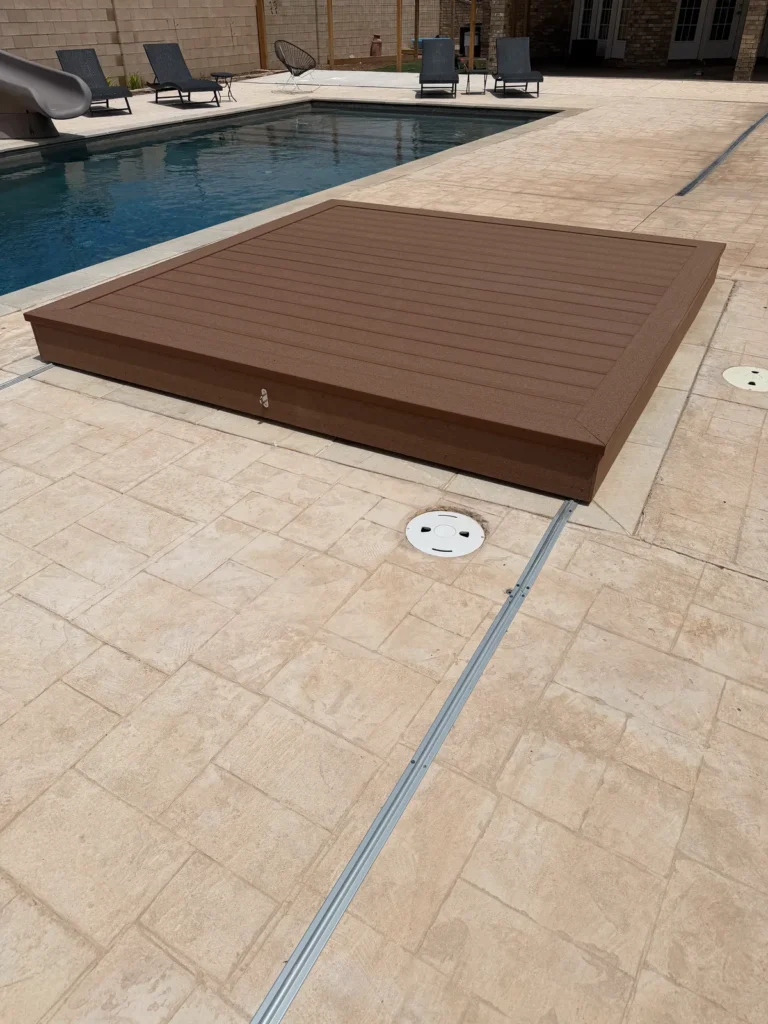
Cost Driver 4 – Layout and Design Options
The layout determines how the deck moves and where it goes when the pool opens.
Common layout questions include:
- Does the deck slide lengthwise or widthwise?
- Is it one panel or two panels?
- Does it move to one side or split in two directions?
- Is there enough open space for the deck to travel?
- Will furniture need to move before opening?
- Are walls, fences, planters, steps, or outdoor kitchens in the way?
Cover Dream states that S-LIDE is available in various layouts to suit nearly any pool and lists panel options including one panel or two panels with width or length opening: S-LIDE sliding deck pool cover.
Layout is often where homeowners underestimate complexity. A pool may be small, but if the yard is tight, the deck may need careful planning to avoid furniture conflicts, walls, landscaping, or access paths.
For a small backyard pool cover, this becomes especially important. The deck does not disappear when it opens. It must slide somewhere. That movement path must be designed before the quote can be accurate.
Cost Driver 5 – Site Conditions and Installation
Site conditions can materially affect the final quote.
Important installation factors include:
- Existing deck material
- Grade changes
- Drainage patterns
- Electrical access
- Equipment access
- Gate width and side-yard clearance
- Walls, fences, planters, or built-in seating
- Landscaping that may need protection or modification
- Whether the project is a new build or retrofit
A new build usually gives the project team more flexibility because the pool, deck, electrical, and movement path can be planned together. A retrofit can still be feasible, but it may require more coordination because the surrounding surfaces are already installed.
This is why a quote should never be based only on pool length and width. The site determines how easily the deck can be built, powered, moved, finished, and maintained.
Ready to Price Your S-LIDE Project?
Share your pool dimensions, site photos, and design goals to explore the right sliding deck configuration for your property.

S-LIDE by Cover Dream: What Buyers Are Paying For
Cover Dream’s S-LIDE sliding deck pool cover should be understood as a premium space-optimization system.
Based on Cover Dream’s product page, buyers are paying for:
- A two-in-one sliding pool cover, patio, and deck solution
- A system designed to make the most of pool-area square footage
- A rolling deck that supports high loads
- Patio furniture compatibility
- Motorized opening and closing at the push of a button
- Various layout options
- A 100% aluminum structure
- Stainless steel fasteners
- Optional solar-powered motor
- Optional insulated panels
This is the correct way to frame S-LIDE sliding deck pool cover pricing. It is not only a cover. It is a moving, load-bearing outdoor living surface.
For the right buyer, that distinction is exactly the value. The pool becomes usable when open, and the footprint becomes deck or patio space when closed.
When a Sliding Deck Pool Cover Is Worth the Cost
A sliding deck pool cover is usually worth serious consideration when the pool area must do more than one job.
Small backyards
If the pool takes up most of the outdoor living area, a sliding deck can reclaim space when the pool is not in use. This is one of the strongest use cases for a pool cover to save space.
Plunge pools and compact pools
Small pools often sit in tight spaces where every square foot matters. A moving deck can help the area function as both a pool and a patio.
Luxury yards where design matters
Some homeowners do not want a visible fabric cover or a large enclosure. A well-designed sliding deck can become part of the architectural experience.
Entertaining spaces
If the backyard is used for guests, dining, or lounge seating, the closed deck can create a more flexible layout.
Pool-to-patio functionality
This is the most important value proposition. The buyer is not just covering water. They are turning the pool footprint into usable surface area.
When Another Cover Type May Make More Sense
A sliding deck is not the best answer for every buyer. A strong article should say that directly.
Automatic safety pool cover
An automatic safety pool cover may make more sense when the buyer wants low-profile daily protection, faster water-surface coverage, and safety-oriented operation without a structural deck.
For safety-cover framing, ASTM F1346 states that the specification is intended to reduce drowning risk by inhibiting access to water by children under five when correctly installed and used according to manufacturer instructions: ASTM F1346.
Retractable pool enclosure
A retractable pool enclosure may make more sense when the buyer wants comfort, debris protection, weather protection, and a covered swimming environment instead of reclaiming deck surface.
Solar or seasonal cover
A solar or seasonal cover may make more sense when the buyer wants a lower-cost temporary solution for evaporation, heat, or debris. DOE explains that pool covers reduce evaporation and that covering a pool when not in use is the single most effective way to reduce heating costs, with possible 50%–70% savings: DOE Swimming Pool Covers.
EPA WaterSense also notes that pool covers can prevent up to 95% of evaporation and that typical uncovered pools can lose 12,000 to 31,000 gallons per year depending on location: EPA WaterSense Pool Covers.
The tradeoff is that lower-cost covers usually do not create patio space, offer premium design integration, or deliver the same daily convenience.
Quote Checklist – What to Send Before Requesting Pricing
To get a more accurate quote, prepare the following information before contacting the project team.
Pool details
- Pool dimensions
- Pool shape
- Pool depth if relevant
- Spa, ledge, or step details
- New build or retrofit status
Deck and site details
- Deck/patio dimensions
- Existing deck material
- Grade or slope conditions
- Drainage conditions
- Nearby walls, fences, planters, or outdoor kitchens
- Site access for materials and installation
Movement and layout
- Desired deck movement direction
- Available movement path
- Furniture plan
- Whether furniture should remain on the deck during operation
- Preferred layout: one-panel, two-panel, width opening, or length opening
Use and load expectations
- Walking only
- Lounge chairs
- Dining furniture
- Entertaining guests
- Children or pets using the closed deck
- Expected daily use pattern
Technical and project context
- Electrical access
- Preferred finish or surface style
- Photos and design drawings
- Budget range
- Desired timeline
- Main goal: space, safety, aesthetics, entertainment, or water/heat retention
The better your information, the better the quote. A sliding deck pool cover is too site-specific for accurate pricing from a single dimension or photo.
Conclusion – Cost Depends on the Deck You Want to Build Over the Pool
The cost of a sliding deck pool cover depends on the deck you want to build over the pool. Motors, structure, decking surface, layout, load expectations, movement path, site access, and installation conditions all affect the final quote.
Public examples often place residential sliding deck systems around $25,000–$75,000+, but that is only a market benchmark—not a Cover Dream quote. The right way to evaluate the cost is to define what the deck must do.
If your priority is pool-to-patio functionality, space optimization, and a premium outdoor living surface, S-LIDE by Cover Dream is the system to evaluate first.
A restrained next step is to request a quote and provide pool dimensions, photos, deck layout, movement path, site access details, and how you plan to use the closed deck.

FAQs
Public industry examples often place residential sliding deck pool covers around $25,000–$75,000+, especially for automatic systems that can be walked on and support furniture. Final pricing depends on pool size, structural load, motorization, decking surface, layout, and installation scope.
They are expensive because they are moving structural decks, not simple fabric covers. The quote must account for load-bearing framing, rails, motors, controls, surface finish, site access, drainage, and installation coordination.
Usually, yes. Motorized operation can add cost through motors, power access, controls, remote operation, security logic, and system calibration. Cover Dream states that S-LIDE can open and close at the touch of a button.
Some systems are designed to support patio use. Cover Dream states that S-LIDE supports high loads and can accommodate patio furniture. Buyers should still confirm the specific load expectations for their project during the quote process.
Decking surface choices can affect price, appearance, comfort, heat, texture, maintenance, slip resistance, drainage, and visual integration. The safest approach is to discuss compatible finish options during the quote process rather than assuming every material is possible.
Yes, it can be an excellent option when the main goal is reclaiming usable space. A sliding deck can turn the pool footprint into a patio or deck area when closed, which is valuable in compact yards and plunge-pool projects.
Not always. A sliding deck is better when the priority is space optimization and pool-to-patio functionality. An automatic safety cover may be better when the priority is low-profile daily protection, fast water-surface coverage, and simpler visual integration.
The required space depends on the layout. A one-panel or two-panel deck needs a clear movement path. The deck must slide somewhere when the pool opens, so walls, fences, furniture, landscaping, and outdoor kitchens must be reviewed.
Yes, a sliding deck can help reduce evaporation by covering the pool surface when closed. EPA WaterSense notes that pool covers can prevent up to 95% evaporation, and DOE states that covering a pool can significantly reduce heating costs.
Start with your main goal. For pool-to-patio functionality and space optimization, compare S-LIDE. For low-profile daily safety-oriented coverage, compare Coverseal. For comfort, debris control, and weather protection, compare N-CLOSURE.
