

Best Pool Cover Type for Your Goal: Safety vs Heat vs Debris vs Space (Decision Table)
The best spa pool cover or plunge pool cover depends on how you use the water: heat retention, safety-oriented closure, daily convenience, compact-space design, and debris or weather exposure. For many buyers, the right choice is not simply the smallest cover—it is the cover system that is easiest to use consistently.
Who this is for
- Homeowners with a spa, plunge pool, swim spa, compact pool, or small heated pool.
- Pool buyers, builders, and landscape designers comparing an automatic safety pool cover, sliding deck pool cover, or retractable pool enclosure.
- Luxury outdoor-living buyers evaluating Cover Dream premium pool cover systems for heat retention, safety, ease of use, and design integration.
Which Cover Is Best for a Spa or Plunge Pool?
The best cover depends on your primary goal.
If you want daily safety-oriented closure and heat retention, an automatic safety cover is often the strongest option to evaluate first. If you want a plunge pool to become usable patio space, a sliding deck cover may be more practical. If you want comfort, debris protection, and a covered swimming environment, a retractable enclosure may be the better fit.
A basic thermal, solar, or seasonal cover can help in narrow use cases, but it may not deliver the same daily convenience, safety-oriented performance, or premium design integration.
Decision Table – Best Spa and Plunge Pool Cover Options by Goal
Cover option | Best for | Heat retention value | Safety/ease-of-use value | Tradeoffs | Cover Dream match |
Automatic safety cover | Daily closure, safety-oriented use, heat retention, water quality | Helps stabilize water temperature and reduce evaporation when closed | Can be opened or secured quickly, depending on system design | Does not create patio space over the pool | |
Sliding deck pool cover | Plunge pools, swim spas, compact yards, pool-to-patio functionality | Can cover the water surface; insulated panel options may support spa/swim spa use | Motorized operation and usable deck surface; can support high loads and patio furniture when designed for it | Requires space for deck movement and structural planning | |
Retractable pool enclosure | Comfort, debris control, weather protection, covered swimming environment | Can help create a warmer, more protected pool environment | Can cover or uncover one module or the whole pool; easier handling than many fixed structures | More visually present than a low-profile cover | |
Basic thermal / solar / seasonal cover | Lower-cost heat or debris help | Can reduce evaporation and heat loss when used consistently | Usually manual and less design-integrated | May not be safety-oriented, automatic, or premium in appearance | Educational comparator only |
Why Spa and Plunge Pools Need a Different Cover Strategy
Spas and plunge pools are not just smaller versions of full-size pools. They are often used differently, heated differently, and placed closer to living areas.
A spa or plunge pool may be used for short, frequent sessions. That means the cover needs to be easy to open and close. If the cover is difficult to handle, it may stay open longer than it should, which reduces heat-retention and water-saving benefits.
These pools also often sit in compact spaces: courtyards, patios, small backyards, decks, or luxury outdoor rooms. In those settings, the cover affects more than maintenance. It affects circulation, safety, furniture layout, visual design, and how usable the space feels when the water is not in use.
Common spa and plunge pool cover priorities include:
- Retaining heat between uses
- Reducing evaporation
- Reducing debris and cleaning
- Supporting safety-oriented closure
- Making daily opening and closing easier
- Preserving patio or deck space
- Keeping the design clean and premium
- Protecting the pool area from weather exposure
The right spa and plunge pool cover should be selected by goal, not only by size.
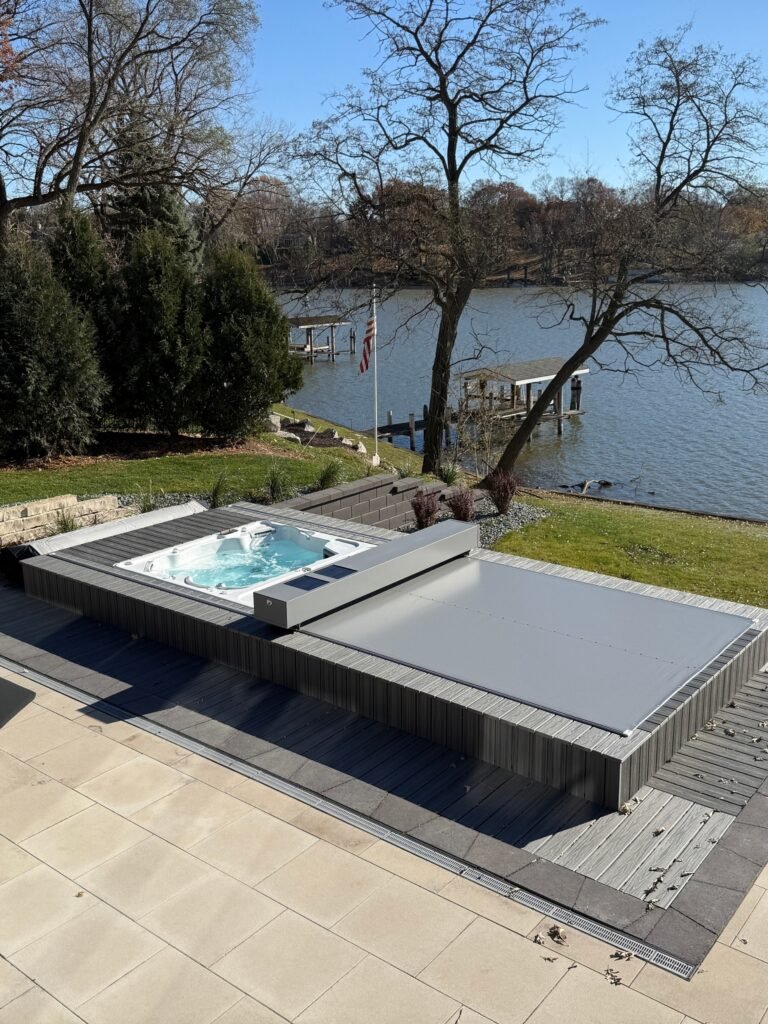
Option 1 – Automatic Safety Cover: Best for Daily Safety, Heat, and Convenience
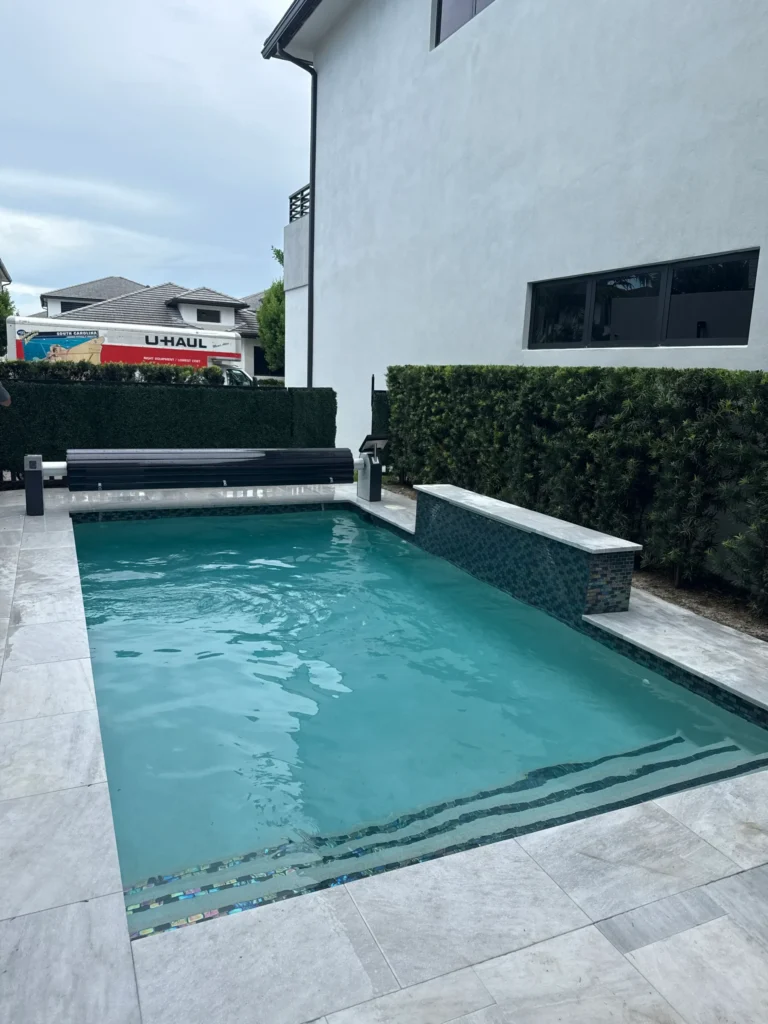
An automatic safety pool cover is often the best option when the buyer wants a clean, low-profile, daily-use solution for a spa, plunge pool, or compact heated pool.
For spas and plunge pools, ease of use matters. If a cover can be closed quickly, the owner is more likely to use it after short sessions. That can help reduce evaporation, debris exposure, heat loss, and unnecessary maintenance friction.
Cover Dream match: Coverseal automatic safety pool cover
Cover Dream’s Coverseal automatic safety pool cover is positioned for safety-oriented automatic closure, everyday convenience, water quality, insulation, and design refinement.
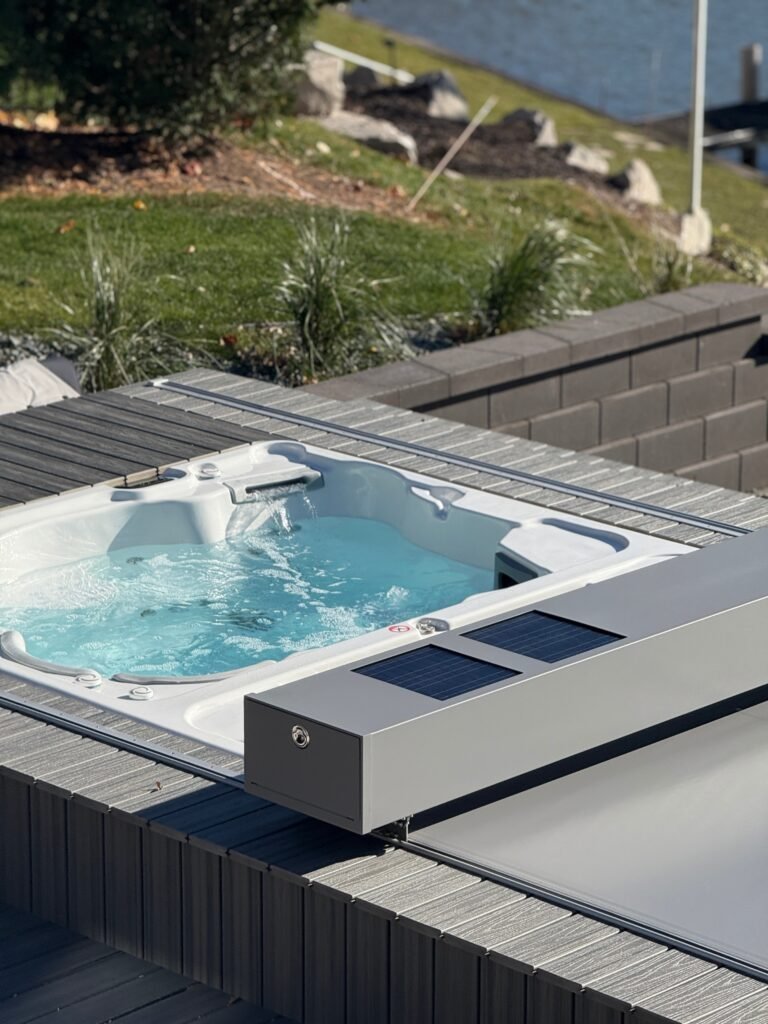
Cover Dream states that Coverseal can be operated by wired or wireless control, can uncover or secure a pool in under a minute, and uses solar-powered batteries built into the casing. The page also states that Coverseal supports the weight of individuals, including children and pets, and meets safety standards including ASTM F1346.
For water quality and heat retention, Cover Dream states that Coverseal helps keep debris and leaves away, reduces photosynthesis and algae build-up, supports more stable pH indicators, reduces cleaning and maintenance interventions, stabilizes water temperature, and greatly reduces water evaporation.
Best-fit cases
Coverseal is worth evaluating when:
- Daily opening and closing convenience matters.
- The buyer wants a safety-oriented cover system.
- The spa or plunge pool is close to a patio, seating area, or home entrance.
- Heat retention and evaporation reduction are important.
- The owner wants a low-profile cover rather than a visible enclosure.
Watchouts
An automatic safety cover is not the same as a patio deck. It covers and protects the pool surface, but it does not turn the pool footprint into usable furniture space like a sliding deck cover.
For safety, always verify the manufacturer’s instructions, installation requirements, operating rules, and whether the system is appropriate for the specific spa, plunge pool, or swim spa design.
Spa Cover Made Easier
For spa and plunge pool owners prioritizing safety-oriented closure, heat retention, reduced evaporation, and everyday convenience, Coverseal™ is the first premium option to evaluate.
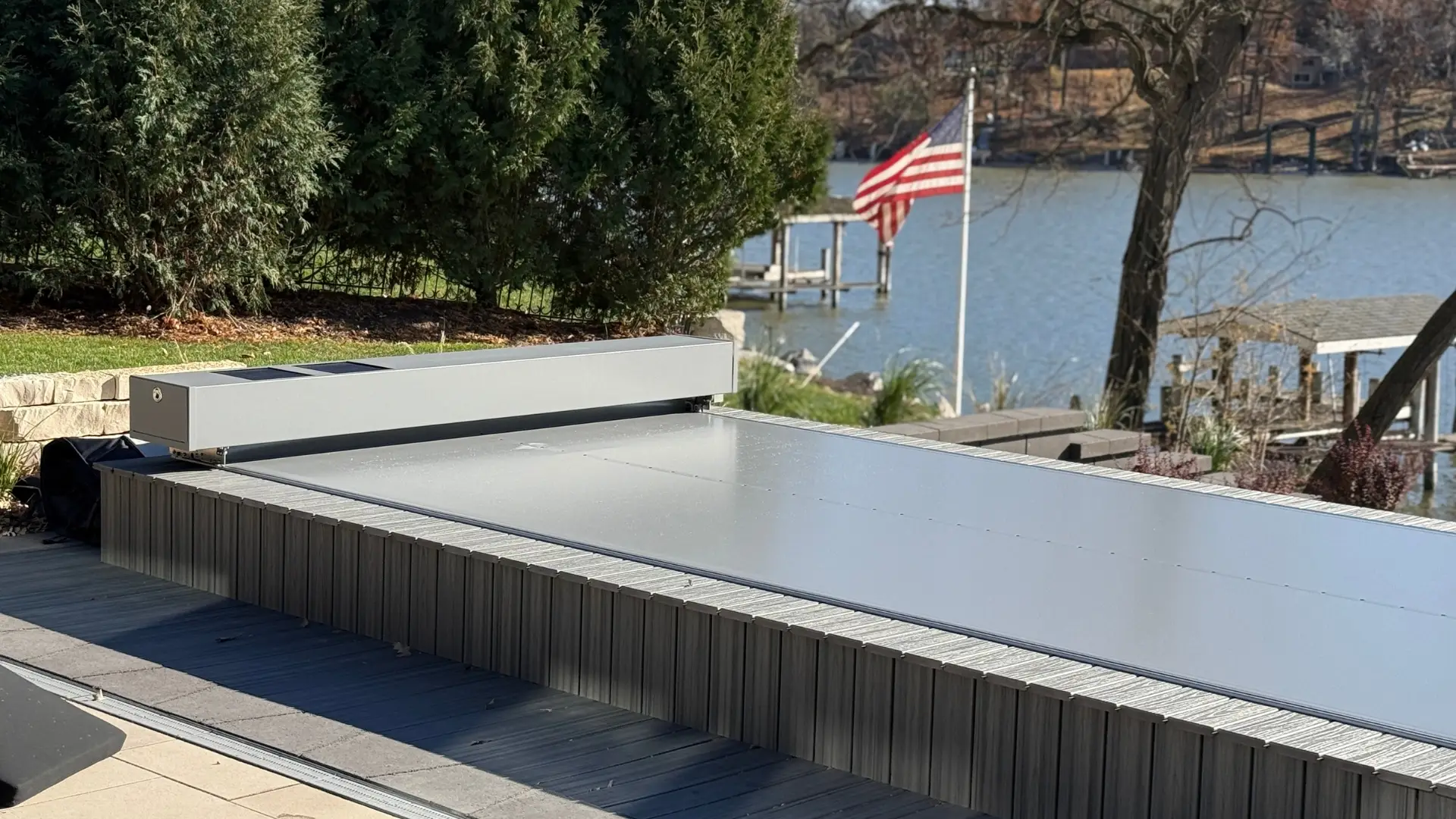
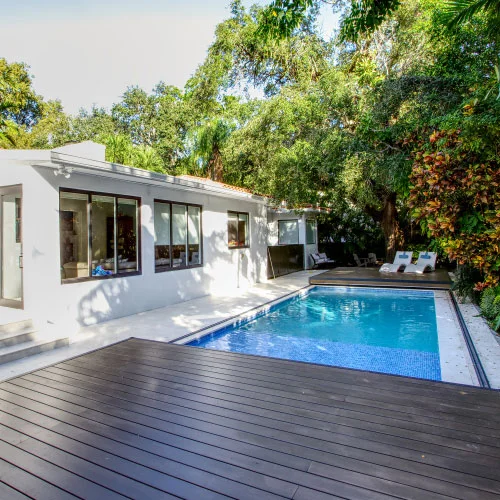
Option 2 – Sliding Deck Cover: Best for Plunge Pools and Space-Saving Spa Areas
A sliding deck pool cover is especially relevant for plunge pools, swim spas, and compact outdoor areas where space is limited.
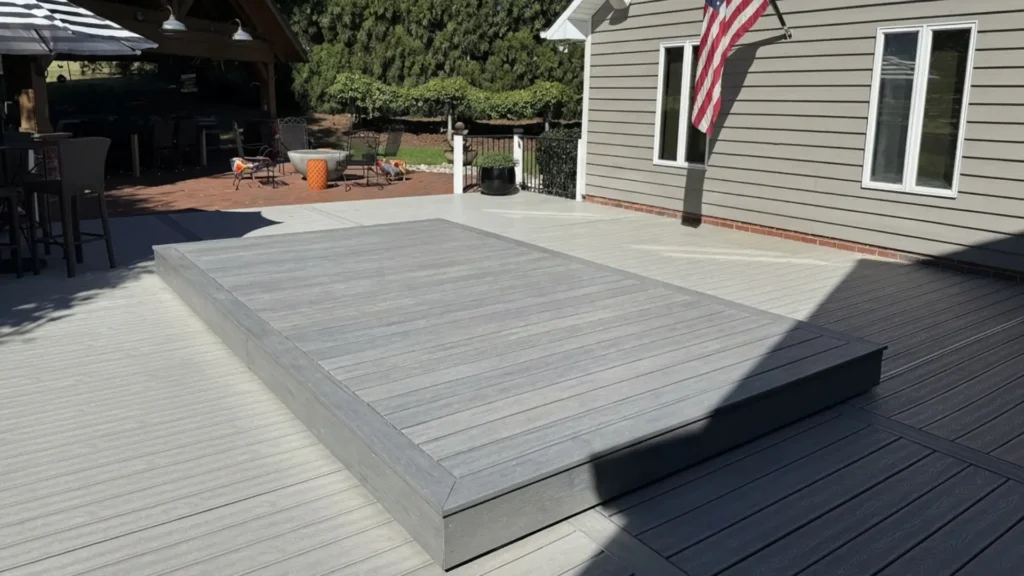
Instead of only covering the water, a sliding deck cover can help the pool footprint function as usable deck or patio space when closed. That can be valuable in small backyards, courtyards, rooftop spaces, and modern outdoor living areas where every square foot matters.
Cover Dream match: S-LIDE sliding deck pool cover
Cover Dream’s S-LIDE sliding deck pool cover is described as a two-in-one sliding pool cover, patio, and deck solution that makes the most of pool-area square footage.
Cover Dream states that S-LIDE supports high loads, can accommodate patio furniture, and can turn the pool into deck space for children, pets, and entertaining guests. The page also states that the motorized pool deck retracts at the push of a button and is available in various layouts to suit nearly any pool.
For spa and swim spa projects, S-LIDE is especially relevant because Cover Dream lists an insulated panel option with 7.8 R-value EPS panels, described as ideal for in-ground spas and swim spas.
Best-fit cases
S-LIDE is worth evaluating when:
- The plunge pool or spa takes up valuable patio space.
- The buyer wants pool-to-patio functionality.
- The project needs a premium space-saving solution.
- The buyer wants a deck surface that can support patio use.
- The space needs to work for entertaining when the pool is closed.
Watchouts
S-LIDE is a structural system, not a basic cover. It requires planning for deck movement, layout, surrounding surfaces, load expectations, and furniture placement. Buyers should confirm the movement path, approved furniture use, surface finish, and installation requirements before finalizing the design.
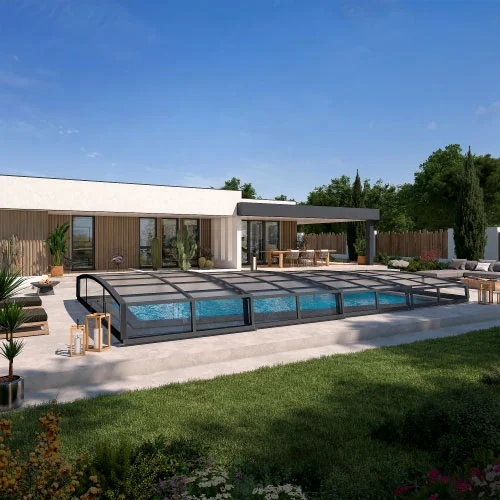
Option 3 – Retractable Pool Enclosure: Best for Comfort, Weather, and Debris Control
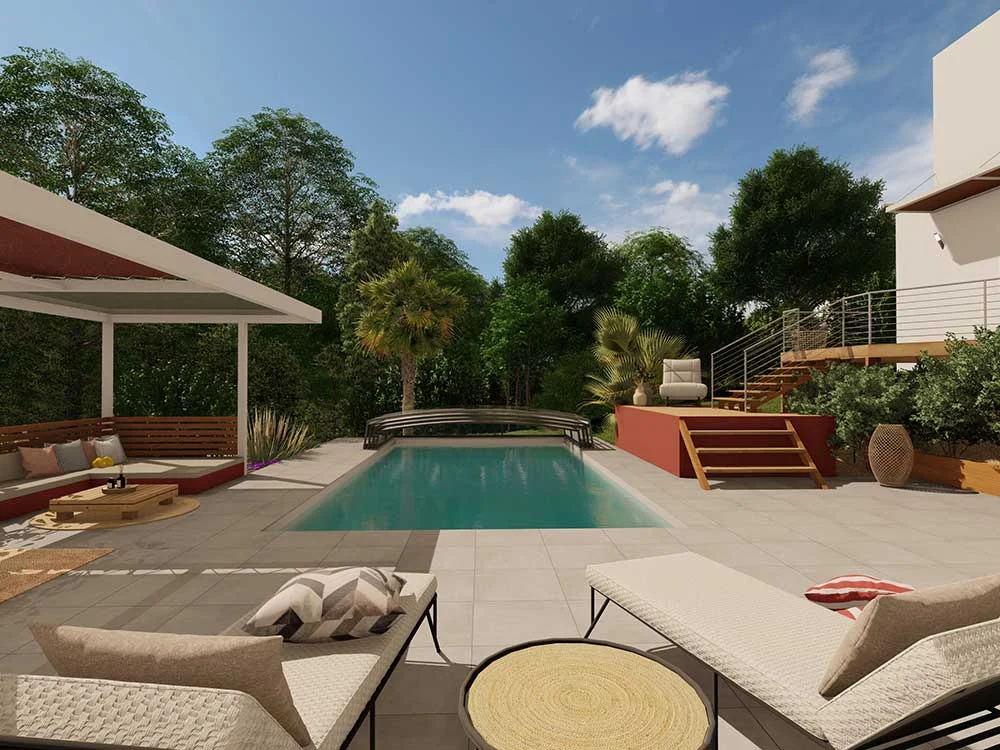
A retractable pool enclosure can be a strong option when the goal is not only covering the water surface but protecting the pool environment.
For spas and plunge pools, this can be useful when comfort, weather exposure, wind, leaves, and cleanliness are major concerns. Instead of simply placing a cover over the water, an enclosure can create a more protected zone around the pool.
Cover Dream match: N-CLOSURE retractable pool enclosure
Cover Dream’s N-CLOSURE retractable pool enclosure is described as a telescopic pool enclosure that can fully cover or uncover the pool one module at a time or all together.
Cover Dream states that N-CLOSURE can be handled easily by one person, uses a solar-powered motor, and protects the pool from weather and debris. The page also describes benefits related to ventilation, cleanliness, comfort, and durability.
For temperature support, Cover Dream states that its polycarbonate panels retain heat to naturally raise water temperature by 12.6°F, helping maintain a more comfortable swimming environment.
Best-fit cases
N-CLOSURE is worth evaluating when:
- The spa or plunge pool is exposed to wind, leaves, or weather.
- The owner wants a protected swimming environment.
- Comfort and cleanliness matter more than reclaiming deck surface.
- A visible enclosure fits the design style.
- The pool area is used across variable weather conditions.
Watchouts
A retractable enclosure is more visually present than a low-profile cover. It also requires space for enclosure modules, movement, and integration with the surrounding deck or landscape. In highly minimalist outdoor spaces, some buyers may prefer an automatic safety cover or sliding deck instead.
What About Basic Spa Covers, Solar Blankets, and Seasonal Covers?
Basic spa covers, thermal covers, solar blankets, and seasonal covers can be useful, but they should be understood clearly.
They may be appropriate when:
- The buyer wants a lower-cost option.
- The main goal is basic heat retention.
- The cover is used manually and consistently.
- The pool or spa does not require premium design integration.
- Safety-oriented performance is not the main purchase driver.
However, basic covers may have limitations:
- They are often manual.
- They may be harder to handle every day.
- They may not integrate visually with a luxury outdoor space.
- They may not create usable deck space.
- They may not offer the same safety-oriented closure as a system designed for that purpose.
- They may not protect the pool environment like an enclosure.
For a high-end spa, swim spa, or plunge pool, the question is not only whether the cover retains heat. The question is whether the owner will actually use it after every session.
Heat Retention, Evaporation, and Energy: What the Evidence Says
Heat retention matters because spas and plunge pools are often heated, used for short sessions, and expected to be ready when the owner wants them.
The U.S. Department of Energy explains that pool covers minimize evaporation and that covering a pool when it is not in use is the single most effective way to reduce pool heating costs. DOE also notes that savings of 50%–70% are possible depending on conditions: DOE Swimming Pool Covers.
EPA WaterSense states that pool covers can prevent up to 95% of pool water evaporation and may reduce cleaning requirements and chemical use when used consistently and appropriately: EPA Pool Water Efficiency.
For spas and plunge pools, those principles are especially relevant because heated water loses value quickly when left exposed. Wind, dry air, temperature difference, and water movement can all increase evaporation and heat loss.
Actual results depend on:
- Cover type
- Cover fit
- Climate
- Wind exposure
- Water temperature
- Heating habits
- How often the cover is used
- Whether the spa or plunge pool is indoors, outdoors, sheltered, or exposed
A cover can only reduce evaporation and heat loss when it is closed. Ease of use is therefore not a luxury feature. It is part of real-world performance.
Safety Considerations for Spa and Plunge Pool Covers
Safety should be discussed carefully. No cover eliminates all risk, and a cover should not replace supervision, secure access, code compliance, or responsible pool ownership.
For safety-cover terminology, ASTM F1346 is the key reference. The standard covers safety covers and labeling requirements for swimming pools, spas, and hot tubs: ASTM F1346.
When discussing safety, use careful wording:
- A safety cover may be intended to reduce risk when correctly installed and used according to manufacturer instructions.
- The system should be evaluated for the specific pool, spa, or hot tub.
- Users should follow manufacturer guidance for opening, closing, maintenance, inspection, and operation.
- Children and pets still require supervision around water.
- Local codes and site-specific safety requirements should be reviewed by qualified professionals.
For spa and plunge pool buyers, safety is often a major concern because these pools are frequently located close to outdoor living spaces, doors, patios, and seating areas. A cover that is easy to close after use can support safer daily habits.
How to Choose Based on Your Main Goal
Use this recommendation matrix to narrow the decision before requesting a quote.
Main goal | Best option to evaluate first | Why |
Heat retention + daily closure | Supports fast automatic closure, water quality, temperature stability, and evaporation reduction | |
Compact space + deck use | Turns the pool footprint into usable deck/patio space and offers insulated panel options for in-ground spas and swim spas | |
Comfort + debris/weather protection | Covers the pool environment and supports comfort, cleanliness, and weather/debris protection | |
Low-cost basic heat help | Thermal, solar, or seasonal cover | May help with heat retention and evaporation but can be manual and less design-integrated |
The best spa pool cover choice is the one that matches the daily use pattern. A cover that is technically effective but inconvenient may not deliver the expected results.
Quote Checklist – What to Share Before Choosing a Spa or Plunge Pool Cover
Before requesting a quote, prepare the following information.
Pool or spa details
- Spa, swim spa, or plunge pool dimensions
- Pool shape
- Water depth
- In-ground, above-ground, or integrated design
- Raised spa, flush-edge spa, or attached spa details
- New build or retrofit status
Heating and use details
- Heated or unheated
- Target water temperature
- Usage frequency
- Typical session length
- Season of use
- Whether the pool is used for relaxation, therapy, exercise, or entertaining
Site and layout details
- Deck or patio space
- Distance to walls, doors, seating, landscaping, or outdoor kitchens
- Sun exposure
- Wind exposure
- Debris sources such as trees, dust, or nearby landscaping
- Drainage conditions
- Available movement path if considering a sliding deck
Safety and operation priorities
- Children or pets in the home
- Desired operation method
- Low-profile vs enclosure preference
- Furniture use over a sliding deck
- Comfort/weather protection needs
- Maintenance expectations
Supporting materials
- Photos from multiple angles
- Design drawings or pool plans
- Equipment location
- Electrical access
- Preferred cover type
- Budget range and timeline
A better quote starts with a clearer goal. Tell the project team whether your main concern is heat retention, safety-oriented closure, daily convenience, space, debris, or weather protection.
Conclusion – Choose the Cover You Will Actually Use
Spa and plunge pools need a cover strategy that reflects how they are used. Heat retention matters because these pools are often warm. Safety-oriented closure matters because they are often close to living spaces. Ease of use matters because many owners use them frequently for short sessions.
If your priority is daily closure, safety-oriented coverage, water quality, heat retention, and reduced evaporation, compare Coverseal automatic safety pool cover.
If your priority is compact-space design, pool-to-patio functionality, high-load deck use, and an insulated panel option for in-ground spas or swim spas, compare S-LIDE sliding deck pool cover.
If your priority is comfort, debris control, weather protection, and a covered swimming environment, compare N-CLOSURE retractable pool enclosure.
A restrained next step is to request a quote and provide dimensions, photos, heating goals, safety priorities, site conditions, and your preferred cover type.
FAQs
The best spa pool cover depends on the main goal. For daily automatic closure, safety-oriented coverage, and heat retention, an automatic safety cover may be the strongest option. For compact spaces, a sliding deck may be better. For comfort and debris protection, consider an enclosure.
For a plunge pool, the best cover depends on space and use. A sliding deck cover can turn the pool into patio space when closed. An automatic safety cover can support daily closure. A retractable enclosure can help with comfort, debris, and weather protection.
Yes. Pool covers help retain heat mainly by reducing evaporation. DOE states that covering a pool when it is not in use is the single most effective way to reduce pool heating costs, with possible savings of 50%–70% depending on conditions.
Automatic and motorized systems are often easier to use daily than manual covers. Coverseal can uncover or secure a pool in under a minute, S-LIDE retracts at the push of a button, and N-CLOSURE uses a telescopic design with easy handling.
It can be a strong option when the buyer wants low-profile, safety-oriented, daily coverage. Cover Dream’s Coverseal automatic safety pool cover is positioned around fast operation, water quality, insulation, temperature stability, and reduced evaporation.
Yes, a sliding deck cover can be especially useful for plunge pools in compact spaces. Cover Dream’s S-LIDE turns the pool area into usable deck space, supports high loads, can accommodate patio furniture, and offers insulated panel options for in-ground spas and swim spas.
Yes, a retractable enclosure can work when the buyer wants a protected pool environment. Cover Dream’s N-CLOSURE can cover or uncover the pool by module or fully and is positioned for weather/debris protection, cleanliness, comfort, and temperature support.
Basic spa covers can help with heat retention if they fit properly and are used consistently. However, they may be manual, less design-integrated, less convenient, and not always safety-oriented. Premium systems may be better when daily ease of use matters.
Ask about heat retention, evaporation reduction, safety-cover standards, daily operation, maintenance, cover fit, weather exposure, debris control, installation requirements, and whether the system is appropriate for your spa, plunge pool, or swim spa design.
Start with your main goal. For daily closure, heat retention, and safety-oriented coverage, compare Coverseal. For compact-space deck use and plunge pool patio functionality, compare S-LIDE. For comfort, debris, weather, and enclosure benefits, compare N-CLOSURE.
