

Automatic Pool Cover Replacement: 7 Signs & Costs
Automatic pool cover replacement is worth considering when damage is widespread, compatible parts are unavailable, or repairs no longer restore reliable closure. A tear, uneven travel, or drainage change calls for an installer assessment; it does not prove the entire system has failed. The choice is to repair a confirmed fault, replace a compatible membrane, or install a new system.
Who this guide is for
- Owners noticing damage or abnormal operation.
- Homeowners comparing repair, membrane replacement, and a new system.
- Buyers considering COVERSEAL for an existing pool.
What Are the 7 Signs Your Automatic Pool Cover Needs Assessment?
These visible changes prompt inspection, not an automatic replacement decision. Stop operating a damaged or abnormally moving cover and contact your installer.
What you notice | Why it deserves attention | What to do next |
1. A tear, hole, or worn membrane area | Damage can spread or affect intended coverage. | Photograph it; ask about an approved repair or replacement. |
2. A change in tension or fit | New sagging or wrinkles need an explanation. | Compare earlier photos; request an inspection. |
3. Gaps or incomplete closure | The pool may no longer be covered as intended. | Restrict access and contact the installer. |
4. Damage or movement at tracks, mounts, or housing | Supporting parts or their attachment may be affected. | Stay clear; document what is visible. |
5. Uneven or jerky travel | An obstruction or system fault may be involved. | Stop operation; note where movement changed. |
6. Repeated stopping or a new scraping or grinding noise | The operating path needs investigation. | Do not keep cycling the cover; call the installer. |
7. Water buildup or changed drainage | Water level or the installed drainage arrangement may need review. | Follow the model’s instructions and seek guidance. |
This grouping follows our automatic pool cover maintenance guide, not manufacturer-defined replacement criteria. If closure is incomplete, maintain other barriers and supervision, as advised by CPSC Pool Safely. Record when the change appeared without operating the cover to recreate it.
Should You Repair the Cover, Replace the Membrane, or Install a New System?
First identify the fault and assess components that would remain.
Option | When it may make sense | What the installer must confirm |
Repair a specific fault | Damage is localized and an approved fix is available. | The remaining system can operate and close as intended. |
Replace the membrane | Fabric is broadly worn but compatible components remain suitable. | Model-compatible material, attachments, and completed safety-related checks. |
Install a new system | Repair is impractical, parts are unavailable, or your goals changed. | A new site assessment, scope, product documentation, and quote. |
Recurring repairs, unavailable parts, and downtime can favor a new system. A functioning cover may also no longer meet your preferences for operation or appearance; that is an upgrade choice, not mechanical failure.
Does the Membrane Need Repair or Replacement?
A small tear and widespread deterioration present different decisions. The installer reviews location, extent, attachments, closure, and approved repair options. Do not patch the cover or adjust tension yourself.
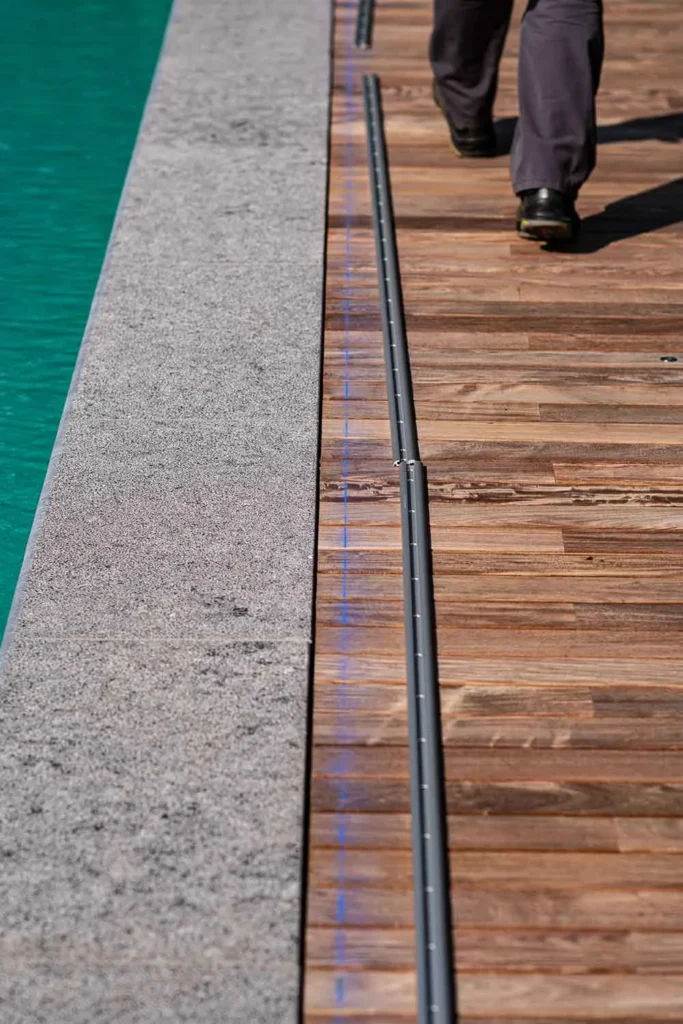
Coverseal’s FAQ notes that slight discoloration can occur with UV exposure; color change alone does not establish structural failure. Its membrane-life guidance estimates replacement after roughly 10–12 years, depending on climate, conditions, use, and maintenance. That is not a guarantee, a required replacement date, or the lifespan of an entire system. It also stresses cleaning abrasive particles from rails because they can accelerate wear.
Ask how the proposed work will be checked. Newer-looking fabric does not establish that the tracks or mounting are sound.
Could an Operating Fault Be Repaired Without Replacing the Cover?
Yes, depending on the confirmed fault and available parts. Uneven movement, noise, or repeated stopping cannot identify a failed motor or belt alone. Report the symptom and stop. Do not force, repeatedly cycle, override, or attempt electrical or mechanism work.
The installer should review the applicable manual, operating path, controls, and installation. Request written findings and checks. If faults recur, compare cumulative work and downtime against replacement options.
Can You Replace the Membrane Without Replacing the Whole System?
Sometimes. The technician must identify the model, confirm compatible material and attachments, and assess tracks, housing, mechanism, controls, mounting, drainage, and closure. Similar dimensions do not make another brand’s membrane compatible.
Confirm measurement, removal, installation, testing, and documentation in the quote. ASTM F1346 addresses safety-cover performance and labeling; new fabric alone does not prove compliance. See our ASTM F1346 guide.

What Does an Installer Inspect Before Recommending Replacement?
Share the brand and model, installation date, service history, and photos. The technician should use the applicable manual; Coverseal’s document library lists its user documents.
Ask for a review of:
- Membrane wear, attachment points, fit, and complete closed position.
- Tracks, housing, mounting points, and the condition of the deck or coping.
- Normal operating path, controls, movement, and sounds.
- Drainage, required water level, and any obstructions.
- Prior repairs, compatible parts, and service access.
Ask for written findings rather than approving replacement from a photo or symptom alone.
How Much Does Automatic Pool Cover Replacement Cost?
Repair, membrane replacement, and a complete new system have different costs. Ask for separate written options when appropriate.
Quote item | Confirm what is included, excluded, or provisional |
Parts or new system | Model compatibility, components, controls, and selected configuration. |
Measurement and labor | Site verification, fitting, and required trade work. |
Removal and disposal | Old membrane, hardware, housing, and waste handling. |
Deck, mounting, and drainage | Repairs or changes needed for the chosen solution. |
Power and other trades | Configuration-specific work and who arranges it. |
Delivery and handover | Transport, testing, documents, and owner instruction. |
Cover Dream’s automatic pool cover cost guide offers broad U.S. budgeting context for new systems: many projects start around 15,000–25,000, and some premium custom projects reach $30,000. Those figures are not a COVERSEAL quote and cannot be applied to a repair or membrane-only job. The actual proposal depends on the pool, site work, configuration, and what removal is required.
Compare retained parts, possible follow-up work, service arrangements, and final checks—not just the first quoted total.
Repair, Replace, or Upgrade Your Pool Cover?
If your automatic pool cover is showing wear, uneven movement, incomplete closure, or recurring faults, the next step should be an assessment—not an assumption. Cover Dream can review your pool, deck, existing system, and replacement goals to determine whether a repair, compatible membrane replacement, or new COVERSEAL™ system makes the most sense.
When Should You Consider a New COVERSEAL System?
Consider a new system if repair is impractical, parts are unavailable, or your goals have changed. Treat it as a fresh installation; do not assume old rails or controls can be reused.
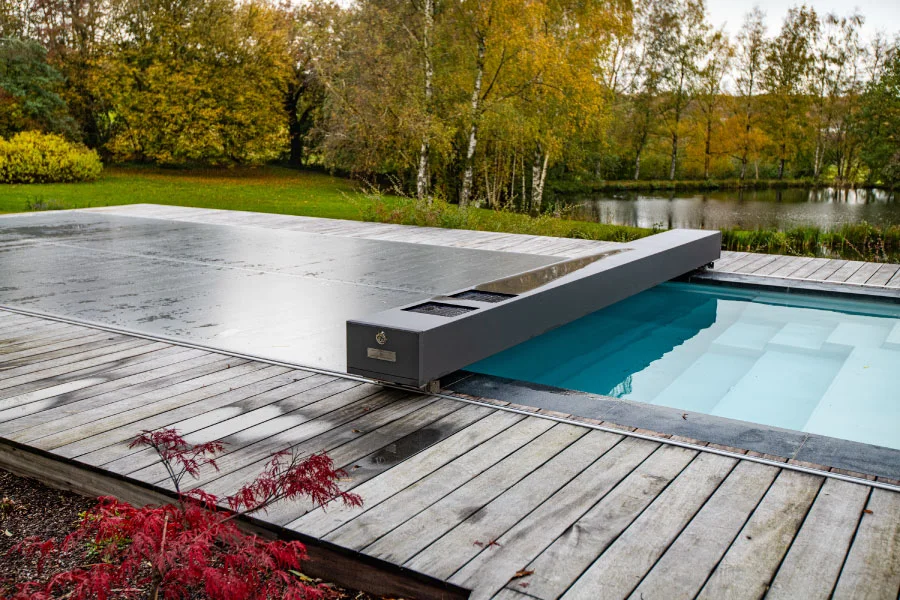
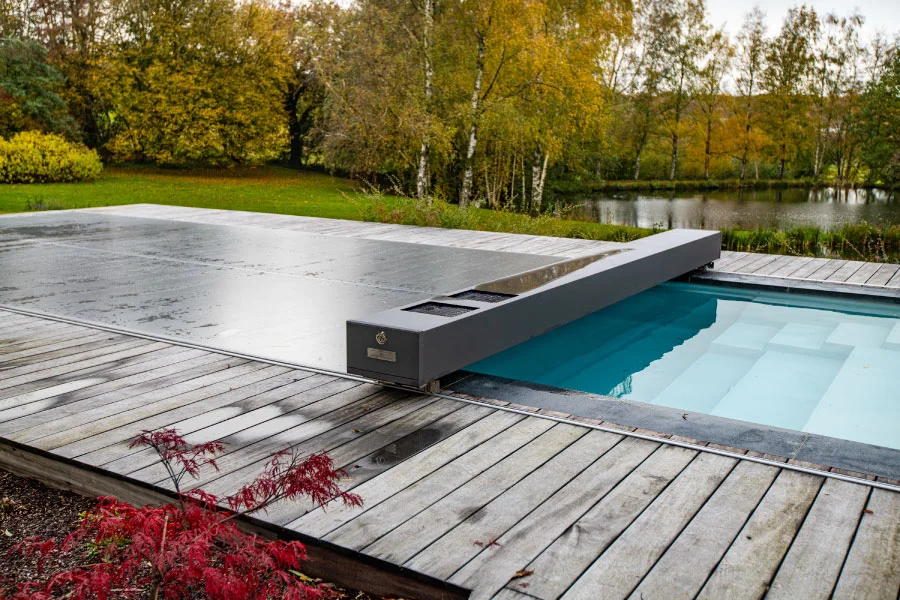
The COVERSEAL automatic safety pool cover combines deck-mounted top tracks, automatic operation, a taut pre-stressed PVC membrane, and integrated rainwater drainage. Cover Dream identifies this product as ASTM F1346 compliant. Its membrane and housing finishes can also be selected to suit the pool setting. These are COVERSEAL-specific features; an older cover or a partially replaced system does not inherit that claim.
An installer must assess pool geometry; deck and coping construction; flatness, slope, and anchoring stability; obstacles; housing clearance; access for installation and future service; and the old system’s removal. The manufacturer flags concave supports and inward slopes as potential installation obstacles in its FAQ. Our complex-pool guide explains why unusual shapes require an individual layout. No deck material or pool shape guarantees compatibility.
COVERSEAL power requirements depend on the selected configuration and installation environment. Outdoor automatic systems typically use solar-charged batteries, while indoor installations may require a dedicated electrical arrangement depending on the model. Confirm the selected configuration and any applicable electrical or bonding requirements during the project assessment.
The Kentucky Blue Cover project shows a retrofit from a basic solar cover to COVERSEAL. It is not a like-for-like automatic-cover replacement.
What Should You Ask Before Approving a Quote?
- What issue did the inspection confirm?
- Can the fault be repaired, or is a compatible membrane available?
- Which components will be retained, replaced, or removed?
- What is included, excluded, or provisional?
- Who removes and disposes of the old material or system?
- Will deck, drainage, access, mounting, or power work be needed?
- What safety and product documentation applies after the work?
- How will operation and closure be demonstrated?
- Whom should you contact for future service?
Considering a New COVERSEAL™?
Request a project-specific quote and share your pool dimensions and shape, photos of the pool and deck, location, deck condition, current cover brand and model, observed issue, access constraints, and project timeline. These details help Cover Dream evaluate whether a new COVERSEAL™ system may be appropriate for your pool.
Request a Project-Specific Quote
FAQs
We would not apply one deadline to every product. Coverseal estimates roughly 10–12 years for its membrane, depending on climate, use, and maintenance. Ask your installer to assess your cover’s condition; this is neither a guarantee nor the lifespan of the complete system.
We recommend stopping operation and asking your installer to assess the tear, its location, and nearby attachments. A manufacturer-approved local repair may be possible, while wider damage may justify a compatible membrane. Do not assume a DIY patch restores safety performance.
We suggest confirming your installed model and compatible options first. The technician should inspect the tracks, mechanism, attachments, mounting, and closure. Membrane-only replacement may be appropriate when the remaining components are suitable and the completed system can be checked and documented.
No. We would not diagnose a motor from uneven travel alone. Stop operating the cover, note when the movement changed, and contact your installer. An obstruction or another component could be involved, and repeated cycling may make the problem worse.
We would not assume it provides its intended protection until the damage has been assessed. Keep the pool secured with other barriers and supervision. Ask your installer which repair, replacement, testing, and documentation are needed before relying on the cover again.
We recommend an itemized quote after inspection. A repair, compatible membrane, and complete new system involve different parts and labor. Confirm removal, site work, delivery, and testing. A broad new-system budget cannot establish the price of your specific repair or membrane replacement.
We can consider COVERSEAL as a new deck-mounted installation if your site is suitable. The installer must assess geometry, deck stability, slope, obstacles, housing space, and configuration. Do not assume your old tracks can be reused or every existing pool qualifies.
We recommend stopping attempts to operate it and contacting the installer. Do not force the membrane or use an unfamiliar override. Restrict access to the pool and maintain other safety barriers and supervision until a professional identifies the problem and confirms proper closure.
The right decision follows the installed system’s condition, compatible repair options, and your goals. Assess a new COVERSEAL against the pool, deck, and complete project scope.
