

Automatic Pool Cover Installation: What Should You Expect?
Installing an automatic pool cover typically involves four stages: assessing your pool and deck, confirming the cover layout, preparing the site, and installing and testing the system. For an existing pool, the biggest question is usually whether the surrounding deck provides a suitable route and mounting surface for the tracks.
COVERSEAL uses a deck-mounted track system, so it can be considered for many existing pools without designing a recessed cover vault into the original pool structure. However, deck condition, slope, pool geometry, obstacles, and operating space must be checked before a system can be specified.
This guide covers site checks, the installation process, cost, timing, and quote questions.
Who this guide is for
- Homeowners planning a new pool and cover together.
- Owners considering an automatic cover for an existing pool.
- Buyers comparing installation proposals and responsibilities.
Can an Automatic Pool Cover Be Added to an Existing Pool?
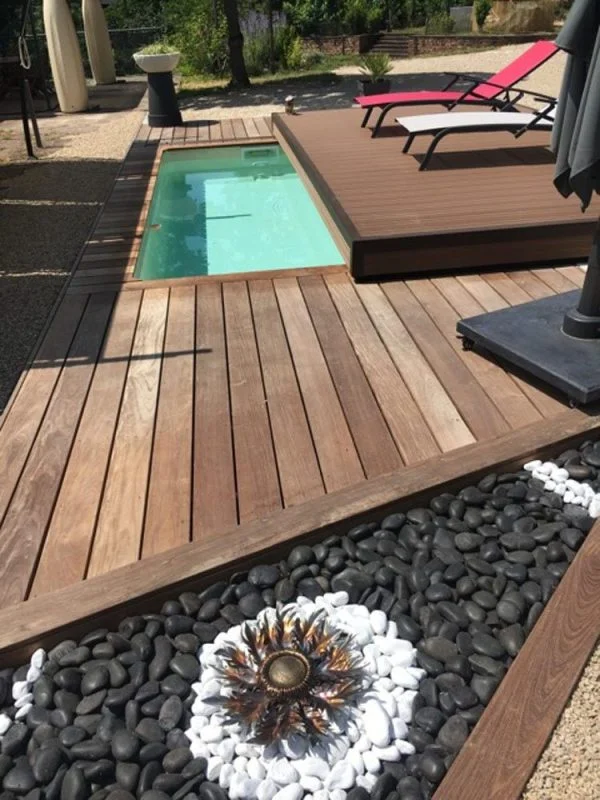
Often, yes. A retrofit depends on the surrounding surface as well as pool shape: tracks and housing need an approved operating path.
The main factors are deck stability and condition; slope and flatness; coping configuration; ladders, spas, and raised features; nearby landscaping or structures; room for the housing; and access for installation and future servicing.
The Coverseal manufacturer’s FAQ flags concave supports, inward slopes, and certain unsuitable mounting surfaces. Cover Dream’s guide to freeform and complex pools excludes vanishing-edge or infinity-edge pools from its current range.
These are illustrative site scenarios, not completed projects:
Existing site | What the assessment may involve |
Straight rectangular pool with stable stone decking | Usually simpler to assess for a continuous track route; the actual support still needs checking. |
Freeform pool with irregular coping and a nearby spa | More planning around track alignment, raised features, and housing position. |
Deck sloping inward or built with unstable boards | May require modification or prove unsuitable after technical review. |
Send photos and dimensions before assuming reconstruction is necessary. Final compatibility requires a project-specific assessment.
What Must Be Checked Before Installation?
COVERSEAL requires a flat, stable anchoring surface capable of supporting the forces generated by the tensioned cover. The manufacturer therefore recommends assessing the actual condition and construction of the coping or deck rather than approving an installation based solely on the surface material.
Review these factors with the installer:
Factor | Why it matters | Who confirms it |
Pool geometry and coping | Curves and elevations affect the proposed track route. | Installer and pool builder |
Flatness and slope | Concave or inward-sloping surfaces may prevent installation. | Installer and deck professional |
Stability and track anchoring | The substrate must support secure rails without movement. | Installer and construction professional |
Physical obstacles | Spas, ladders, steps, and landscaping may interrupt travel. | Installer and pool builder |
Housing clearance and service access | The mechanism needs an approved position and future maintenance access. | Installer and homeowner |
Drainage and water level | Both must suit the pool and the selected cover. | Installer and pool professional |
Grounding and bonding | Site-specific requirements may apply. | Electrician and local authority |
Delivery access and power configuration | These affect preparation, trades, and scope. | Installation team and electrician |
Show any required preparation on the approved layout and itemized quote.
How Is an Automatic Pool Cover Installed?
The project has six professional stages. The exact fitting method must follow the applicable model instructions.
1. Survey and measurement
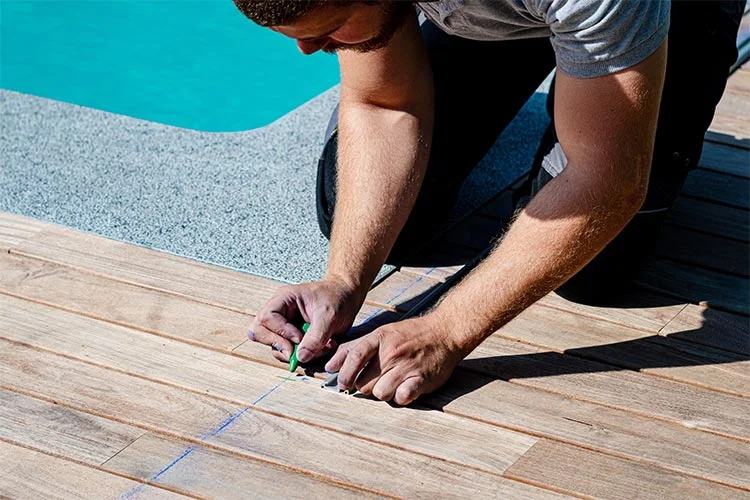
The installer records dimensions, elevations, mounting surfaces, access, and features that could obstruct travel. The survey should establish where the tracks and housing can fit and what preparation may be needed.
2. Confirm the layout and itemized quote
Review the track and housing positions, finishes, controls, preparation, exclusions, and each party’s responsibilities. Agree on the visible result before site work begins.
3. Coordinate site preparation
Complete approved support work and arrange access or other trades. Keep the pool area secured. If deck or coping details change, have the installer review the proposed layout again.
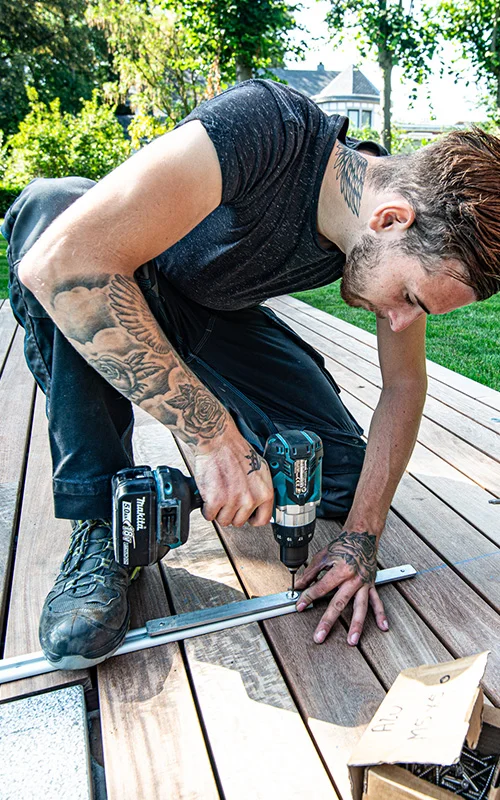
4. Install according to the applicable manual
Qualified personnel fit the specified components under the instructions for that model. The manufacturer’s document library is a starting point; obtain the applicable U.S. installation and owner instructions through the installer. Generic online instructions cannot establish fastening or electrical specifications for your site.
5. Test operation, closure, and safety functions
Ask the installer to demonstrate normal travel, complete closure, controls, and applicable safety functions. Have interference or incomplete closure resolved before accepting the system for use.
6. Complete owner training and handover
Learn how to operate the cover, recognize abnormal behavior, and contact the right service provider. Keep the model documentation and care instructions. Our automatic pool cover maintenance guide can help organize ongoing checks.
Before the installer leaves, confirm:
- The cover opens and closes correctly.
- Rails are clean and unobstructed.
- The membrane reaches its intended closed position.
- Controls operate normally, and the applicable safety control is demonstrated.
- Documentation is supplied and warranty registration is explained.
- A service contact is provided.
What Will the Installed System Look Like?
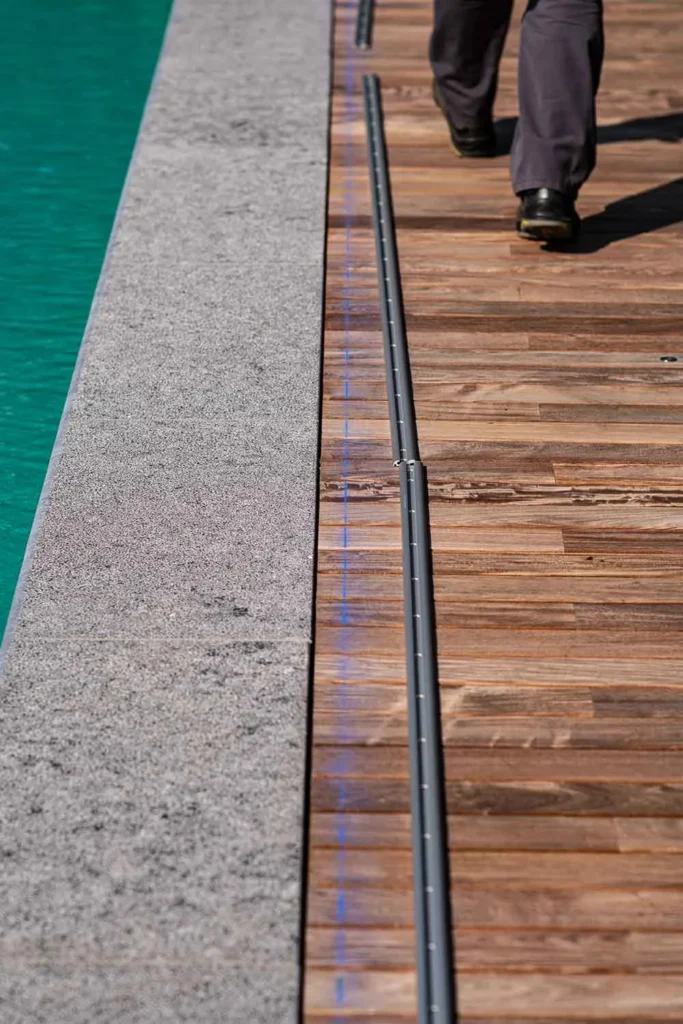
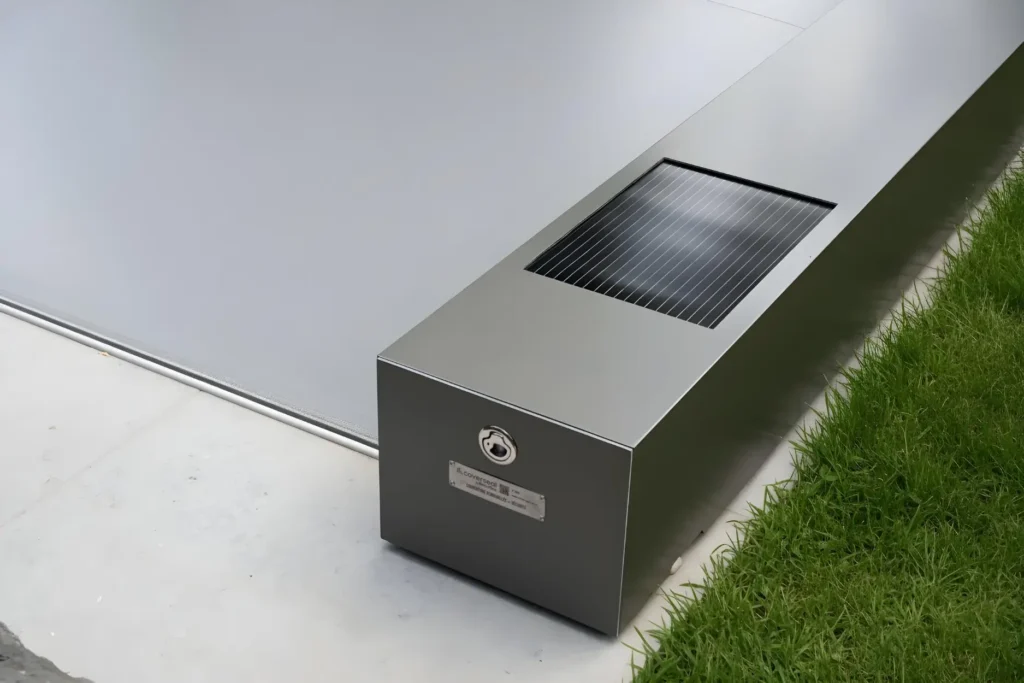
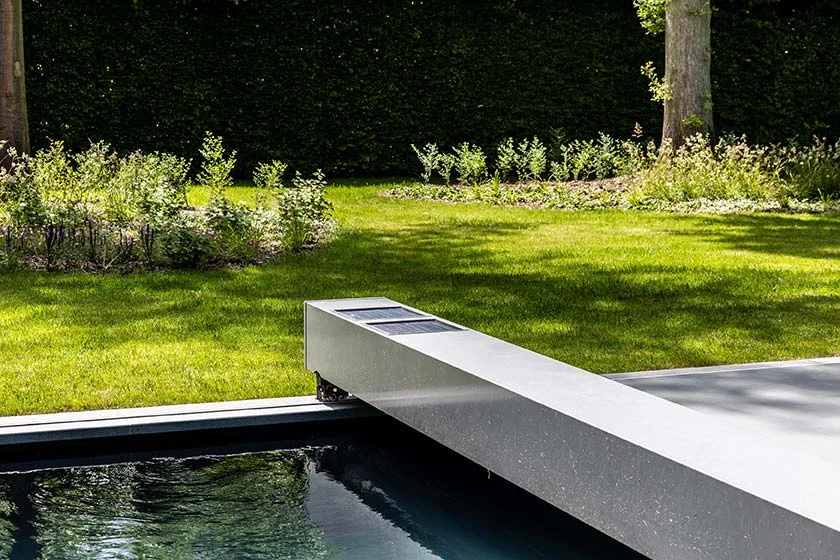
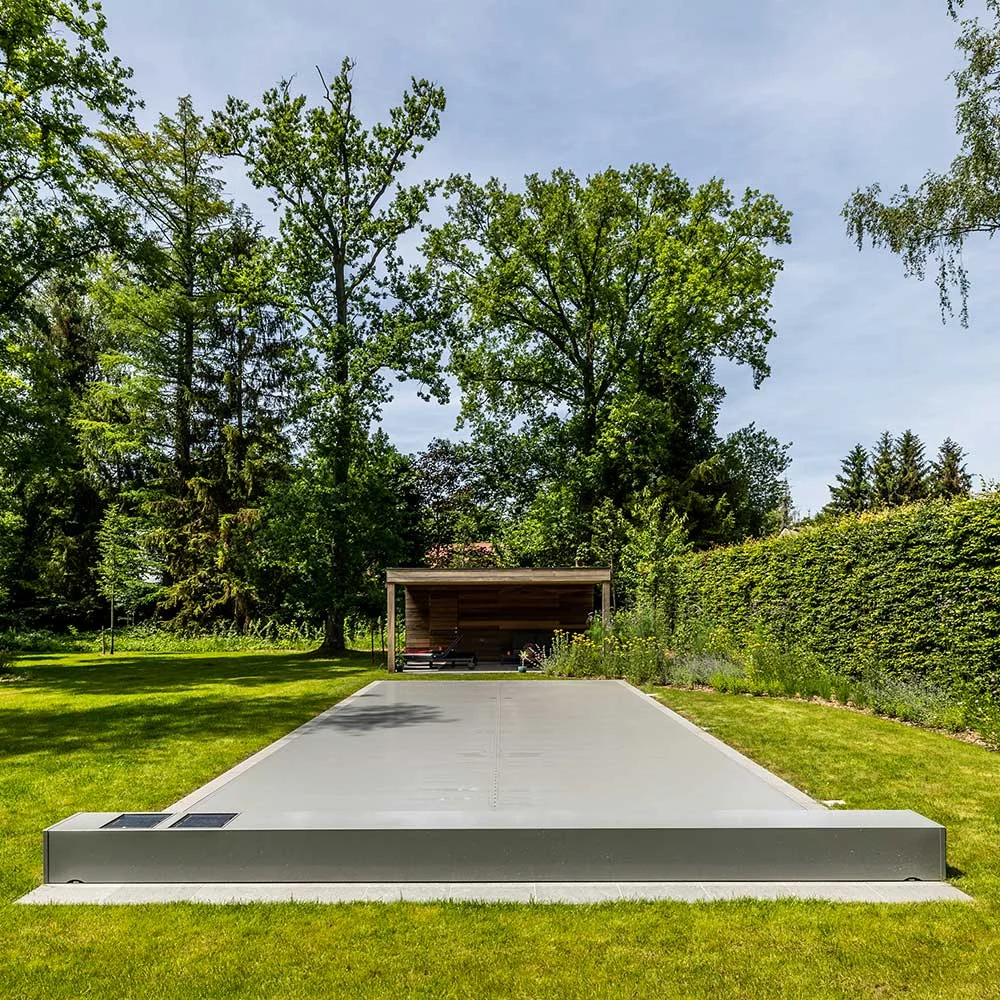
A COVERSEAL automatic safety pool cover has two deck-mounted tracks, a housing for the mechanism, and a tensioned, pre-stressed PVC membrane over the closed pool. Tracks and housing remain visible; their placement and finish depend on the approved layout. Ask for a site-specific drawing before approving their position.
Cover Dream’s COVERSEAL anatomy image illustrates the main visible components. The final layout will depend on your pool and site.
How Much Does Automatic Pool Cover Installation Cost?
Separate system price, installation labor, and total installed cost. Pool size, deck condition, finishes, access, and site preparation affect the total. A system-only amount should not be compared with an installed project quote.
Cost component | What to confirm in the proposal |
Equipment | Membrane, tracks, mechanism, housing, controls, and selected options |
Installation labor | Measurement, fitting, alignment, and included work |
Site work | Deck repairs, support preparation, or agreed alterations |
Electrical work | Requirements for the selected configuration and any separately contracted work |
Delivery and access | Transportation, handling, and access-related charges |
Fees and taxes | What applies locally and whether it is included |
Testing and handover | Operational checks, training, and documentation; confirm whether included in labor |
Mark each component included, excluded, or provisional. Do not count bundled fitting twice. Cover Dream’s automatic pool cover cost guide provides general budgeting context, but its ranges do not establish a separate COVERSEAL labor charge or a guaranteed installed total. Ask how unexpected site conditions and requested design changes will be priced and approved.
Protect Your COVERSEAL With Proper Care
Routine cleaning, visual inspections, and attention to changes in normal operation can help reduce avoidable wear. Follow the approved care guidance for your COVERSEAL system and contact your installer when movement, closure, drainage, or visible components appear abnormal.
How Long Does the Installation Process Take?
Cover Dream typically allows approximately one day for on-site fitting once the site is prepared, while manufacturing and delivery may take approximately 6–12 weeks. Actual timing depends on dimensions, finish, location, and site readiness.
Ask for separate dates for assessment, site preparation, manufacturing and delivery, fitting, testing, and handover. Confirm dependencies on other trades or local approvals. An on-site fitting estimate is not the entire project timeline.
What Safety and Local Requirements Apply?
ASTM F1346 addresses safety-cover performance and labeling. Request documentation applicable to the supplied system, and read Cover Dream’s guide to ASTM F1346 pool-cover requirements. Correct installation, operation, and maintenance remain essential.
Ask the relevant local authority and project professionals which approvals, inspections, electrical provisions, and bonding requirements apply. Solar-charged operation does not eliminate a site-specific review. A product standard does not approve an entire construction project.
CPSC Pool Safely guidance emphasizes supervision and layers of protection. Maintain required barriers and access control during and after installation. Do not walk on the cover or operate it through obstructions. Covering the pool also does not replace water testing, sanitation, or routine pool care.
How Does COVERSEAL Fit Your Project?
COVERSEAL combines deck-mounted tracks, automatic operation, a tensioned membrane, and an integrated rainwater-drainage approach. The tracks and housing must fit the approved layout and allow service access. Cover Dream identifies COVERSEAL as ASTM F1346 compliant; request documentation for the proposed system.
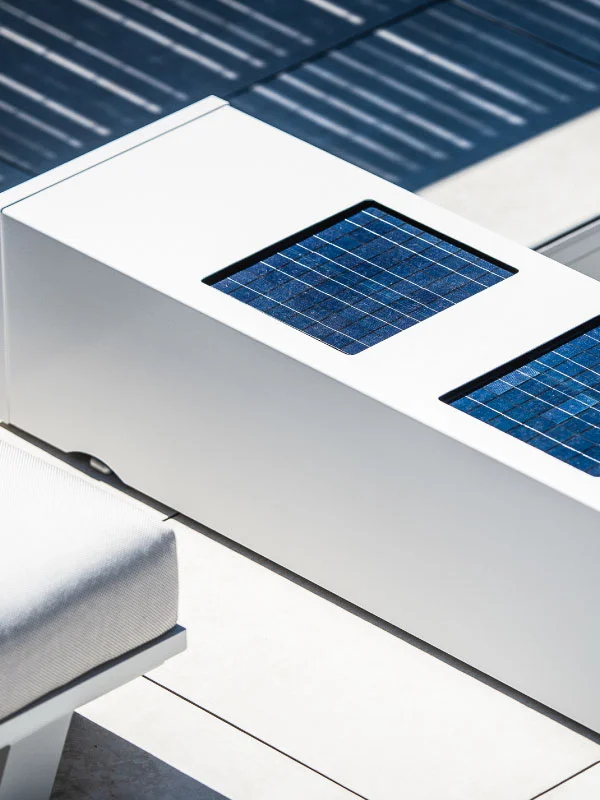
COVERSEAL power requirements depend on the selected configuration and installation environment. Outdoor automatic systems typically use solar-charged batteries, while indoor installations may require a dedicated electrical arrangement depending on the model. Confirm the selected configuration and any applicable electrical or bonding requirements during the project assessment.
Follow the selected system’s drainage instructions rather than importing accessories or installation methods from another cover type. For different goals, the N-CLOSURE pool enclosure protects the broader pool area, while the S-LIDE sliding deck pool cover creates usable space above the covered pool. Each needs its own site review and instructions; COVERSEAL’s safety claim and mounting guidance do not transfer to them.
What Should You Ask Before Accepting a Quote?
- Is my deck and coping suitable for the proposed track anchoring and slope?
- What site preparation is required, and who completes it?
- Which costs are included, excluded, or provisional?
- Where will the tracks and housing be visible, and what are the manufacturing and fitting milestones?
- Who coordinates other trades and confirms local approvals?
- What testing, training, documentation, and support contacts will I receive?
Plan around your pool. Request a COVERSEAL project quote with pool dimensions and shape, deck material and condition, photos from every side, location, new-build or retrofit status, obstacles, and desired timeline.
FAQs
Often, yes. We review your pool shape, deck construction, slope, obstacles, and room for the tracks and housing. Photos can narrow the options, but a project-specific assessment must confirm suitability before a system is specified.
We recommend an itemized quote separating the system, fitting, and site work. Your total depends on dimensions, finishes, support condition, and access. Our general cost guide is a starting point, not a COVERSEAL labor price.
We typically allow approximately one day for on-site fitting after preparation, while manufacturing and delivery may take 6–12 weeks. Ask for a project schedule that also accounts for assessment, site work, location, and handover.
We cannot determine that from deck material alone. The installer must check its construction, stability, flatness, and slope. An inward slope, concave support, or unstable boards may need modification or rule out the proposed layout.
We recommend confirming your selected configuration and site conditions. Outdoor automatic systems typically use solar-charged batteries, while indoor installations may need a dedicated electrical arrangement depending on the model. Applicable electrical and bonding requirements also need review.
We assess the surrounding deck and proposed track route case by case, rather than deciding from shape alone. Our current complex-pool guide excludes vanishing-edge and infinity-edge pools from the product range it discusses.
Qualified personnel should handle installation because mounting, alignment, controls, and safety functions must follow the applicable instructions. We encourage you to provide photographs and project details while leaving technical fitting and any required electrical work to appropriate professionals.
We recommend seeing a complete opening and closure, a controls and safety-function demonstration, and clear rails. Request model documents, care instructions, a warranty-registration explanation, and the correct service contact before accepting the installation.
