

Pool Cover vs Enclosure vs Sliding Deck: Which Keeps Your Pool Cleanest?
COVERSEAL provides daily protection directly over the water. N-CLOSURE protects against wind-driven dust and leaves when closed, while S-LIDE keeps debris out of the water but transfers cleaning to its deck surface. This pool cover vs pool enclosure decision depends on the property and which cleaning tasks matter most.
Who this guide is for
- Pool owners dealing with wind, nearby trees, pollen, fine dust, or seasonal leaf fall.
- Homeowners comparing a direct-water cover, an overhead enclosure, and a sliding deck.
- New-build and retrofit clients who want less water cleaning without overlooking system upkeep.
Cover vs Enclosure vs Sliding Deck
No system makes debris disappear. Each changes where it lands and what must be cleaned.
Comparison point | COVERSEAL | N-CLOSURE | S-LIDE |
Direct water protection | Taut membrane over the water | Overhead protection; no water-surface seal | Moving deck covers the pool footprint |
Wind-driven debris | Intercepts debris at water level | Shields the broader pool area when closed | Keeps much debris above the water |
Fine dust | Reduces entry; not dust-proof | Reduces wind-driven entry; not dust-proof | Dust settles on the deck or enters at openings |
Leaves | Collect on the membrane | Collect outside, on panels, or near entrances | Collect on the deck |
Daily convenience | Automatic, frequent closure | Best protected when kept closed | Closure also creates usable space |
What still needs cleaning | Membrane, tracks, edges, and pool | Glazing, frame, rails, floor, and pool | Deck, tracks, drainage, edges, and pool |
Space requirements | Low-profile top-track installation | Room for telescopic sections | Clear sliding-platform operating zone |
Main tradeoff | Clear debris before opening | Greater visual and spatial presence | Water cleaning becomes deck-area cleaning |
Best use case | Routine direct-water protection | Broader shielding on windy sites | Debris control plus pool-to-patio use |
What Does “Less Pool Cleaning” Actually Mean?
Cleaning includes skimming, vacuuming, brushing, emptying baskets, servicing filters, and clearing protection-system surfaces. To reduce pool cleaning time, ask two questions: How much debris stays out of the water, and where does it go instead?
A closed system can reduce exposure, but it does not replace filtration, sanitation, testing, balancing, skimming, vacuuming, or inspections. The U.S. EPA notes that covers can reduce cleaning requirements and chemical use in its pool water-efficiency guidance.
How Wind, Dust, and Leaves Affect Pool Maintenance
Wind
Wind moves debris sideways, carrying leaves across decks and through openings. Results depend on fit, installation, wind patterns, landscaping, pool geometry, use, and maintenance. Protection decreases while any system is open.
Fine Dust and Pollen
Fine particles settle on membranes, glazing, decks, tracks, or water and may enter through gaps. No option is dust-proof. Reduced exposure may lessen the load, but surface and water care remain necessary.
Leaves and Larger Debris
Leaves are easier to intercept, but accumulated material must be removed before opening. Follow manufacturer and installer instructions. Twigs, seed pods, and wet leaf piles also require attention near tracks, drainage, and moving sections.
How COVERSEAL Reduces Water-Cleaning Demands
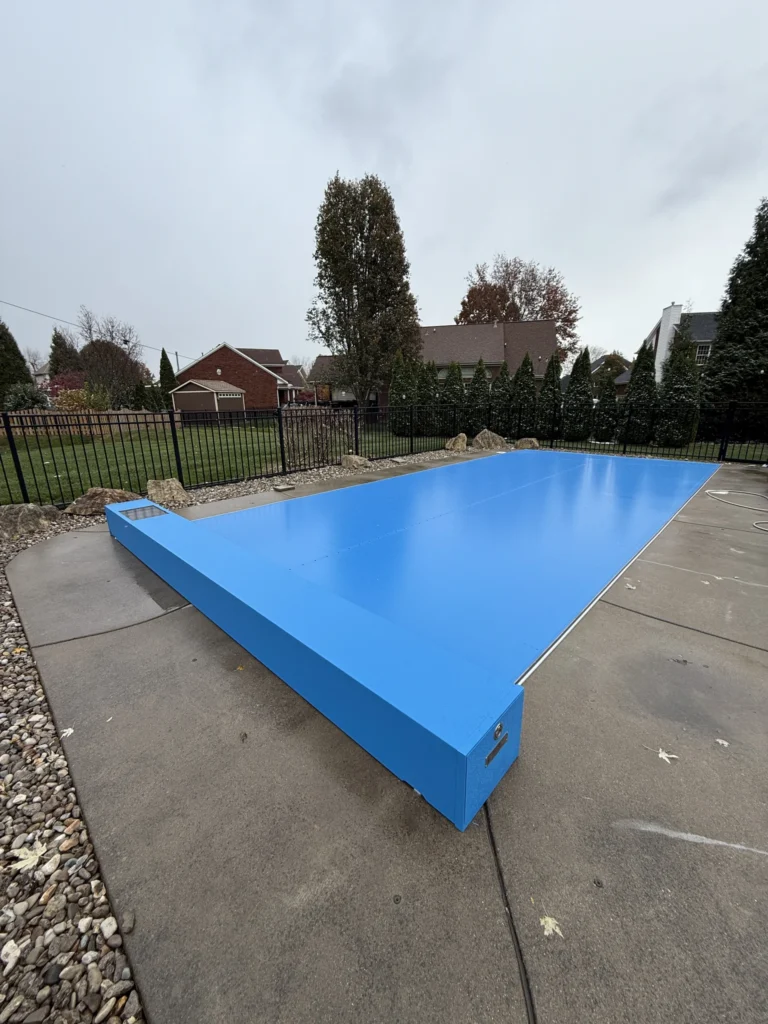
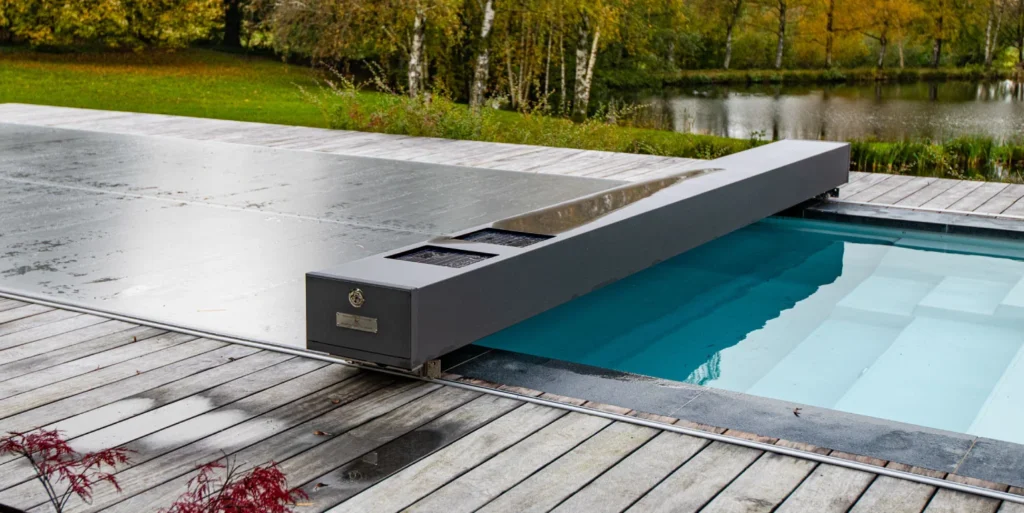
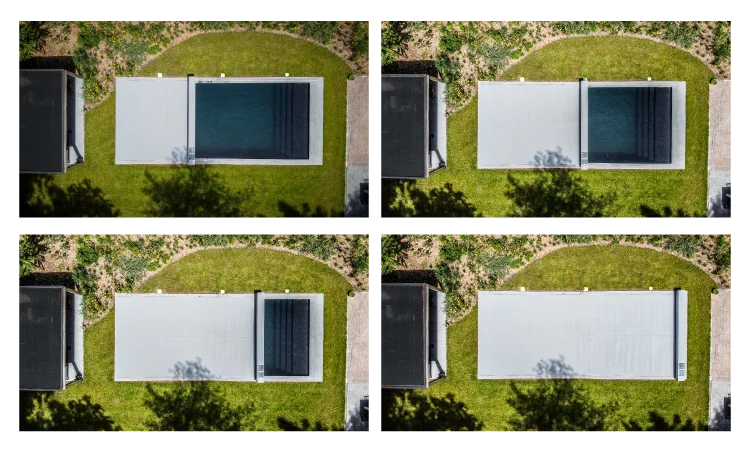
COVERSEAL’s deck-mounted automatic safety pool cover places a taut, pre-stressed PVC membrane directly over the pool. As a pool cover for debris, its top-track configuration, discreet deck integration, automatic operation, and self-draining rainwater design make it well suited to frequent closure between swims. An outdoor solar-powered configuration is also available.
Leaves and larger debris collect on the membrane instead of dropping directly into the pool. Fine dust may settle on top or enter around edges. The membrane, top tracks, and deck require cleaning; handle accumulated debris as directed before opening.
COVERSEAL is positioned as ASTM F1346 compliant. ASTM F1346 establishes performance requirements for safety covers, but that label does not apply automatically to every cover or enclosure. Cover Dream’s guide explains ASTM F1346 pool-cover requirements.
How N-CLOSURE Manages Wind-Driven Debris
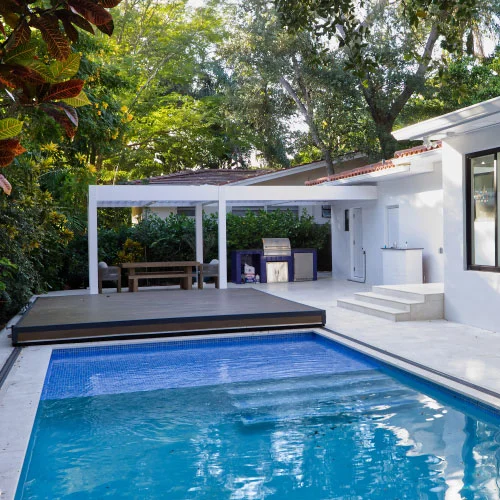
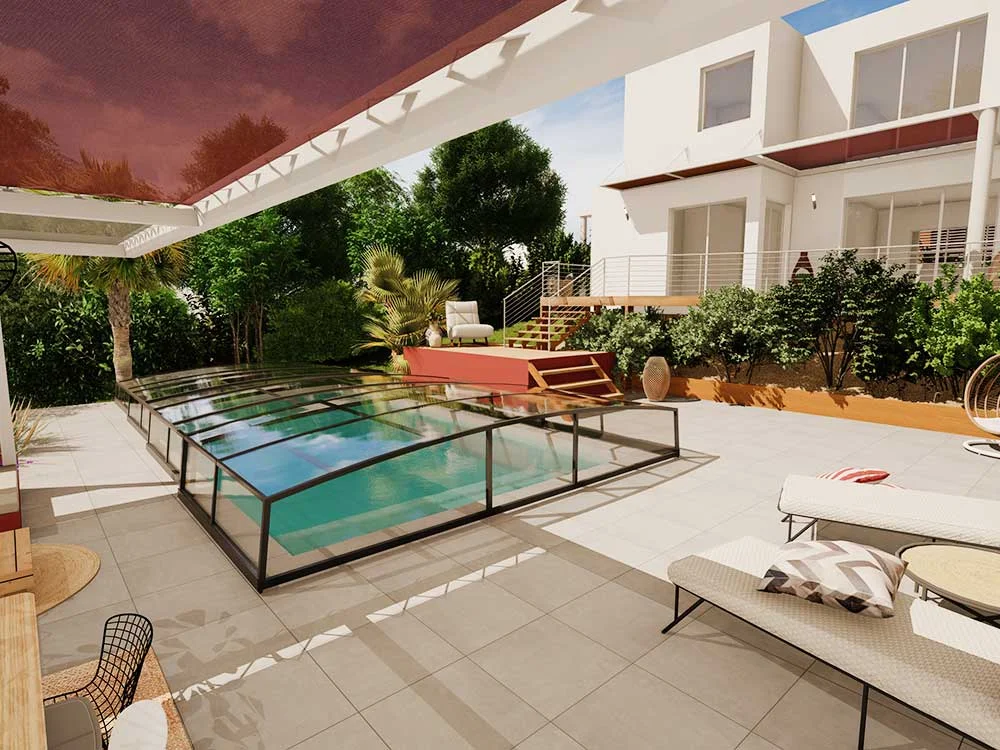
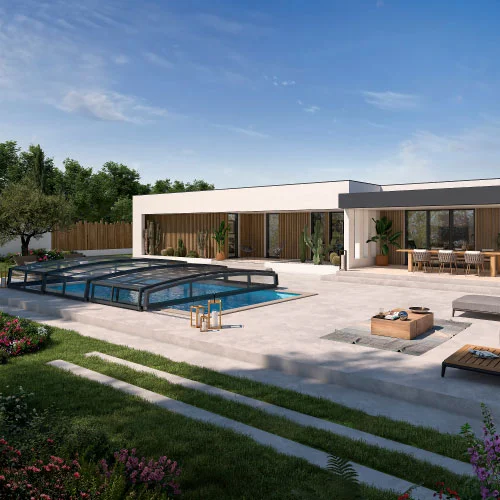
N-CLOSURE is a retractable telescopic pool enclosure positioned above and around the swimming area. When closed, it can interrupt wind before airborne leaves, pollen, and dust reach the pool and nearby deck. This broader protected zone can be valuable on exposed properties where debris enters from several directions.
In a pool enclosure vs pool cover comparison, the central distinction is the protected area: an enclosure surrounds the pool environment, while a cover sits over the water. Debris may collect on panels, at the base, or near rails, and fine particles can enter through openings. N-CLOSURE is not positioned here as an ASTM F1346 safety cover; confirm its current operating method for each project.
How S-LIDE Changes the Cleaning Routine
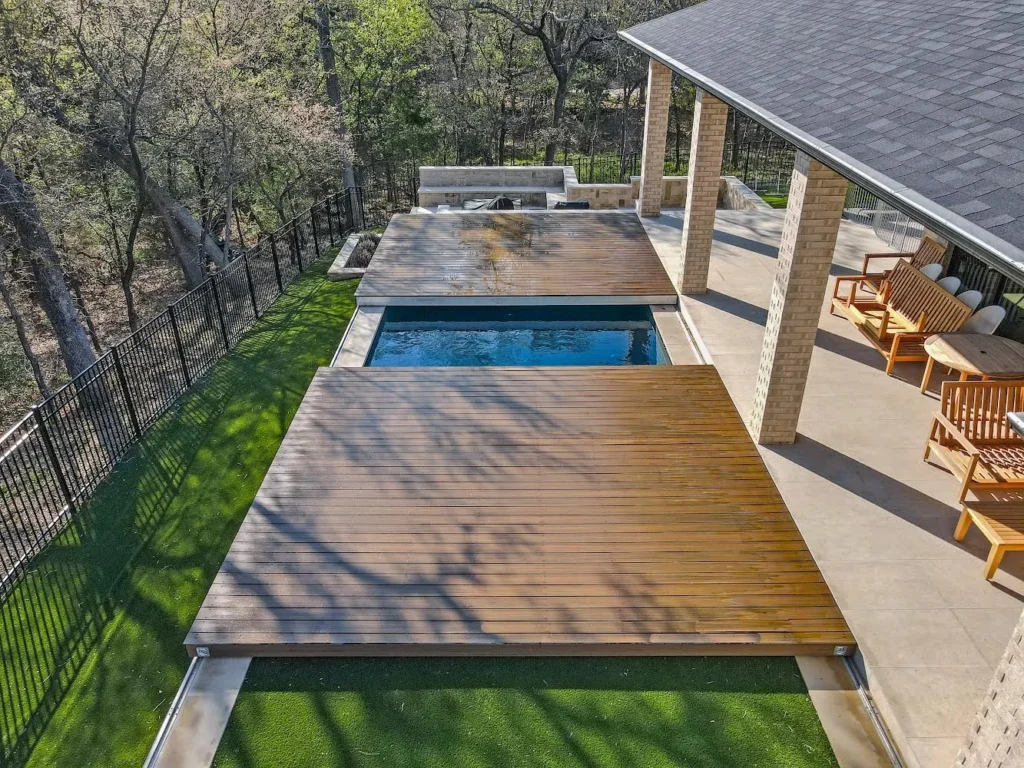
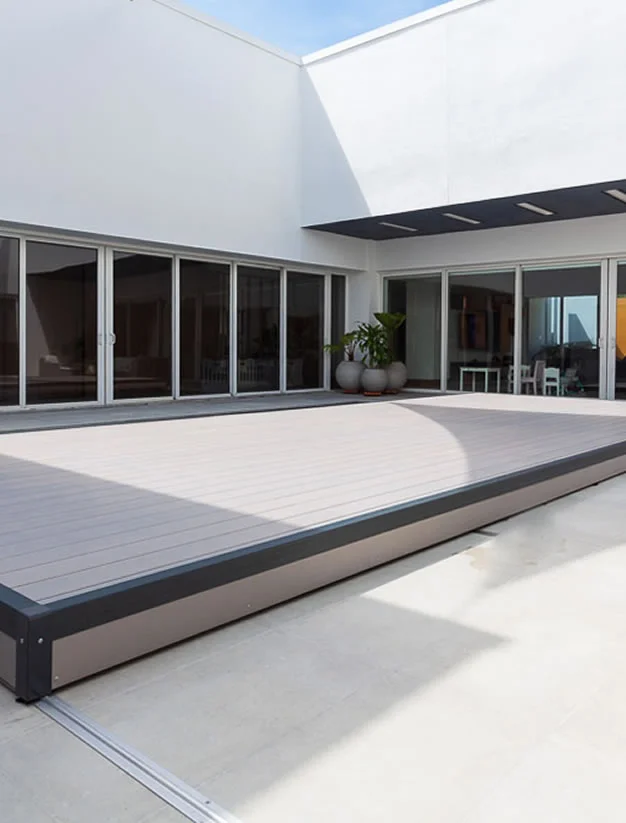
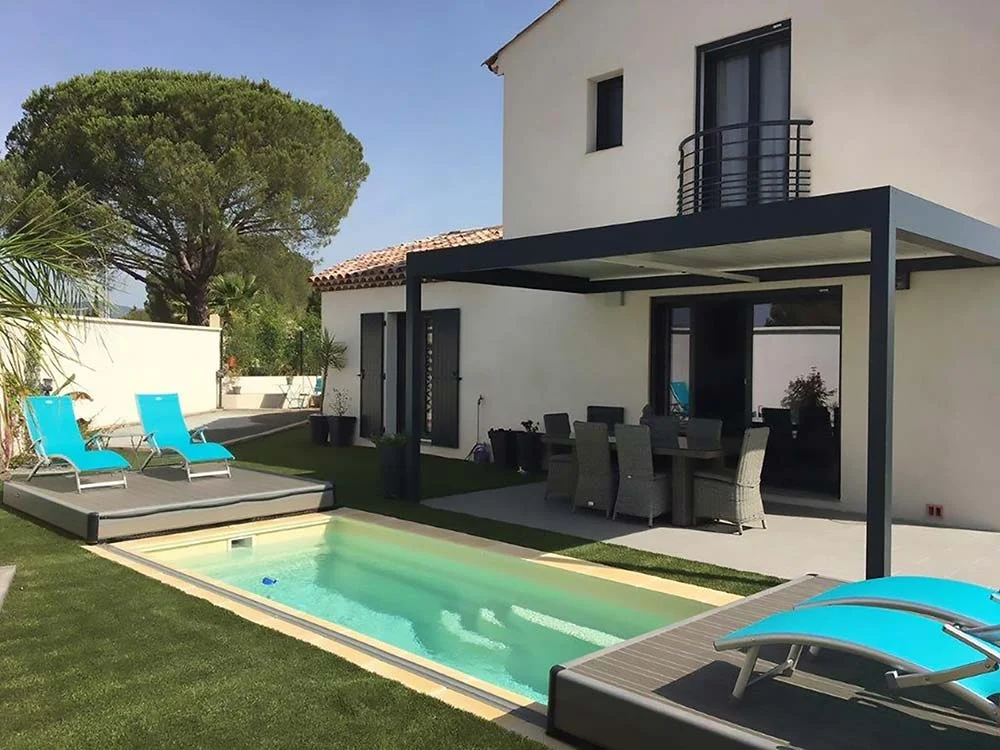
S-LIDE transforms the covered pool into usable deck space. This sliding pool deck cover prevents much of the falling debris from reaching the water when closed and changes a single-purpose pool footprint into a functional patio-like surface.
Cleaning moves upward: leaves, pollen, and dust settle on the deck for removal before it moves. In a pool cover vs sliding deck decision, compare the membrane-cleaning routine with the deck, tracks, drainage, edges, and operating area S-LIDE requires. S-LIDE suits projects where space matters as much as water cleaning. Learn how covering a pool with a deck supports outdoor-space planning.
Choose the Cleaning Strategy That Fits Your Propert
Different systems reduce cleaning in different ways. COVERSEAL™ protects the water directly and works well for frequent closure. N-CLOSURE™ protects a broader pool environment from wind-driven debris. S-LIDE™ keeps much of the debris above the water while also turning the pool footprint into usable deck space.
The best option depends on your wind exposure, nearby trees, dust and pollen levels, available space, and which surfaces you prefer to clean.
Which System Works Best for Different Properties?
Property or priority | Strong starting point | Why |
Frequent use and closure after swims | COVERSEAL | Automatic direct-water coverage |
Open, windy site | N-CLOSURE | Broader closed protected zone |
Pool footprint must serve another purpose | S-LIDE | Closed platform becomes usable space |
Heavy leaf fall above the pool | COVERSEAL or S-LIDE | Both intercept leaves above water |
Dusty site with crosswinds | N-CLOSURE | Broader wind shielding; not dust-proof |
Low-profile preference | COVERSEAL | Remains close to the pool plane |
Pool-to-patio goal | S-LIDE | Built around space conversion |
These are starting points. Assess wind direction, trees, pool shape, elevations, access, drainage, and likely closure habits.
Does Less Debris Mean Less Filter Maintenance?
Often, a lower debris load means fewer leaves in baskets and less material reaching the filter. That can help reduce pool maintenance demands without eliminating them. EPA WaterSense guidance notes that covers prevent debris from entering pools and can reduce the water used in filter backwashing.
Fine particles still reach water, and maintenance varies with equipment, use, weather, and chemistry. EPA home-maintenance guidance recommends regular skimming and vacuuming and cleaning filters only when needed. Follow equipment pressure and service guidance.
What Are the Cleaning Tradeoffs?
COVERSEAL concentrates debris on its membrane and requires clear top tracks. N-CLOSURE adds glazing, rails, and thresholds to clean. S-LIDE creates a sweepable platform but adds deck, drainage, and moving areas.
All three work best when closed, correctly installed, and maintained. None eliminates pool care. Cover Dream also explains how a pool cover can reduce evaporation and chemical demand.
Questions to Ask Before Choosing a System
- Is the main problem leaves, fine dust, pollen, crosswinds, or a combination?
- Do I want to protect only the water or the broader pool environment?
- How often will the system realistically remain closed?
- Where will intercepted debris collect, and how will I remove it?
- Is there enough room for enclosure sections or a sliding deck operating zone?
- Will the project be a retrofit or part of a new pool design?
- How do the pool shape, coping, elevations, and drainage affect installation?
- Which surfaces, tracks, rails, or moving areas require routine cleaning?
- Is a product-specific safety standard required for this project?
- What site preparation, installation scope, and budget should I expect? Review the factors that influence automatic pool-cover cost rather than relying on a generic figure.
Get a property-specific recommendation. Request a Cover Dream consultation and quote with your pool dimensions and shape, site photographs, location and climate, wind exposure, nearby trees or other dust and pollen sources, new-build or retrofit status, primary maintenance concern, preferred system, and desired timeline.
Compare the Right System for Your Property
Different pool protection systems reduce cleaning in different ways. COVERSEAL™ protects the water directly, N-CLOSURE™ shields a broader pool environment from wind-driven debris, and S-LIDE™ keeps much of the debris above the water while also creating usable outdoor space.
COVERSEAL™
Best suited to automatic direct-water protection and frequent closure between swims.
Explore COVERSEAL™ →N-CLOSURE™
A strong option when wind, leaves, dust, and broader environmental protection are the main concerns.
Explore N-CLOSURE™ →S-LIDE™
Ideal when debris protection should also convert the pool footprint into usable deck or patio space.
Explore S-LIDE™ →The best decision depends on your property’s wind exposure, nearby trees, dust and pollen sources, available space, pool design, and the cleaning routine you want to maintain. A project-specific review can clarify where debris will collect and which system is the most practical fit.
Get a Property-Specific Recommendation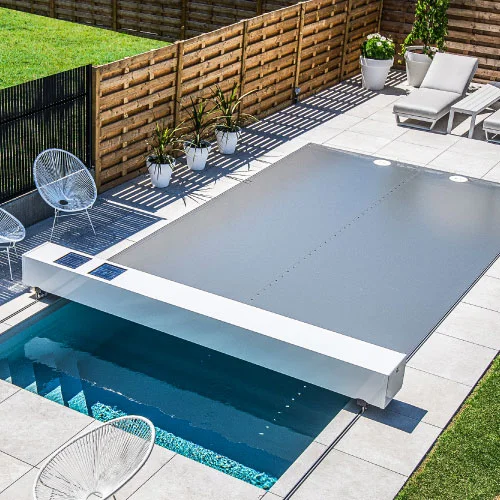
FAQs
Yes, a correctly fitted cover used consistently can reduce the debris entering the water, which may lessen skimming and vacuuming. The cover itself, its tracks, and surrounding areas still require care, and routine filtration, sanitation, testing, and balancing remain necessary.
To keep leaves out of a pool, choose according to site exposure and cleanup preference. COVERSEAL intercepts leaves on a taut membrane, S-LIDE holds them on a deck surface, and N-CLOSURE can shield a broader area from windblown leaves when closed.
Yes. An automatic cover can reduce direct dust deposition, but it is not dust-proof. Fine particles may enter near edges or while the cover is open. Fit, installation quality, wind, pool geometry, operating habits, and cover maintenance all affect results.
It can be on an exposed property because a closed enclosure interrupts wind around a larger area, not just at the water surface. However, debris can collect on panels, rails, thresholds, and surrounding surfaces, and protection decreases whenever the enclosure is open.
Yes. A sliding deck keeps much debris above the water, but its walking surface, tracks, edges, drainage paths, and operating zone need cleaning. Leaves and grit should be managed according to manufacturer and installer instructions before the deck is moved.
Generally, accumulated leaves should be cleared so they are not carried or dropped into the water during opening. Use the cleaning method and operating sequence specified by the manufacturer and installer, particularly when debris is wet, heavy, or gathered near tracks.
By intercepting debris, a cover may reduce the amount of material reaching baskets and filters. It does not remove the need for filtration or establish a fixed cleaning interval. Monitor the equipment and follow the filter manufacturer’s pressure-based inspection and service instructions.
COVERSEAL and S-LIDE both intercept falling leaves directly above the water; N-CLOSURE may better manage leaves driven across the broader pool area. Compare canopy position, prevailing wind, available space, opening habits, and whether membrane, glazing, or deck cleaning is preferable.
Compare COVERSEAL, N-CLOSURE, and S-LIDE calmly against the property’s wind exposure, debris sources, pool design, cleaning priorities, and outdoor-space goals. The right solution is the one that turns those specific conditions into a practical, sustainable maintenance routine.
