

How Pool Covers Save Water & Chemicals: Evaporation and Heat Loss
Pool covers save water mainly by reducing evaporation. They can also help reduce chemical demand by limiting refill cycles, debris, sunlight exposure, and environmental contamination. The actual savings depend on climate, wind, pool size, cover type, and—most importantly—whether the cover is used consistently when the pool is not in use.
Who this is for
- Homeowners who want to understand how a pool cover reduces evaporation.
- Pool buyers comparing an automatic safety pool cover, retractable pool enclosure, or sliding deck pool cover.
- Builders and luxury outdoor-living buyers evaluating Cover Dream premium pool cover systems for water conservation, heat retention, cleaner water, and easier maintenance.
What Changes When You Cover a Pool?
| What changes | Why it matters | What the evidence says | Best cover type to evaluate |
|---|---|---|---|
| Evaporation drops | Less water leaves the pool surface | EPA WaterSense states that a pool cover can prevent up to 95% of pool water evaporation. | Automatic cover, sliding deck cover, enclosure |
| Heat loss drops | Less heat escapes through evaporation | DOE stated that covering a pool when not in use is the single most effective way to reduce pool heating costs, with possible 50–70% savings. | Automatic cover, enclosure, solar/thermal cover |
| Water refill decreases | Fewer top-ups can reduce water waste | EPA’s archived pool cover page notes that uncovered pools can lose 12,000–31,000 gallons per year depending on location. | Automatic cover, sliding deck cover, enclosure |
| Chemical demand may become easier to manage | Less refill water and debris can mean fewer chemistry swings | EPA notes that pool covers can reduce cleaning requirements and chemical use when applied consistently and appropriately. | Automatic cover, enclosure |
| Debris load decreases | Less organic material enters the pool | Covered pools generally receive fewer leaves, dust, and wind-driven contaminants. | Enclosure, automatic cover |
| Cleaning time may decrease | Less debris can reduce skimming and filtration burden | EPA includes reduced cleaning requirements as one benefit of pool covers. | Enclosure, automatic cover |
| Consistency of use improves real savings | A cover only works when it is actually used | Convenience strongly affects whether homeowners cover the pool regularly. | Automatic/motorized systems |
The main lesson is simple: the best savings come from the cover you actually use. A lower-cost cover that stays folded in storage may deliver less value than a system that is easy enough to close every day.
Why Evaporation Is the Main Problem
Evaporation is the starting point for most pool water and heat loss. When water evaporates from the pool surface, the pool loses water volume. That loss often triggers refilling. Refilling can then affect the pool’s chemistry because new water changes the balance of minerals, sanitizer demand, pH, alkalinity, and other conditions.
Evaporation is also a major heat-loss pathway. The U.S. Department of Energy explains that pool covers minimize evaporation and that covering a pool when not in use is the single most effective way to reduce pool heating costs.
This is why a pool cover is not only a “water-saving accessory.” It can affect the whole maintenance cycle: water level, heat retention, refill frequency, cleaning demand, chemical stability, and day-to-day pool readiness.
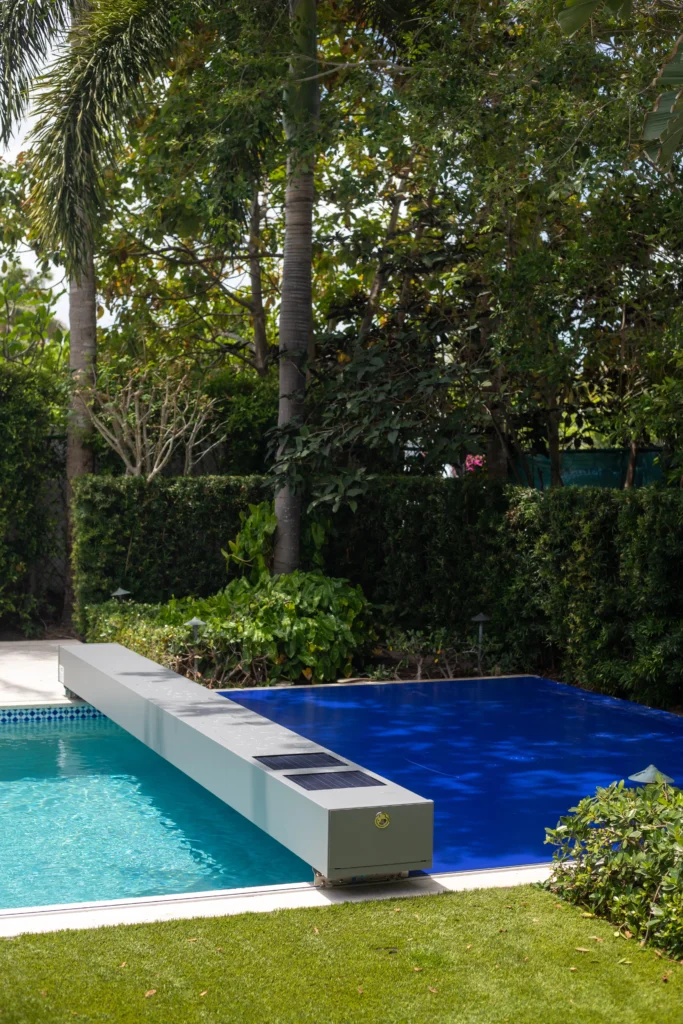
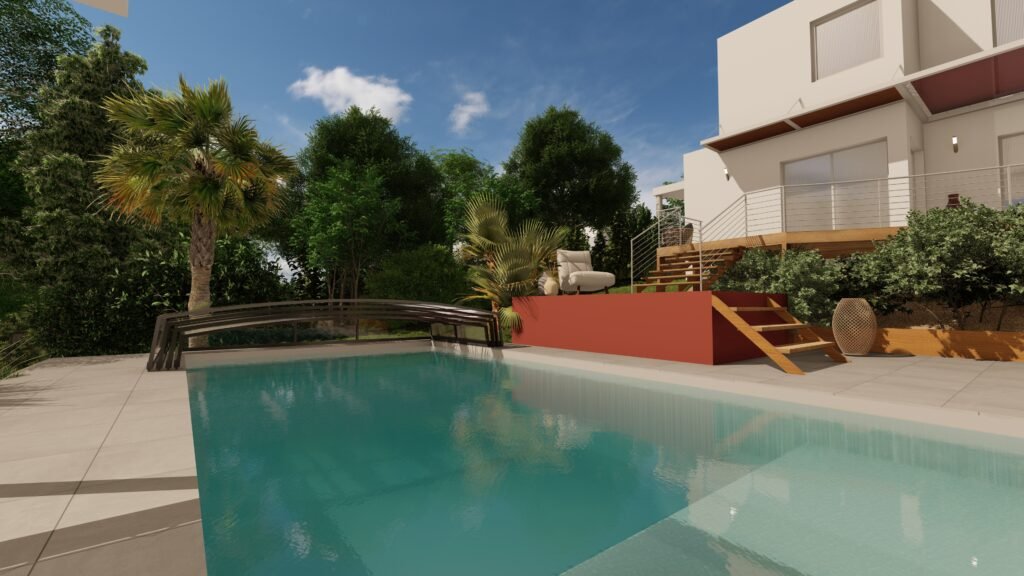
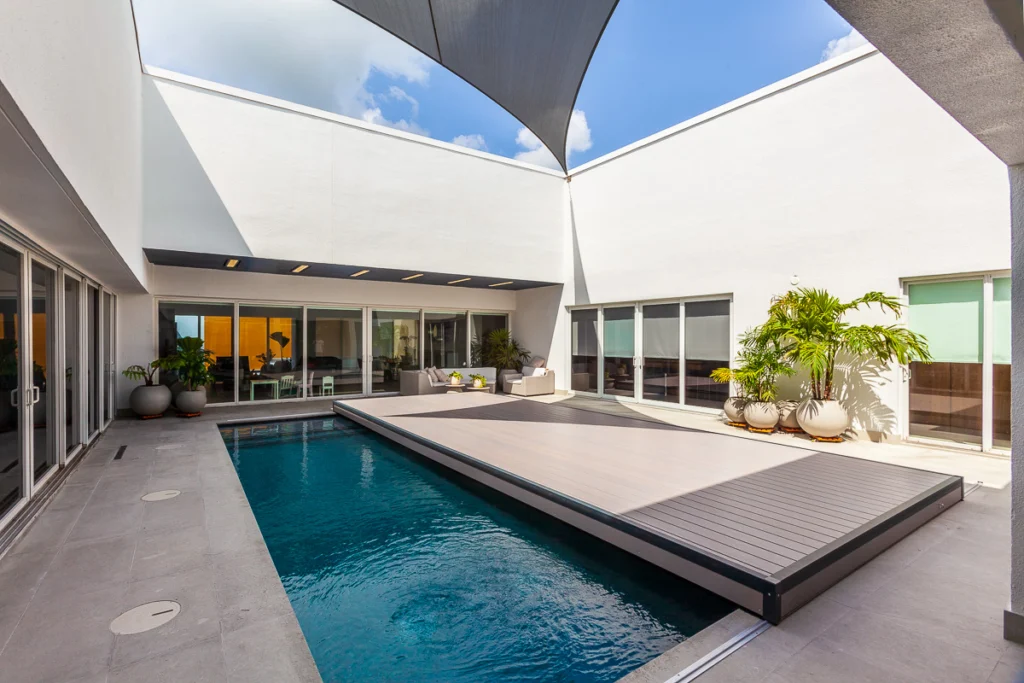
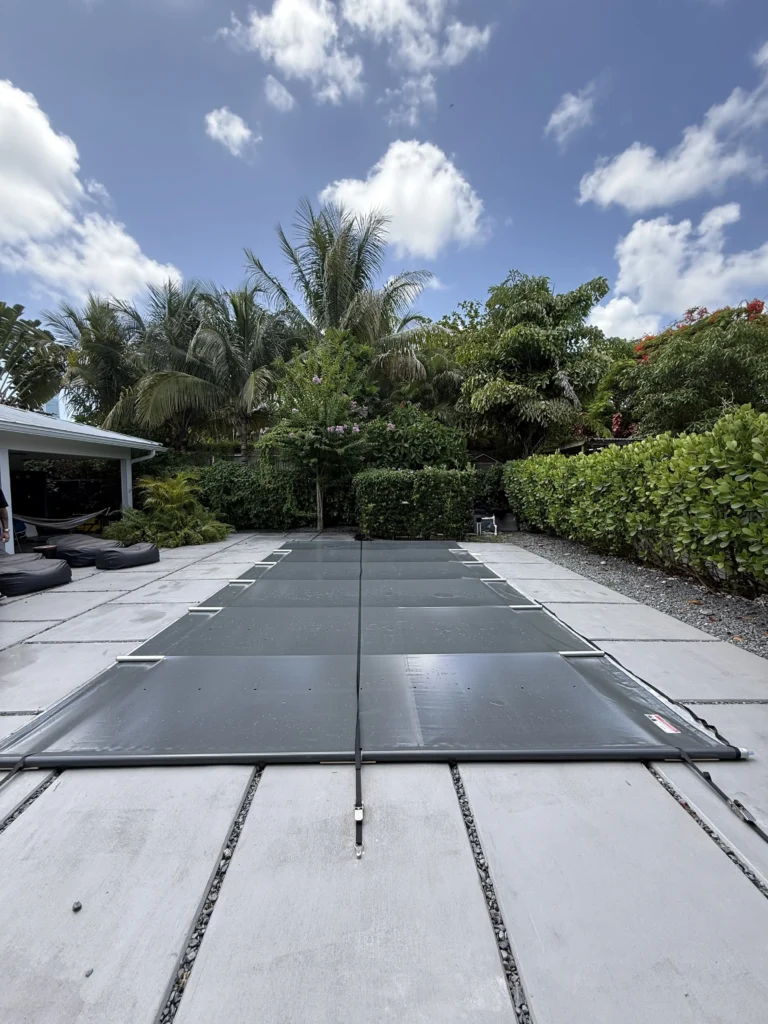
How Pool Covers Save Water
Pool covers save water by physically limiting evaporation from the pool surface. EPA WaterSense states that pool covers can prevent up to 95% of pool water evaporation. EPA’s archived WaterSense pool cover page also notes that a typical uncovered pool can lose 12,000 to 31,000 gallons of water per year to evaporation depending on location.
Actual savings vary by pool size, temperature, wind exposure, humidity, sun exposure, whether the pool is heated, how often the pool is covered, and whether the cover fits and seals effectively.
A pool in a hot, dry, windy location may lose water much faster than a shaded pool in a humid climate. A heated pool may also benefit more from coverage because evaporation affects both water and energy. For luxury pools, this is especially important because large surface areas, raised spas, and exposed locations can increase water movement and environmental exposure.
How Pool Covers Help Reduce Chemical Use
A pool cover does not eliminate the need for chemicals. Pools still require proper water testing, sanitation, filtration, and balancing. However, a cover can reduce the conditions that often increase chemical demand.
1. Less refill water can mean fewer chemistry swings. When evaporation lowers the water level, homeowners often refill the pool. Refill water brings its own chemistry profile that can affect hardness, alkalinity, and pH. By reducing evaporation, a cover can reduce the frequency of refilling, which can help make water chemistry easier to manage.
2. Less debris can reduce organic load. Leaves, pollen, dust, and other organic materials increase cleaning and sanitizer demand. A covered pool receives less debris when the cover is closed. EPA states that pool covers can reduce cleaning requirements and chemical use when applied consistently and appropriately.
3. Less environmental exposure can improve stability. Depending on the cover type, a cover can reduce sunlight exposure, wind exposure, and surface contamination. These factors can affect how often the pool needs cleaning, balancing, and sanitizer adjustment. The key is careful wording: a cover can help reduce chemical pressure; it does not replace proper pool care.
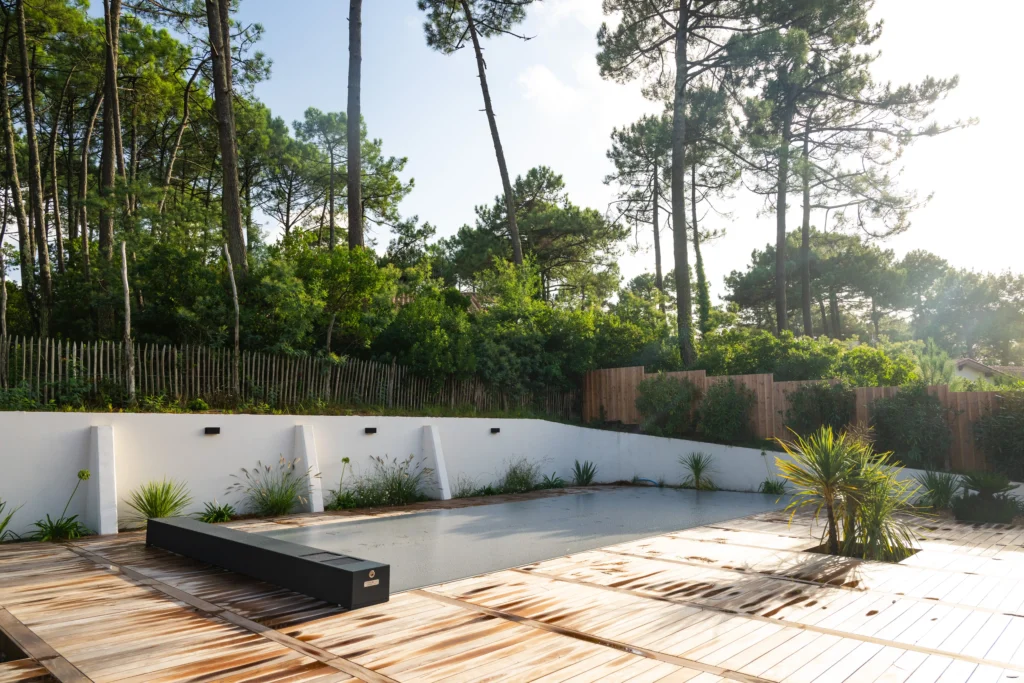
How Pool Covers Help Reduce Heat Loss
Evaporation is not only water loss. It is also heat loss. The U.S. Department of Energy states that covering a pool when not in use is the single most effective way to reduce pool heating costs, with possible savings of 50%–70%.
That matters for three reasons:
- Less evaporation means less heat leaves the water.
- Less heat loss means the heater may run less often.
- More stable water temperature can make the pool more usable.
For heated pools, a cover can become one of the most practical energy-saving investments because it directly addresses surface heat loss. But again, the cover must be used when the pool is not in use. An uncovered pool loses the benefit.
Cover Dream’s S-ROLL takes this a step further with an optional solar-heating slat, which actively captures sunlight to warm the water while the cover is closed, on top of standard heat-loss prevention.
Protect your loved Ones!
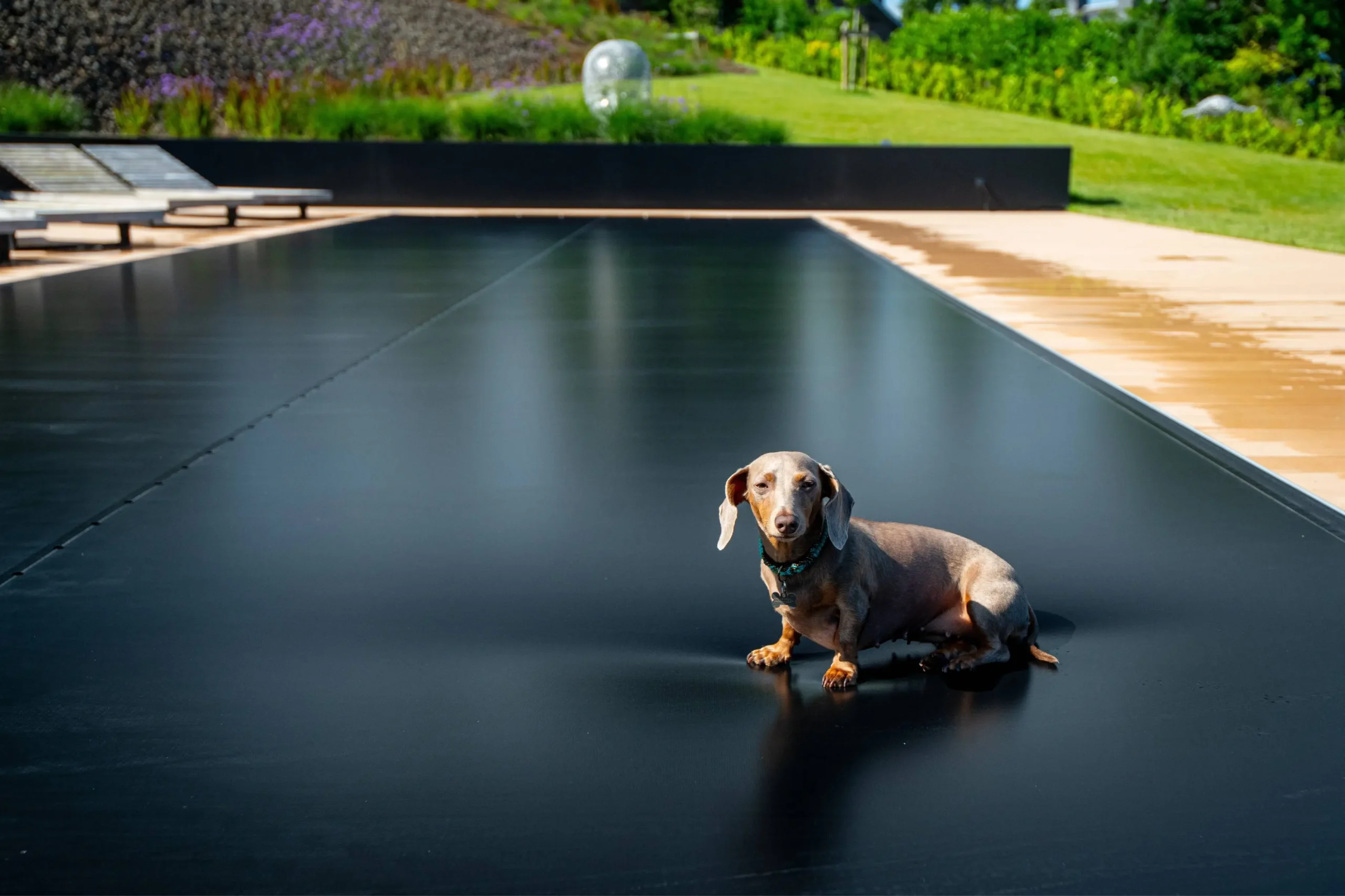
A pool cover is the most efficient barrier against accidental drownings. Get your pool covered.
What Changes with Different Cover Systems
Not all covers solve the same problem. A basic solar cover, an automatic safety cover, a retractable enclosure, and a sliding deck cover all reduce exposure differently.
Automatic safety cover — Coverseal
An automatic safety cover is often the best fit when the goal is daily coverage with minimal friction. Because it can be opened and closed more easily than many manual covers, it can support consistent use.
Cover Dream’s Coverseal automatic safety pool cover is positioned around fast automatic operation, safety-oriented coverage, water quality, insulation, evaporation reduction, and temperature stability. Cover Dream states that the system can open or secure a pool in under a minute and operates through wired or wireless control.
For safety-oriented decisions, ASTM F1346 is the relevant safety-cover reference. ASTM describes the specification as intended to reduce drowning risk by inhibiting access to the water by children under five when correctly installed and used according to manufacturer instructions.
Retractable pool enclosure — N-CLOSURE
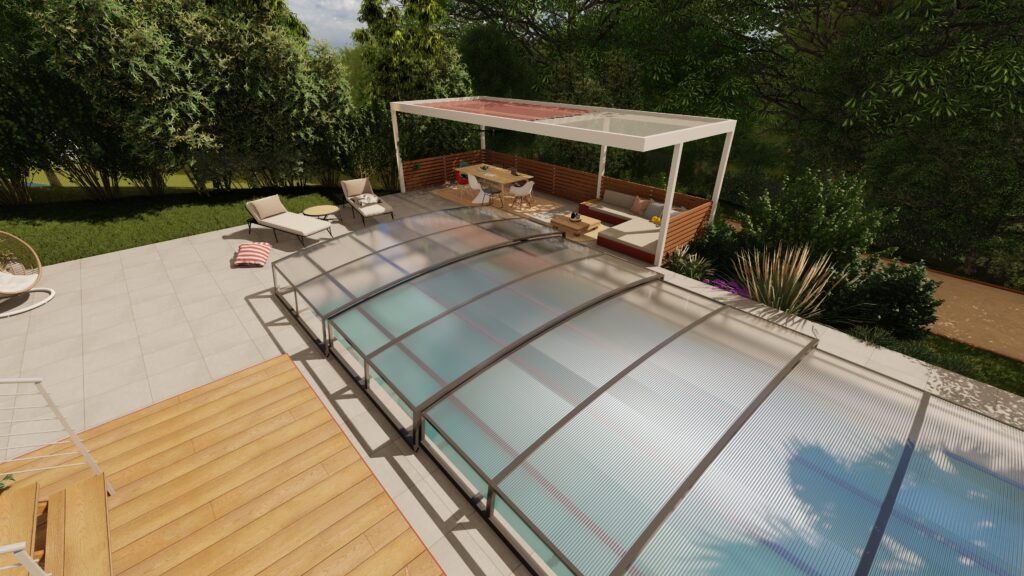
A retractable pool enclosure covers the pool environment rather than only the water surface. This can be helpful when the goal includes debris control, weather protection, comfort, and a more protected swim space.
Cover Dream’s N-CLOSURE retractable pool enclosure is described as a telescopic enclosure that can cover or uncover the pool one module at a time or entirely. Cover Dream states that the system can be handled easily by one person and glides open and closed manually on a frictionless aluminum track. Solar heat is trapped passively to warm the water — it is not used to power the enclosure’s movement.
Sliding deck pool cover — S-LIDE
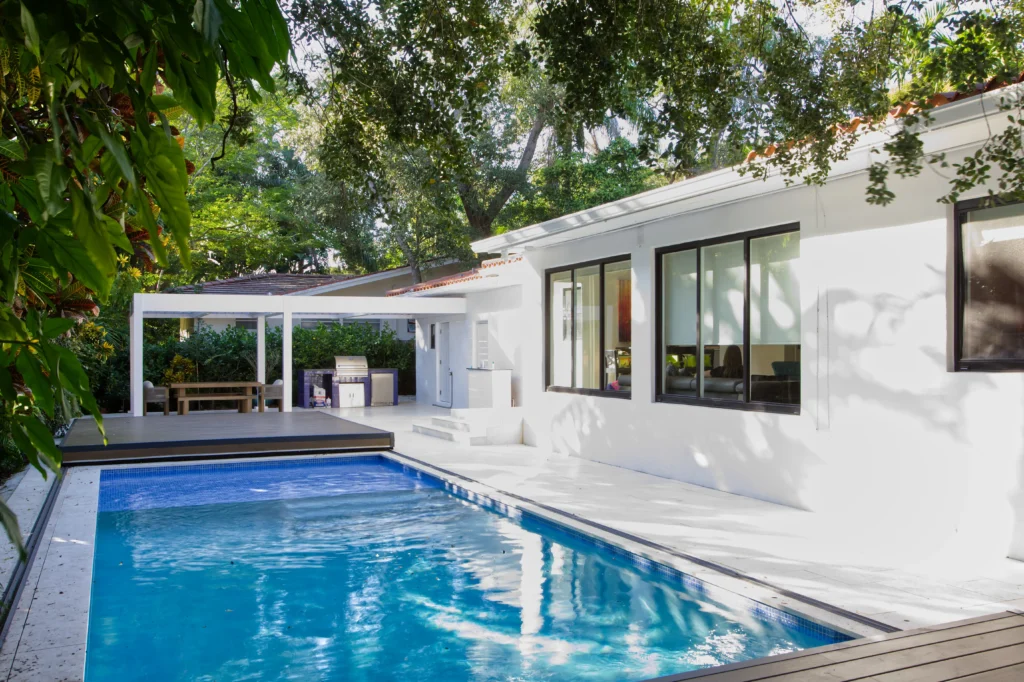
A sliding deck cover combines coverage with usable surface area. It can be particularly useful when the buyer wants water-saving benefits and better use of the pool footprint.
Cover Dream’s S-LIDE sliding deck pool cover is positioned as a two-in-one sliding pool cover, patio, and deck solution. Cover Dream states that it helps make the most of pool-area square footage, supports high loads, and can accommodate patio furniture. Motorized operation is available as an option.
Slatted automatic cover — S-ROLL
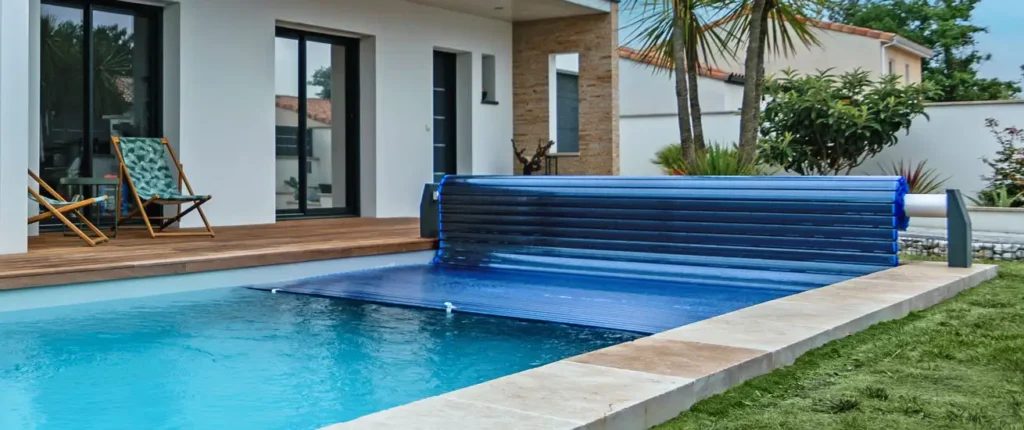
A slatted automatic cover rolls a bed of rigid slats across the pool, combining automated daily coverage with built-in heat management. Because the slats close at the touch of a button, this system supports the same consistency benefit as other automatic covers, without the certified safety-cover positioning of Coverseal.
Cover Dream’s S-ROLL slatted automatic cover uses PVC or polycarbonate slats, with an optional solar-heating slat that captures the sun to warm pool water while the cover is closed. Cover Dream states the system is suited to out-of-standard pool shapes.
Manual safety cover — B-COVER
A manual safety cover trades automatic convenience for a lower price point while still delivering a certified safety rating. It is tensioned into place by hand rather than opened and closed with a motor.
Cover Dream’s B-COVER is a trackless, manual tensioned safety cover built with fiberglass support bars and reinforced PVC fabric, rated to support 500+ lbs and designed for all-season use. Because there are no tracks, it can be fitted to a wide range of pool shapes at a more accessible price than Coverseal.
The tradeoff is convenience: a manual cover depends more on the homeowner’s discipline to close it consistently. For buyers who want certified safety and dependable evaporation and heat-loss protection at a lower cost, and who will use the cover routinely, B-COVER is a reasonable option to compare.
Solar or seasonal cover
A solar or seasonal cover can reduce evaporation and heat loss in narrow use cases. It may be a practical lower-cost option, especially for homeowners who can handle and store the cover easily. The limitation is convenience: if the cover is difficult to deploy, it may not be used consistently, and it usually does not provide premium safety-oriented operation, architectural design integration, or space transformation.
Cover Dream Product Match by Goal
The right Cover Dream system depends on what the buyer is trying to improve.
| Buyer goal | Best Cover Dream system to evaluate | Why |
|---|---|---|
| Water + heat + daily closure | Coverseal automatic safety pool cover | Designed for fast automatic closure, evaporation reduction, insulation, and water-quality support |
| Debris + weather + comfort | N-CLOSURE retractable pool enclosure | Covers the pool environment and helps protect against weather and debris |
| Space + covered water surface | S-LIDE sliding deck pool cover | Turns the pool area into usable deck/patio surface while covering the pool |
| Lowest-cost temporary coverage | Solar or seasonal cover | May reduce evaporation, but usually lacks premium daily convenience and design integration |
Coverseal, N-CLOSURE, S-LIDE, S-ROLL, and B-COVER solve different problems — none should be presented as the universal answer for every pool.
Best Practices to Get Real Water and Chemical Savings
A pool cover can only deliver results if it is part of the actual routine. Use these practices to improve real-world performance.
Cover the pool when it is not in use
DOE’s heating-cost guidance depends on covering the pool when it is not in use. If the cover stays open, evaporation continues.
Choose a system that is convenient enough to use daily
Convenience matters. Automatic and motorized systems can help because they reduce the friction of closing the pool.
Remove debris from the cover
Debris sitting on a cover can create cleaning issues when the cover opens or is handled. Regularly remove leaves and dirt according to the manufacturer’s instructions.
Maintain proper chemistry
A cover can reduce some sources of chemical demand, but it does not replace water testing, sanitation, filtration, and balancing.
Inspect the cover, tracks, and enclosure
Any system should be inspected and maintained. For automatic covers, that may include tracks, membrane condition, housing, and operation. For enclosures, check movement, panels, rails, and seals as applicable.
Plan around climate and usage
A windy, dry, hot climate may benefit more from evaporation control than a mild, humid climate. Heated pools may also gain more from reduced heat loss.
Quote Checklist: What to Share Before Choosing a Cover
Before choosing a cover system, prepare clear project information. This will make the quote more accurate and the recommendation more useful.
Pool information: pool size and shape, pool depth and surface area if available, spa/ledge/step or irregular shape details, new build or retrofit status.
Site conditions: climate and wind exposure, sun exposure, debris sources such as trees/dust/leaves/landscaping, drainage conditions, deck layout and material.
Current concerns: water loss or frequent refilling, high chemical use, heat loss, debris and cleaning time, safety priority, comfort and season-extension goals.
System preferences: automatic cover, retractable pool enclosure, sliding deck cover, low-profile design, space optimization, premium design integration.
Supporting materials: photos from multiple angles, pool drawings or plans, equipment location, electrical access, desired timeline.
The more clearly you define the problem, the better the recommendation will be. A buyer focused on evaporation may need a different solution than a buyer focused on debris, safety, or reclaiming deck space.
Conclusion: The Best Savings Come from the Cover You Actually Use
Evaporation drives water loss, heat loss, and refill frequency. Refilling can affect chemistry, while debris and environmental exposure can increase cleaning and balancing needs. A pool cover can reduce these pressures, but the real savings depend on consistent use.
- If the priority is water savings, heat retention, and daily closure, compare Coverseal automatic safety pool cover.
- If the priority is debris, weather, comfort, and cleaner swimming conditions, compare N-CLOSURE retractable pool enclosure.
- If the priority is space optimization plus coverage, compare S-LIDE sliding deck pool cover.
- If the priority is automatic evaporation and heat control without a safety rating, compare S-ROLL slatted automatic cover.
- If the priority is certified safety at a lower price point with manual operation, compare B-COVER manual safety cover.
A restrained next step is to request a quote and provide your pool dimensions, site photos, climate and debris concerns, and your primary goal: water savings, chemical stability, heat retention, debris reduction, safety, or space.
FAQs
Yes. EPA WaterSense states that pool covers can prevent up to 95% of pool water evaporation when applied consistently and appropriately. The actual reduction depends on pool size, climate, wind exposure, cover type, and how often the cover is used.
EPA’s archived WaterSense pool cover page notes that a typical uncovered pool can lose 12,000 to 31,000 gallons of water per year to evaporation depending on location. A cover can reduce that loss significantly by limiting evaporation from the pool surface.
Pool covers can help reduce chemical demand, but they do not eliminate chemical use. By reducing evaporation, refill cycles, debris, and environmental exposure, a cover can make water chemistry easier to manage. Proper testing, filtration, and sanitation are still required.
Yes. DOE states that covering a pool when it is not in use is the single most effective way to reduce pool heating costs, with possible savings of 50%–70% depending on conditions, usage, and pool environment.
The cover that saves the most water is usually the one that is used consistently and effectively limits evaporation. Automatic covers, sliding deck covers, enclosures, and solar covers can all reduce evaporation, but convenience and fit strongly influence real-world savings.
Yes, it can help. An automatic pool cover can reduce refill frequency, debris entry, and environmental exposure when closed. That may reduce some of the conditions that increase chemical demand, although regular water care and chemical balancing are still necessary.
A pool enclosure can reduce wind-driven debris, leaves, dust, and weather exposure by covering the pool environment. Cover Dream’s N-CLOSURE is positioned for weather and debris protection, comfort, and enhanced pool cleanliness.
A solar cover can reduce evaporation and heat loss if used consistently. However, it may not offer the same daily convenience, safety-oriented operation, or premium design integration as an automatic cover, retractable enclosure, or sliding deck system.
Actual savings depend on climate, wind, pool size, temperature, sun exposure, debris load, refill water quality, and how often the pool is covered. Convenience matters because a cover only reduces evaporation and exposure when it is actually in place.
Start with your main goal. For water, heat, and daily closure, compare Coverseal. For debris, weather, and comfort, compare N-CLOSURE. For space optimization plus coverage, compare S-LIDE. For automatic evaporation and heat control without a safety rating, compare S-ROLL. For certified safety at a lower price point with manual operation, compare B-COVER. Each system solves a different problem.
