

In 2026, an automatic pool cover cost typically starts around $15,000–$25,000 for many projects, with real-world quotes often landing anywhere from $15,000 to $22,000 and premium custom builds reaching $30,000. Your final price depends most on pool shape, track style (recessed vs deck-mounted), electrical scope, and deck work.
Who is this for?
You are planning a new pool build and want to budget accurately before construction decisions lock in costs.
You are considering a retrofit and want to understand what “site work” can add to the quote.
You care about clean aesthetics and need clarity on deck-mounted vs recessed/undertrack systems.
If you are comparing cover types, it helps to review a complete system overview (what’s possible, what’s custom, and what drives design decisions). Cover Dream’s overview of its smart cover systems provides that context, and our automatic safety pool cover page is a practical reference for how a premium automatic cover is positioned.
If you are a builder or trade partner planning multiple installs, Our dealer pathway is also relevant early because dealer support often affects lead times, service planning, and installation coordination.
2026 automatic pool cover pricing: realistic ranges
Automatic pool cover pricing varies because it is part product, part construction scope. Still, market references give you useful guardrails:
- Starting range: many automatic covers begin around $15,000–$25,000 USD.
- Common real-world range: $15,000 to $22,000, with an average around $22,000; premium custom projects may reach $30,000.
These ranges are not a quote. They are a budgeting baseline. Your quote becomes “real” once track style, pool shape, electrical, and deck integration are defined.
Why pricing varies so widely?
- Some pools accept standard track solutions with minimal deck disturbance.
- Others require custom geometry, complex integration, drainage planning, and extended electrical work (often not necessary with Coverseal).
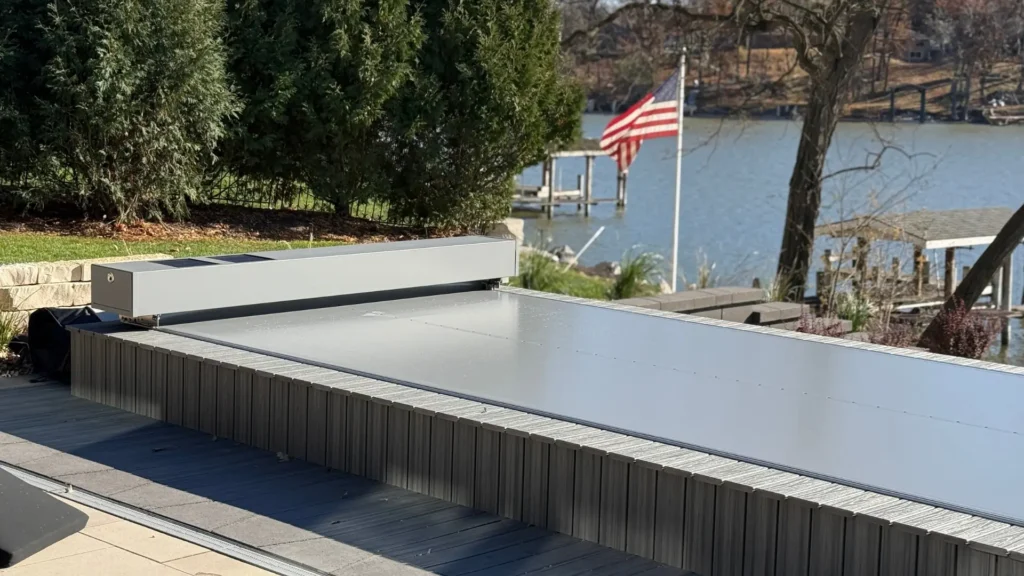
Quick estimator: the 7 inputs that predict your quote direction
If you know the items below, you can usually predict whether you will land near the “starting range,” the mid-range, or the premium end.
Estimator table (use this to pre-qualify your budget)
Quote input | Lower-cost direction | Higher-cost direction |
Pool shape | Rectangle / simple geometry | Freeform, complex curves, special edges |
Track style | Deck-mounted/top track | Recessed/undertrack integration |
Build type | New build (planned early) | Retrofit (demo + patch work) |
Electrical scope | Short run, existing capacity | Long run, trenching, panel work, added controls |
Deck work | Minimal deck disturbance | New pour, pavers reset, drainage changes |
Access and logistics | Open access to pool perimeter | Tight access, special handling, custom sequencing |
Aesthetic integration | Standard visible details | “Invisible” details (hidden housing, cleaner lines) |
If you want a quote that holds up, decide track style and integration level early. Those choices ripple into deck work and labor often more than the cover mechanism itself.
What you are actually paying for? (and what you are not)
An automatic pool cover quote typically blends several buckets. Understanding the buckets prevents “apples-to-oranges” comparisons.
Common quote components:
Cover system components
- Mechanism, tracks, cover material, housing/casing, controls (varies by system).
- Customization options may affect price (colors/finishes/housing treatments in premium systems).
Installation labor
- Measurement, fitting, track placement, alignment, and commissioning.
- Labor ranges can vary widely; automatic covers are more labor-intensive than basic manual covers, and complexity increases with shape and integration requirements.
Electrical work (often separated or subcontracted)
- New circuit runs, trenching/conduit where needed, connection and controls (not necessary with Coverseal).
Deck and site work (the most common “surprise” cost bucket)
- Cutting concrete, resetting pavers, patching, drainage adjustments, managing elevation transitions.
Often not included unless specified
- Major deck reconstruction beyond what is required for track integration
- Major electrical service upgrades if your panel needs expansion – (often not necessary with Coverseal)
- Permitting fees when or where applicable (often not applicable with Coverseal)
- Landscaping restoration beyond the immediate work zone
When you compare quotes, insist on a line-item view that shows site work assumptions. Two quotes can differ by thousands simply because one assumes deck modifications and the other does not.
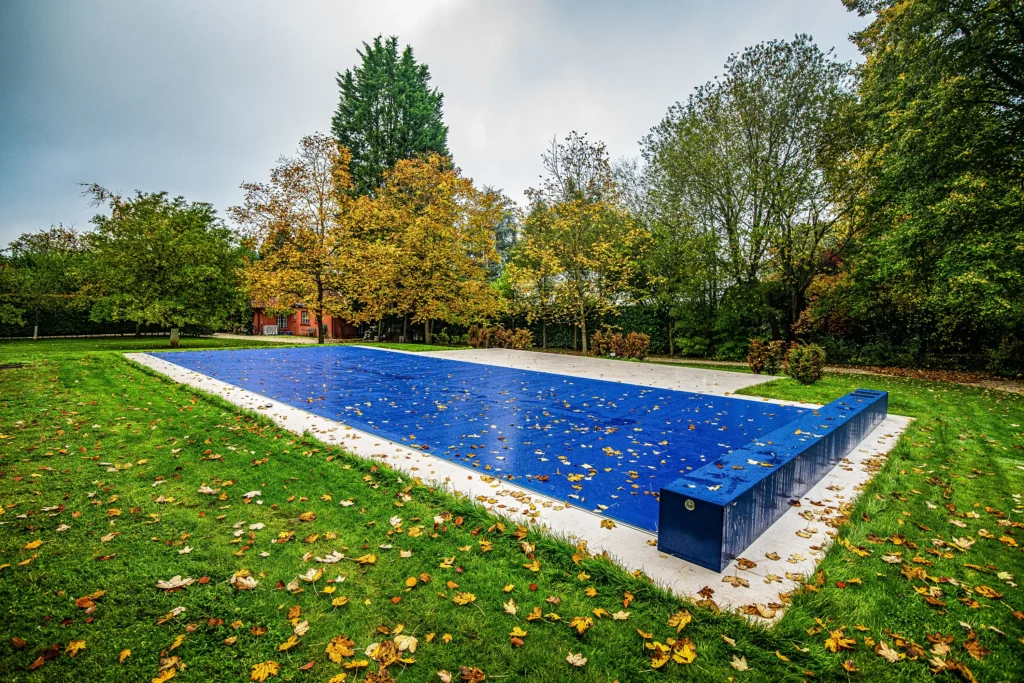
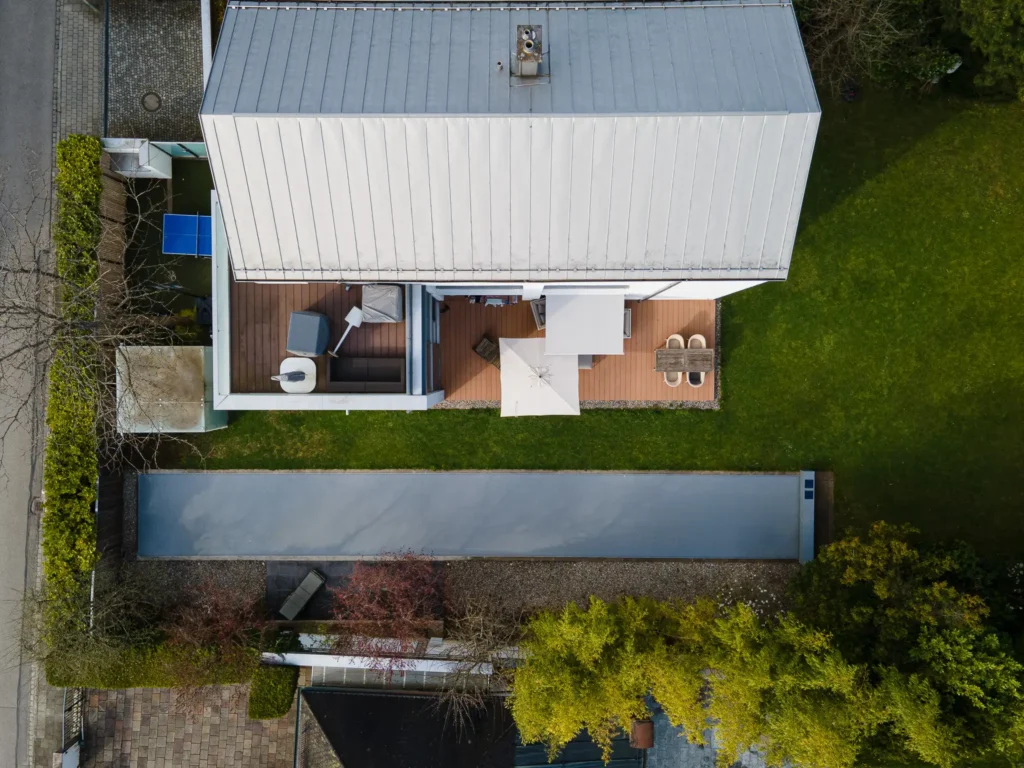
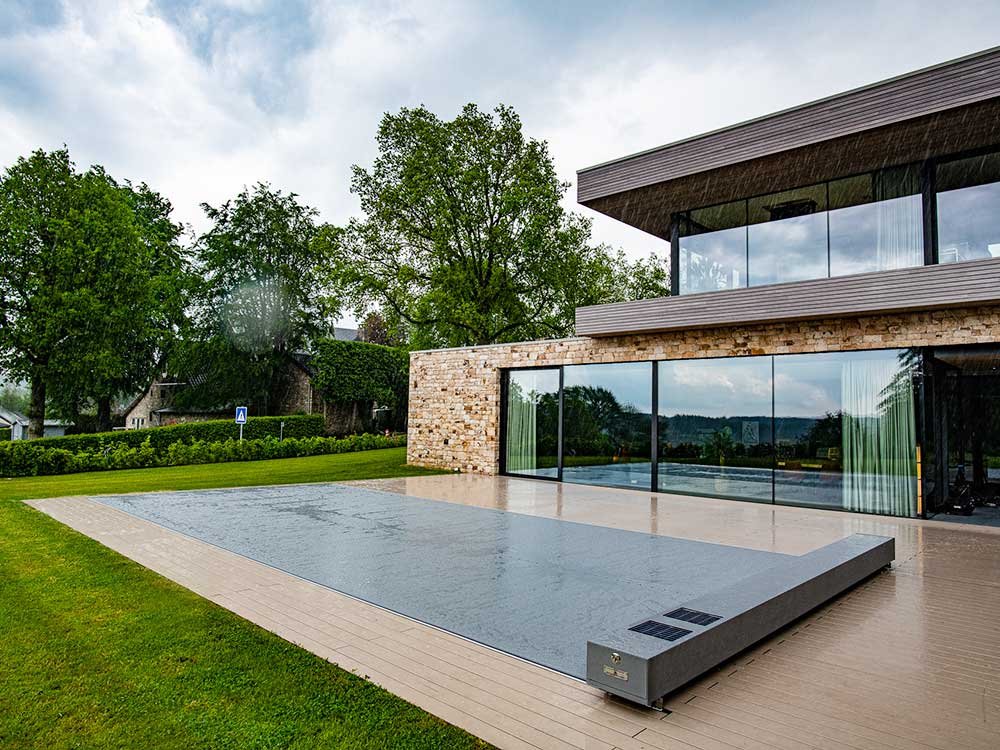
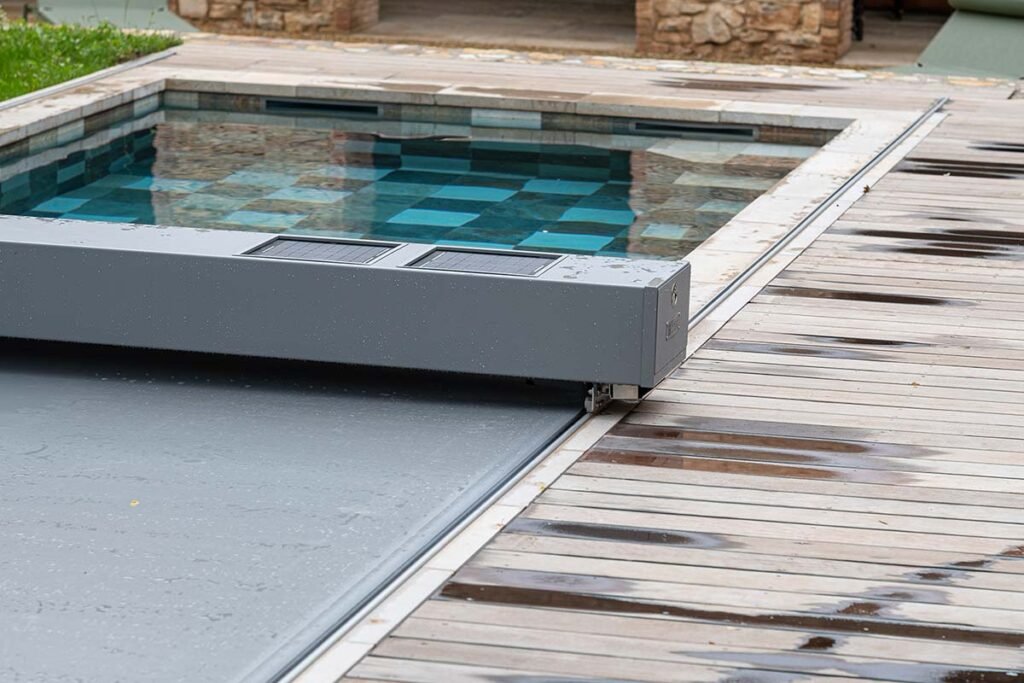
Track options: deck-mounted vs recessed/undertrack (the biggest cost lever)
Track style affects cost because it changes how much construction is required around the pool perimeter.
Deck-mounted/top track (often simpler)
- Typically easier to plan and install when the deck is already complete.
- May reduce deck demolition and patch work.
- A good option when cost control is the priority
Recessed/undertrack (often cleaner, often costlier)
- Chosen to hide tracks.
- More likely to require planning for elevations, deck interfaces, and drainage details.
- Frequently increases labor and deck work compared to simpler track approaches.
Extremely costly for existing pools
Design rule: If you want recessed/cleaner integration, plan it as early as possible ideally during design or construction. Retrofits can be done, but deck demolition and restoration can become a major portion of the total cost.
Pool shape and features: why “custom” is not a small price change
Many pricing articles emphasize pool size, but pool shape and features often drive complexity more than square footage.
- Free form pools are most likely not possible to cover with an undertrack system
- Market guidance notes that costs vary by pool size or linear foot, and additional expenses come from features and installation complexity.
- Starting-cost references also call out pool design, track options, shape/features, landscaping, and electrical as cost considerations.
Features that commonly raise quotes:
- Curved geometries and unusual radii
- Benches, steps, and perimeter details that affect track runs
- Special edges (design-dependent) requiring custom coordination
- Tight deck layouts that complicate access and construction sequencing
If your pool is complex, the best way to control cost is to lock in your cover approach early, then shape details around that plan.
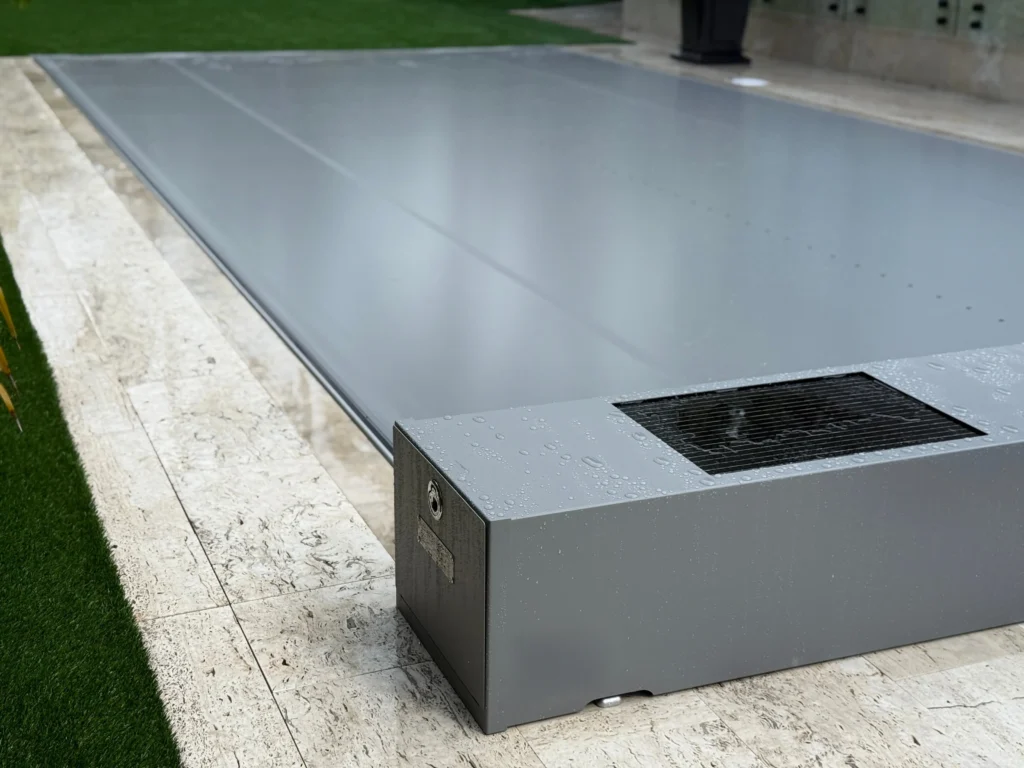
New build vs retrofit: how timing changes the cost profile
New build
When a cover is planned during construction, you can:
- Integrate track placement into deck design
- Coordinate electrical during rough-in (not required with a Coverseal system)
- Avoid rework and patching
- Optimize drainage and access details (not required with a Coverseal system)
Retrofit (often higher variance)
Retrofits are feasible, but they sometimes introduce:
- Demo and removal work (often not applicable with Coverseal)
- Deck restoration and finish matching (often not applicable with Coverseal)
- More site constraints (because the yard is already built)
If you are budgeting for a retrofit, assume a wider spread between “best case” and “high complexity.” That spread is usually driven by deck work and electrical, not the cover itself
Installation and labor: what moves the labor number
Labor is where quotes diverge because labor tracks complexity.
Factors that typically push labor up:
- Recessed integration (not recommended with Coverseal) and deck modifications
- Freeform shapes requiring more fitting time
- Limited access to the pool perimeter
- Electrical routing complexity (often not applicable with Coverseal)
- Scheduling constraints (tight project windows, staged work)
Market references for pool cover costs and labor can be useful for context, but your quote’s labor is ultimately a reflection of site conditions and design choices.
Options and upgrades: what changes price and what is worth paying for?
Labor is where quotes diverge because labor tracks complexity.
The best upgrades are the ones that affect daily experience, durability, and predictable operation. The worst upgrades are purely cosmetic “add-ons” that do not align with how you use the pool.
Upgrades that typically justify cost (depending on your priorities)
Aesthetic integration
Cleaner lines and better integration can improve the overall outdoor space and reduce visual clutter. This often ties back to track style and housing decisions.
Material and durability choices
Some premium systems emphasize reinforced materials and features such as self-draining membranes that reduce the need for accessory pumps, depending on the system design.
Operational convenience
Some systems are designed to open/close quickly and may include wired or wireless control.
Upgrades that should be questioned
- Any option that complicates maintenance without clear day-to-day benefit
- Any integration claim that requires your deck to be rebuilt unless you already planned for it
- Any “feature” that increases complexity but does not match your real usage pattern
A good approach is to decide your must-haves (safety, aesthetics, operational convenience) and then treat everything else as optional.
Protect your loved Ones!
A pool cover is the most efficient barrier against accidental drownings. Get your pool covered.
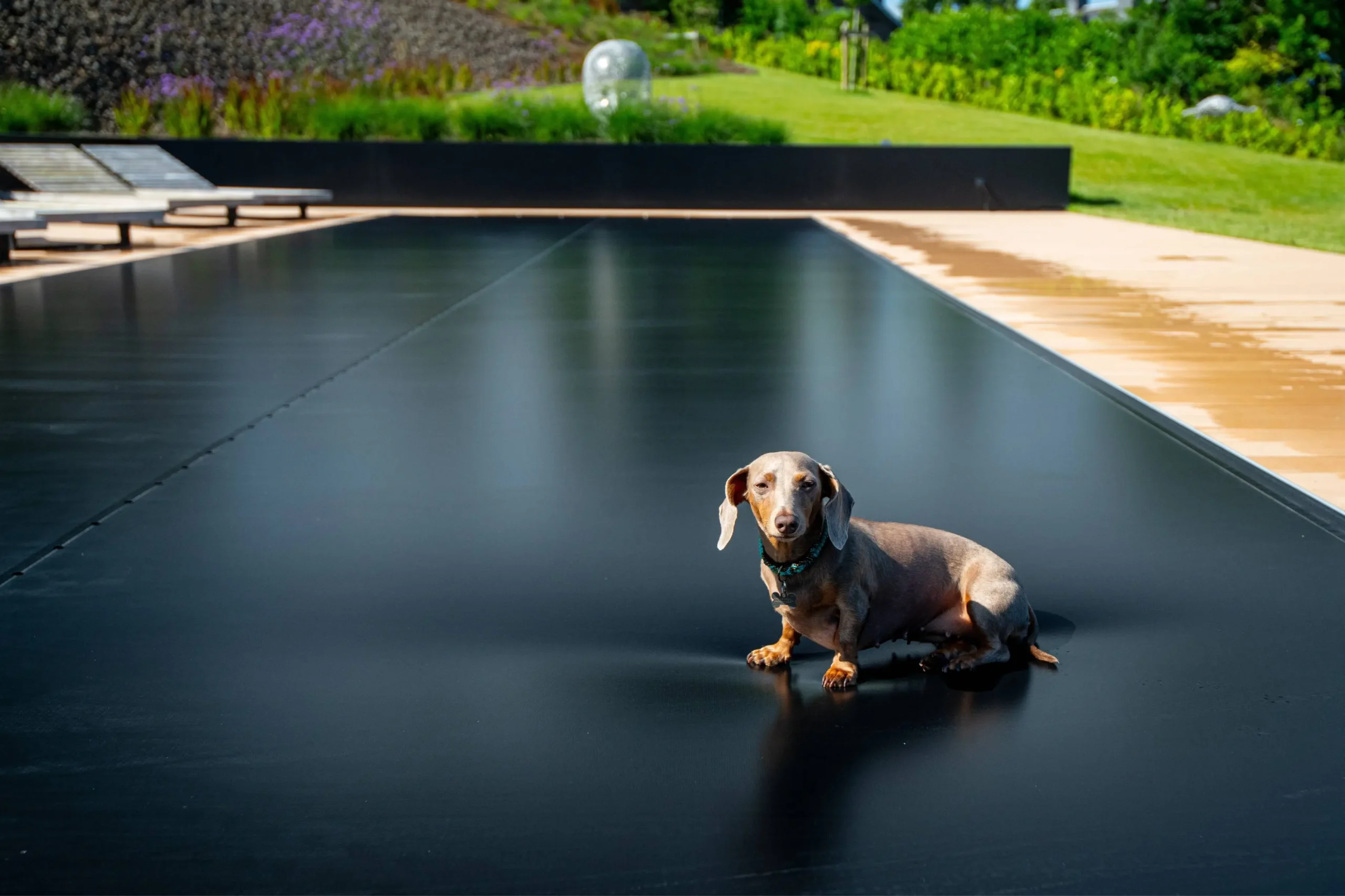
Operating cost impact: water, heat, and why covers can pay back over time?
Automatic covers are not purchased only for cost savings; many buyers prioritize safety and convenience first. Still, operating costs matter and credible public sources give useful ranges.
Water savings (evaporation reduction)
EPA’s WaterSense program estimates that a typical uncovered pool can lose 12,000 to 31,000 gallons per year to evaporation depending on location, and that using a cover can prevent up to 90% of pool water evaporation.
Heating savings
The U.S. Department of Energy states that covering a pool when it is not in use is the single most effective way to reduce pool heating costs, and that 50%–70% savings are possible (conditions vary).
Reality check: savings depend on wind, humidity, temperature, how often you keep the pool covered, and whether you heat the pool. The most reliable way to benefit is simple: close the cover when the pool is not in use.
Safety standards: what ASTM F1346 means (and what it does not)?
If you see “safety cover” language, you should understand the standard behind it. ASTM F1346 establishes requirements for safety covers for pools and is intended, when correctly installed and used according to manufacturer instructions, to reduce drowning risk by inhibiting access of children under five.
Important nuance:
- A safety-rated cover is a layer of protection, not a substitute for supervision.
- Compliance depends on correct installation and proper use.
On Cover Dream’s automatic safety pool cover page, the brand positions its system within this safety context and references ASTM F1346 compliance.
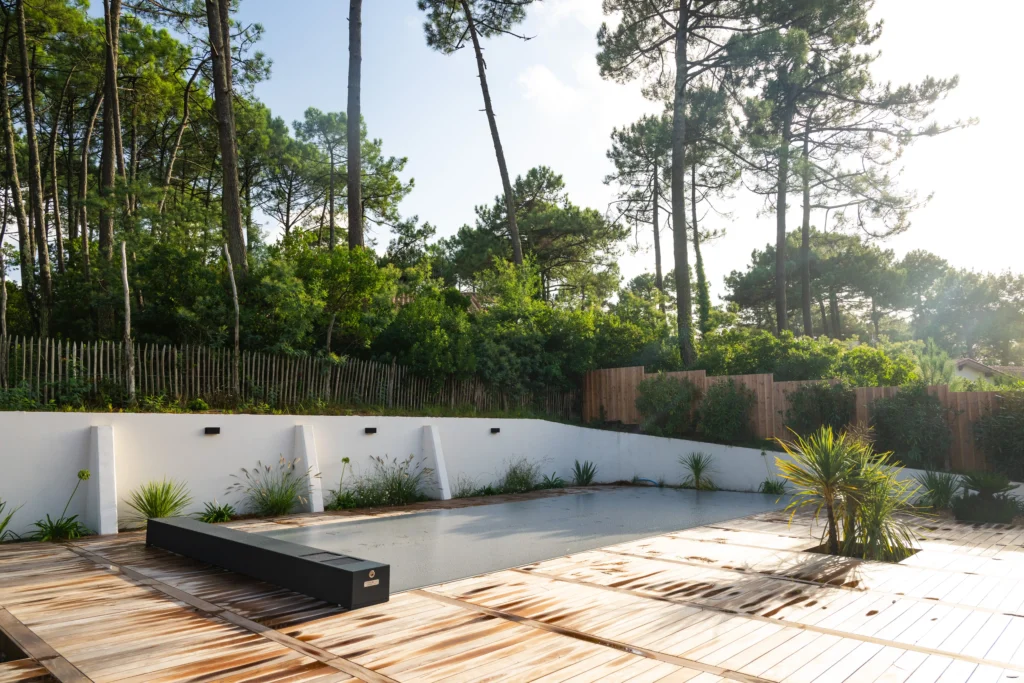
Why Cover Dream?
If your priority is a premium, design-forward automatic cover, Cover Dream positions itself as a U.S. distributor of tailor-made smart pool covers and related solutions.
Its automatic safety pool cover page highlights convenience features, customization options, and a design that emphasizes quick operation; it also describes solar-powered autonomy via integrated solar panels in the casing.
If you are evaluating multiple providers, the practical takeaway is not brand claims.
The practical takeaway is this: use your quote process to validate assumptions – track style, deck changes, electrical scope, service plan, and safety standard alignment.
For trade partners or installers, Cover Dream also operates a dealer pathway, which can matter for procurement, coordination, and ongoing support.
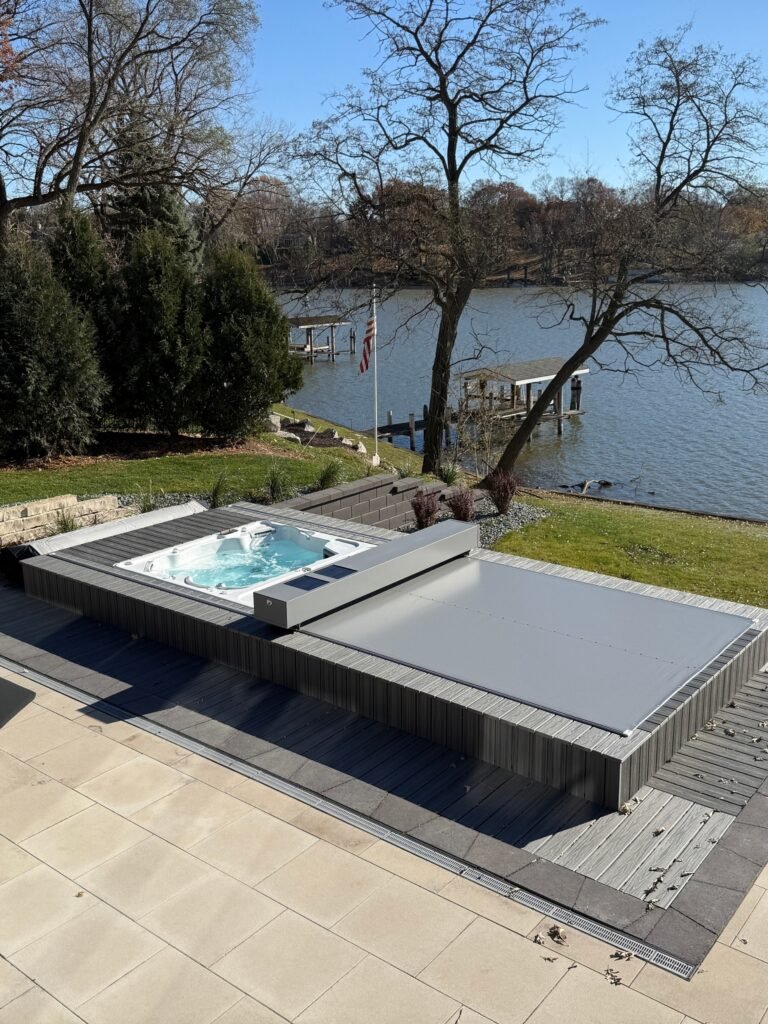
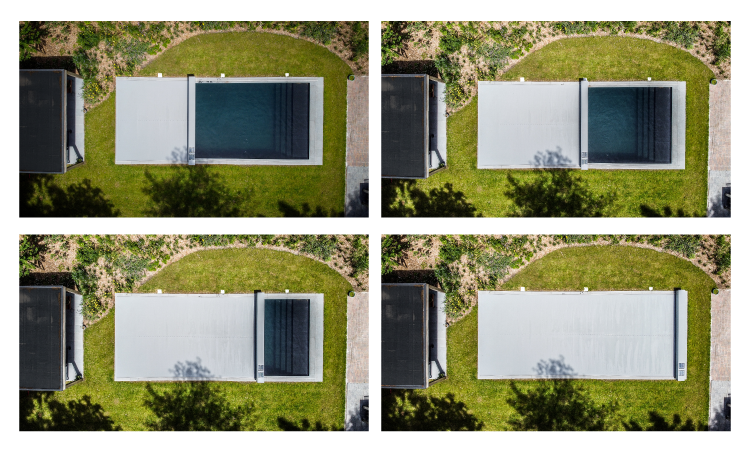
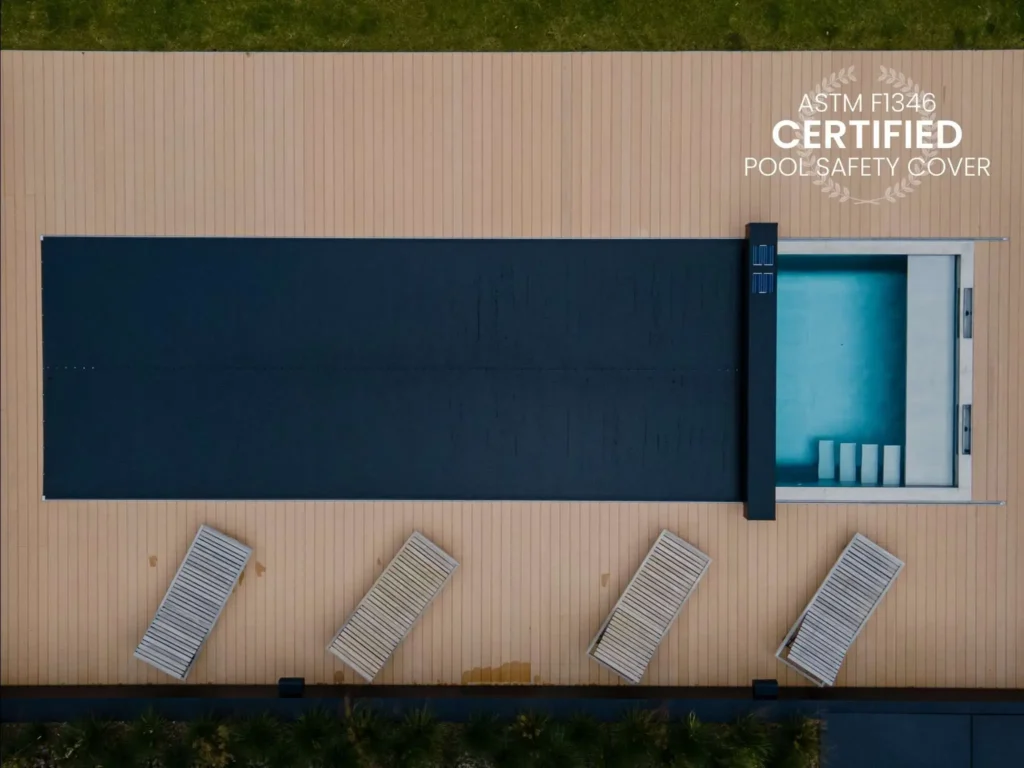
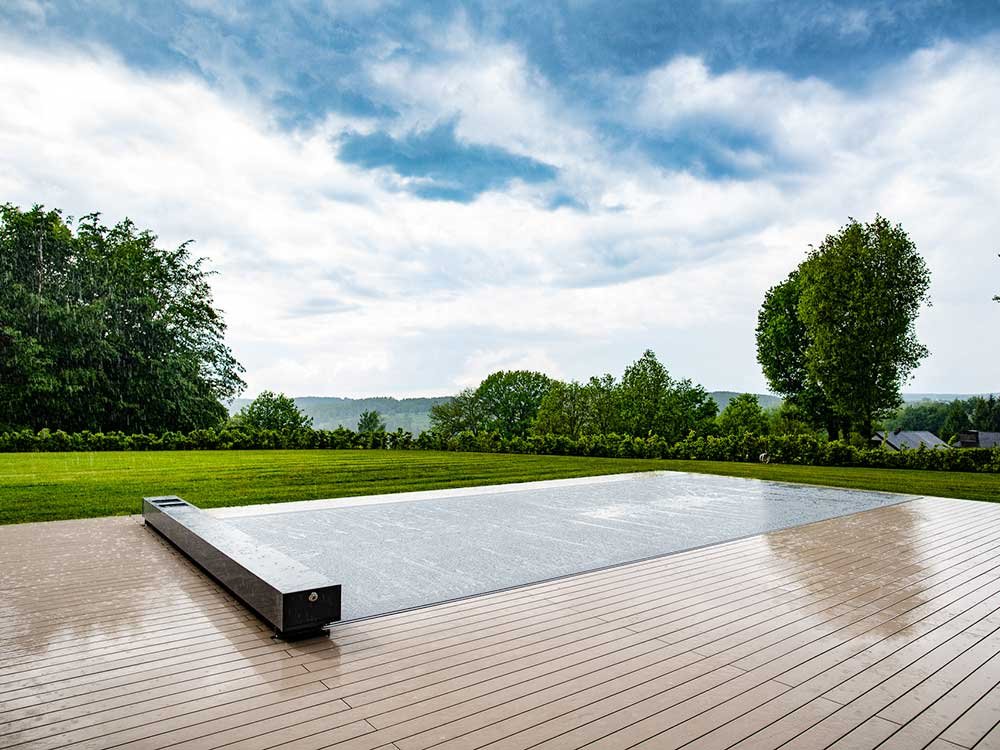
Why Cover Dream?
If you want an accurate quote without multiple revisions, gather the following before you request pricing.
What to provide
- Pool dimensions and shape (a basic plan view helps)
- Photos of the pool perimeter and deck (every side)
- Deck material (pavers, poured concrete, tile, composite, etc.)Your preferred track approach (deck-mounted vs recessed/undertrack)
- Electrical panel location and approximate distance to the pool equipment area
- Any access constraints (tight side yard, screened enclosure, narrow gates, etc.)Timeline (new build phase or retrofit window)
What to ask (so the quote is comparable)
- What deck changes are assumed, and what deck restoration is included?
- Is electrical included? If not, what electrical scope is assumed?
- What maintenance is expected (and what is included in service)?
- What safety standard is the cover designed to meet, and what installation requirements support that?
- What is the lead time and installation timeline?
Cover Dream’s quote pathway is structured as a form-based request process; if you use it, include the checklist items above so the first quote draft is close to final.
Put an end to the headaches of pool maintenance
A pool cover is the only way to keep your pool safe and clean at the same time. Get your pool covered.
Common cost mistakes (and how to avoid them)
Mistake 1: Comparing a basic cover quote to an integrated design quote
A quote that assumes deck-mounted tracks and minimal deck work will not match a quote built around recessed integration and finish restoration.
Fix: Ask each provider to restate the same assumptions: track style, deck modifications, and electrical scope.
Mistake 2: Ignoring “site work” until after the cover is selected
Site work is not an afterthought; it can be a major driver of total cost.
Fix: Decide early whether you can tolerate visible tracks or whether you require concealed integration.
Mistake 3: Treating safety claims as generic
Safety-rated systems have standards, installation requirements, and usage expectations.
Fix: Understand ASTM F1346’s intended purpose and confirm how installation and use align with it.
Frequently asked questions
In 2026, an automatic pool cover typically starts around $15,000–$25,000 USD for many projects. Premium custom builds can reach $30,000.
After pool size, it is often the combined impact of pool shape and track integration (deck-mounted vs recessed/undertrack) because those choices drive fabrication fit and deck/labor scope.
Not necessarily but a recessed integration typically increases planning and installation scope, especially when it affects deck work and finishing details.
Coverseal often doesn’t incur any additional cost to the project. With other products the most common adders are deck demolition and restoration, paver reset, electrical trenching or panel work, and drainage adjustments. These vary sharply by site.
They can. DOE states that covering a pool when not in use is the most effective way to reduce pool heating costs, with 50%–70% savings possible depending on conditions and usage.
Yes. EPA WaterSense estimates a typical uncovered pool can lose 12,000–31,000 gallons per year to evaporation and that a cover can prevent up to 95% of evaporation.
ASTM F1346 is a performance specification for safety covers intended, when correctly installed and used according to manufacturer instructions, to reduce drowning risk by inhibiting access of children under five.
Coverseal is installed in one day and a single site visit.
With competing products, timing depends on whether it is a new build or retrofit and how much deck/electrical work is required but usually several days and site visits to be installed.
Send pool dimensions and shape, photos of every deck edge, your preferred track style, deck material, electrical panel location/distance, and any access constraints.
