

Automatic Pool Cover Maintenance: Cleaning, Inspections, and Failure Prevention
Automatic pool cover maintenance starts with cleaning accessible tracks, inspecting visible components, and following the instructions for your installed model. Keep the operating area clear, watch for changes during normal use, and stop if travel or closure becomes abnormal. A practical inspection routine can help reduce avoidable wear and identify problems early.
Who this guide is for
- Automatic-cover owners organizing routine cleaning and inspections.
- Homeowners noticing debris buildup or changes in cover operation.
- Buyers evaluating COVERSEAL’s care requirements before installation.
What Should Your Automatic Pool Cover Maintenance Schedule Include?
Use this suggested framework to organize observations around use, weather, and pool care. Your installer should confirm the tasks and service interval for your model, site conditions, and operating habits.
Inspection trigger | Visible check | Owner action | When professional help is needed |
Before operation | Pool, travel path, accessible tracks, visible damage | Keep people and objects clear; operate only when conditions are suitable | Damage, obstruction you cannot safely clear, or abnormal movement |
After storms or heavy debris | Leaves, grit, branches, drainage changes | Inspect before operating; clean accessible areas as instructed | Trapped debris, displaced components, or unusual water accumulation |
During routine pool care | Membrane condition, water level, housing, surrounding deck | Record changes and follow approved care instructions | Tears, loose parts, unexplained water-level changes, or recurring concerns |
At the installer’s confirmed interval | Previously recorded wear or operating issues | Arrange the specified professional inspection | Internal checks, adjustments, repairs, or uncertain condition |
Keep the model identification, installation details, and service contact together. The manufacturer’s documents page lists user documentation; obtain the manual applicable to your installation before choosing cleaning methods or service procedures.
Keep a short maintenance log with the date, conditions, work completed, and any change noticed. A clear record makes your report more useful than a general description such as “it sticks sometimes.”
How Should You Clean Automatic Pool Cover Tracks?
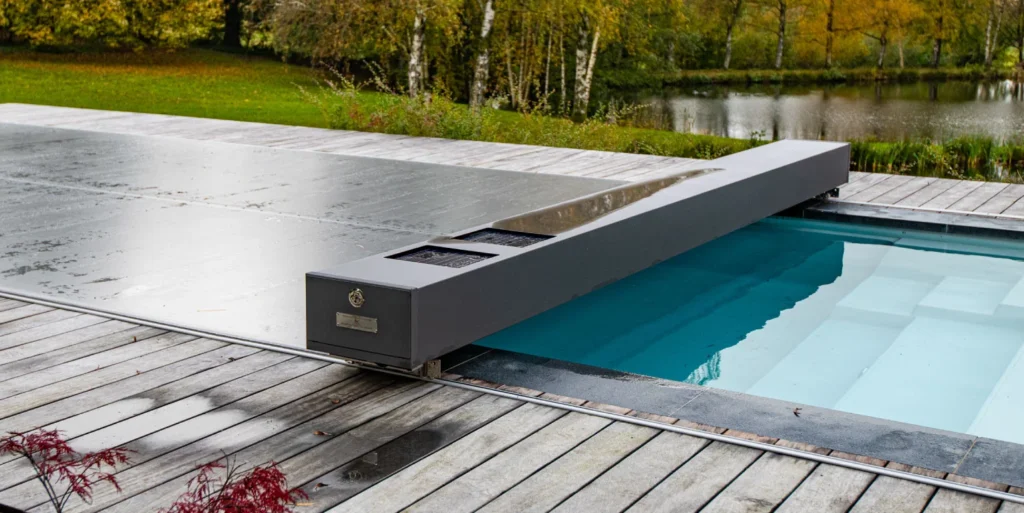
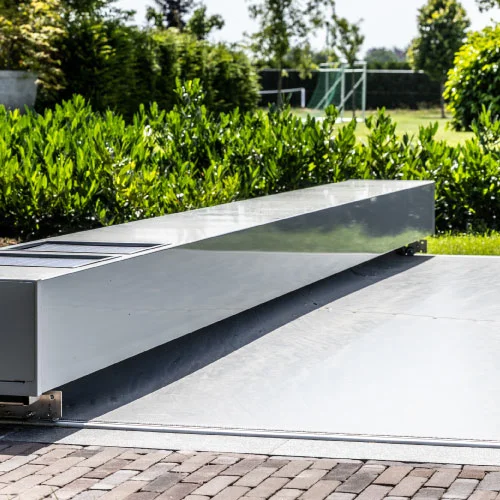
Clean accessible tracks using your model’s approved procedure. The Coverseal manufacturer FAQ emphasizes regular rail cleaning because sand and other abrasive particles can accelerate wear in mechanical parts and eventually the membrane.
- Secure the stationary cover. Follow its manual to prevent unintended operation. Keep controls inaccessible to others while you work.
- Inspect from the deck. Identify loose debris, visible damage, and anything caught near moving components. Stay outside the mechanism.
- Clean accessible surfaces. Use only approved tools and methods. Do not use water jets, cleaning chemicals, or tools inside tracks and on the membrane.
- Check the surrounding area. Remove loose material that could immediately return to the tracks. Leave trapped debris to the installer when removal requires access beyond owner maintenance.
- Observe normal operation when appropriate. Once cleaning is complete, restore operation as instructed. From a safe position with the pool in view, watch normal travel without reaching toward moving parts. Stop if movement changes.
Do not dismantle tracks, extract belts, adjust tension, or repeatedly run the cover to push debris through. If the approved cleaning method is unclear, pause and request instructions.
How Should You Clean the Membrane and Housing?
Use the procedure approved for the installed membrane and finish. Coverseal’s membrane-cleaning guidance permits pressure washing with reduced spray intensity and neutral-pH soap, and recommends a microfiber cloth for the trim. Confirm applicability to your model before proceeding.
The FAQ does not establish a universal pressure setting, nozzle distance, or soap concentration. Obtain those details where needed; do not guess from a pressure washer’s settings or another cover’s instructions.
Work from the deck without walking on the cover. Keep the system stationary and secured during cleaning. Membrane-cleaning permission does not authorize spraying tracks, controls, electrical components, or the concealed mechanism. Clean accessible housing surfaces according to their finish-specific instructions, and leave internal access to qualified service personnel.
What Should You Inspect on an Automatic Pool Cover?
Look for changes from the cover’s normal appearance and behavior:
- Tears, worn areas, or changed membrane tension.
- Visible track damage, loose hardware, or displaced components.
- Housing damage or objects obstructing its path.
- Unusual gaps or an incomplete closed position.
- Water accumulation or unexpected pool-water-level changes.
- Missing or unreadable warning labels.
Photograph concerns from the deck and record when they appeared. Observations help the installer assess the issue; they do not establish a diagnosis or confirm safety.
ASTM F1346 addresses safety-cover performance and labeling, with its protective purpose tied to correct installation and use. Cover Dream’s guide to ASTM F1346 pool-cover requirements explains what documentation to verify. A visual check cannot recertify a damaged system.
Which Warning Signs Mean You Should Stop Operating the Cover?
Stop when travel, sound, drainage, or closure differs materially from normal. Several issues can produce similar symptoms, so report what you observe without assuming a motor or belt has failed.
Observation | Possible concern to assess, not a diagnosis | Appropriate response |
Uneven or jerky travel | Obstruction or a tracking/mechanical issue | Stop; photograph visible conditions and contact the installer |
Repeated stopping | Obstruction, control, power, or mechanical issue | Stop repeated attempts; report when stopping occurs |
New grinding, scraping, or other unusual noise | Contact or interference requiring assessment | Stop and request inspection |
Tears, loose components, or visible damage | Compromised condition or attachment | Stop use and restrict pool access |
Incomplete closure | Obstruction or a system issue preventing proper closure | Do not treat the pool as secured; contact the installer |
Changed drainage or unusual accumulated water | Blockage, water-level change, or another installation issue | Keep people away; obtain guidance before operating |
Describe whether the issue began during opening or closing and when the system last worked normally. Do not recreate a fault just to record it.
Maintain barriers and supervision while the cover is unavailable. CPSC’s Pool Safely guidance recommends keeping covers operational alongside other protective measures. Do not force movement, attempt electrical repairs, or use emergency overrides to work around a fault.
Protect Your COVERSEAL With Proper Care
Routine cleaning, visual inspections, and attention to changes in normal operation can help reduce avoidable wear. Follow the approved care guidance for your COVERSEAL system and contact your installer when movement, closure, drainage, or visible components appear abnormal.
Which Maintenance Mistakes Increase Wear?
Avoid these common shortcuts:
- Ignoring grit: include accessible rails in the cleaning routine.
- Using unapproved cleaners: verify compatibility with the specific surface.
- Adding lubricant without instructions: confirm whether any lubrication is required and who should perform it.
- Forcing a stalled cover: stop and report the symptom.
- Changing water level arbitrarily: obtain the pool and cover requirements first.
- Postponing visible damage: seek advice before continued use worsens the condition.
Water care remains necessary. The CDC recommends routine disinfectant and pH testing and adjustment. Follow chemical labels and the cover’s treatment instructions, including any required opening period. Our guide to pool-cover water and chemical savings provides context for potential benefits; coverage does not replace sanitation.
How Do Weather and Seasonal Changes Affect Maintenance?
Let actual conditions trigger additional observations. Wind, leaf fall, nearby construction, and landscaping can leave new debris in the operating area. After such events, inspect accessible surfaces and use a blower to clean debris out before the next use.
Do not operate through ice, snow, or obstructions, or attempt removal methods the installer has not approved. Seasonal closure also requires a separate plan for water, plumbing, and equipment. Ask how your cover’s water-level and drainage requirements fit that plan.
How Does Coverseal Fit Your Maintenance Priorities?
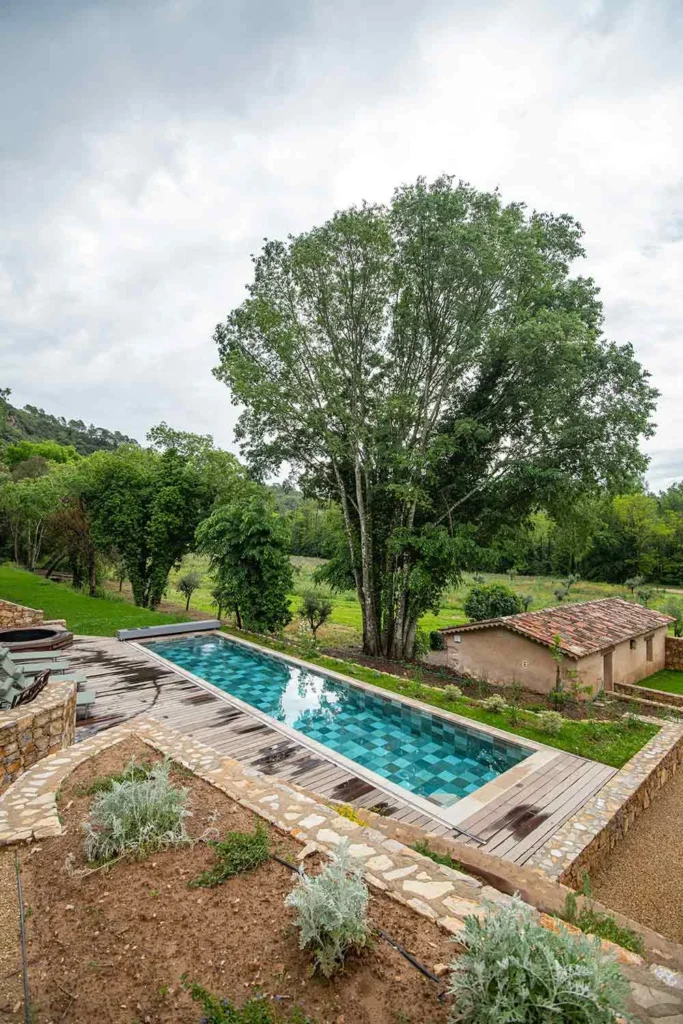
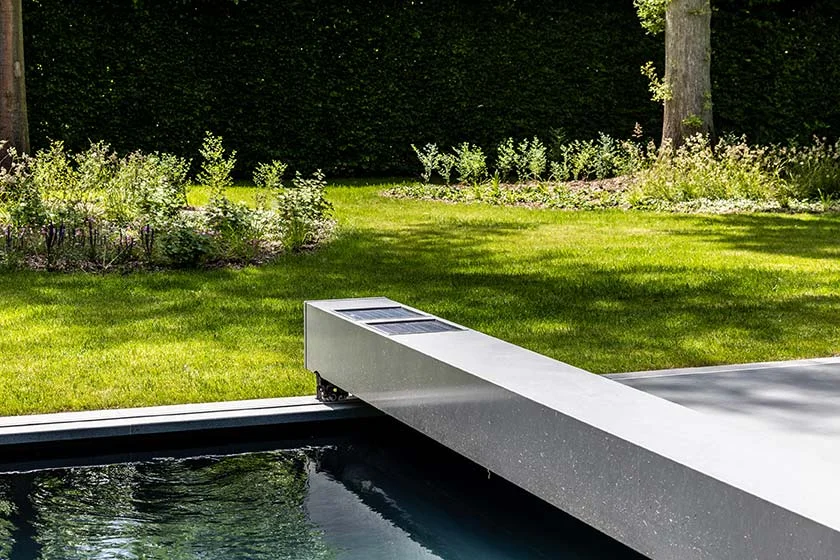
The COVERSEAL automatic safety pool cover combines a deck-mounted, top-track design with a taut, pre-stressed PVC membrane, automatic operation, and a self-draining rainwater design. Cover Dream identifies this product as ASTM F1346 compliant.
These features support convenient daily coverage while leaving accessible tracks, membrane surfaces, and the operating area to inspect and care for. Automatic operation does not eliminate maintenance or guarantee freedom from failures.
At handover, ask for a demonstration of normal travel and the fully closed position. Knowing what the correct operation looks like helps you recognize a change without attempting an adjustment.
For COVERSEAL, use its documented drainage arrangement. Do not add generic cover pumps, water bags, or air pillows. Owners of other brands should follow their systems’ drainage instructions.
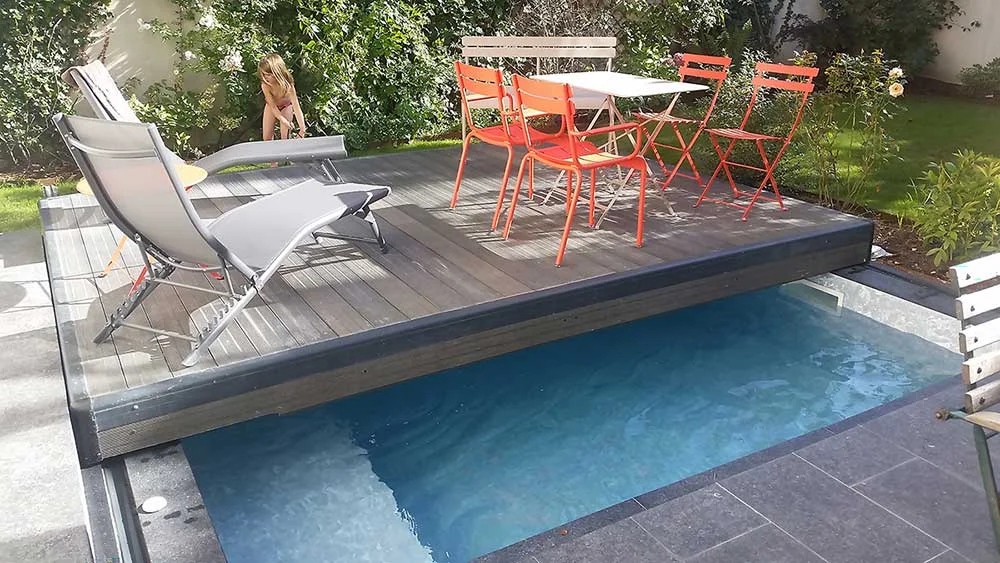
Different priorities may suit different products. The N-CLOSURE pool enclosure protects the broader pool environment, while the S-LIDE sliding deck pool cover converts the covered pool footprint into usable deck space. Each needs its own care instructions and product-specific safety documentation; COVERSEAL’s maintenance guidance and compliance claims do not transfer to either system.
What Should You Ask Your Installer?
Review automatic pool-cover cost and installation factors alongside ownership requirements. Ask:
- Which manual applies to my exact model and installation?
- Which tools, cleaners, and rail-cleaning methods may I use?
- Is lubrication required, and who should perform it?
- What water level and drainage conditions must be maintained?
- What professional service interval suits this site?
- Which symptoms require stopping, and whom should I contact?
Planning a new cover? Request a COVERSEAL project quote with your pool dimensions, site photographs, location, new-build or retrofit status, and timeline. Existing owners experiencing faults should contact their installer with the model details and observed symptoms.
FAQs
We recommend checking visible conditions before operation and after storms or heavy debris, with additional observations during pool care. Your installer should set the professional service interval for the installed model and site; there is no universal calendar for every cover.
We recommend securing the stationary cover against unintended operation, then cleaning only accessible surfaces with approved tools and methods. If debris is trapped near moving components or removal requires dismantling, stop and ask your installer for assistance.
We recommend confirming the procedure for your model first. Coverseal’s FAQ permits reduced-intensity spray and neutral-pH soap for membrane cleaning, without specifying universal equipment settings. This guidance does not authorize pressure washing electrical components or tracks.
We recommend checking your model’s instructions before applying any lubricant. Do not assume that oil or grease is part of routine track care. Ask your installer whether lubrication is required, which product is approved, and who should apply it.
We recommend stopping operation and noting where uneven movement began. Photograph visible debris or damage from a safe position and contact your installer. Avoid repeated cycling, pulling the cover, or adjusting belts to correct an unidentified issue.
We suggest recording what happened during your normal opening attempt, then contacting your installer. A failure to open does not identify a specific defective component. Avoid forced movement, electrical repairs, and overrides; maintain restricted access to the pool.
We recommend comparing the observed level with your installer’s documented requirements and reporting unexplained changes. Do not drain or refill to a generic measurement. Seek guidance before operating if water loss or accumulation could affect the cover’s condition.
We recommend professional attention at the confirmed service interval and whenever damage, abnormal movement, incomplete closure, or persistent drainage concerns appear. Provide model details, photographs, and a symptom history. Cleaning accessible surfaces does not replace inspection of internal components.
