

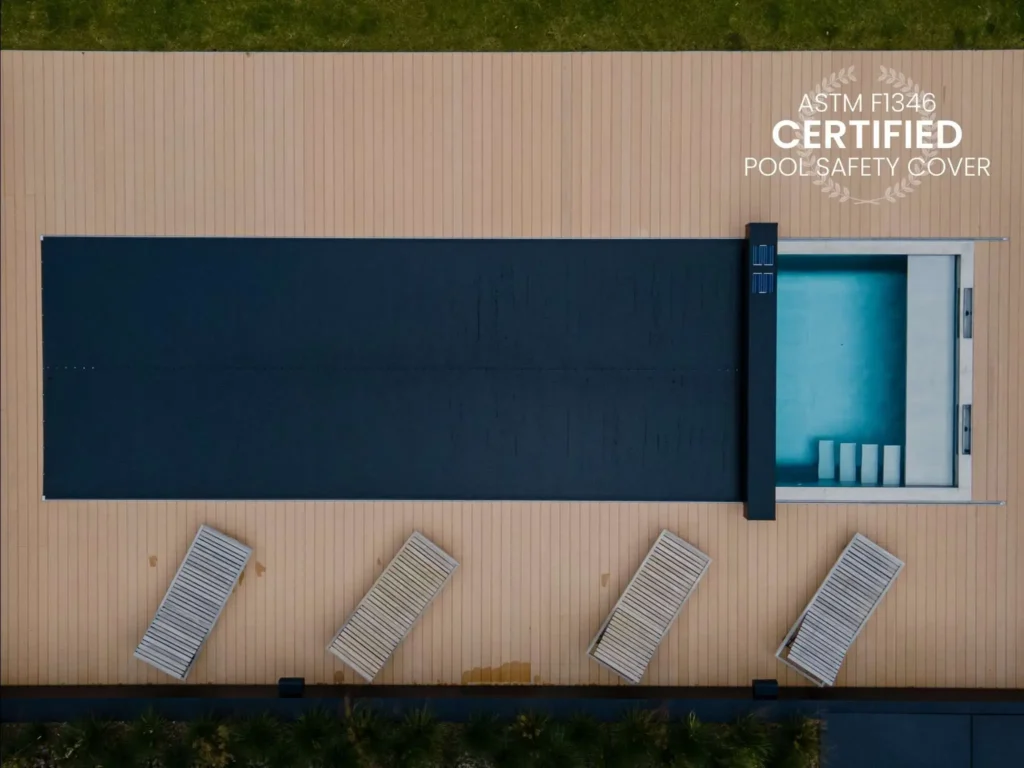
ASTM F1346 is the performance standard that defines what a pool “safety cover” must do how it must support weight, control gaps/openings, drain standing water, and display specific warning labels. When correctly installed and used, it is intended to reduce drowning risk by inhibiting access by children under five. This guide shows how to verify a real safety claim before you buy.
Who this is for
- Homeowners compare products marketed as “safety covers” and want evidence, not slogans.
- Buyers considering an automatic safety cover and needing a practical verification checklist.
- Pool builders/specifiers who need a simple, non-legal way to screen “ASTM” claims.
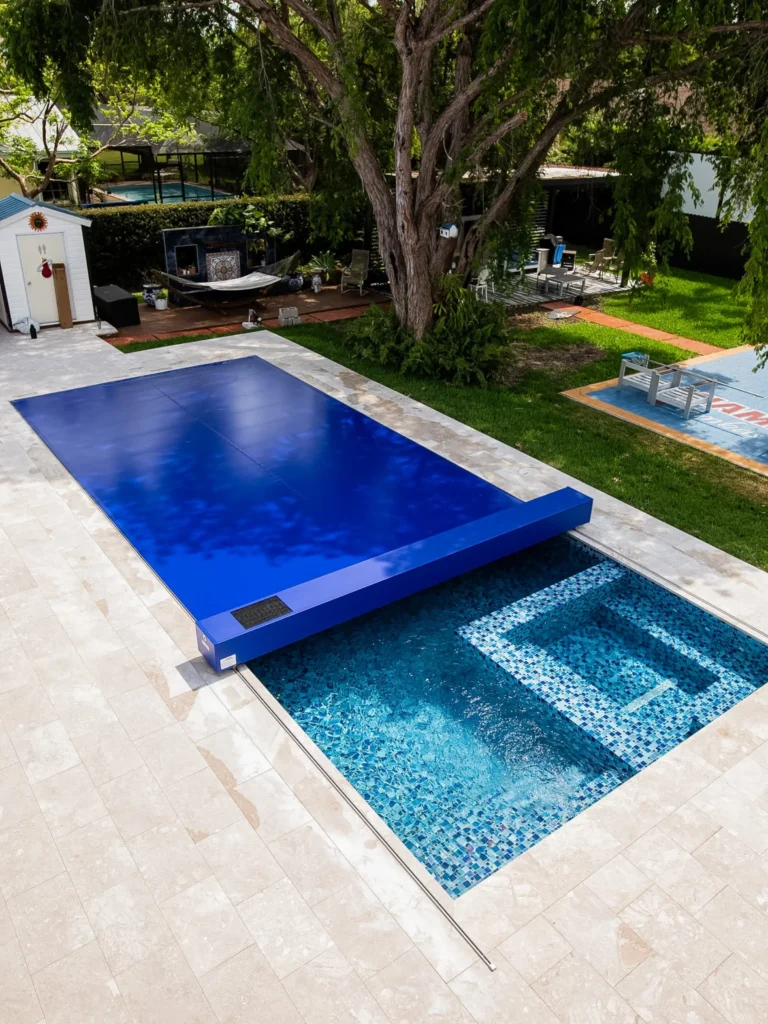
If you want a concrete example of how an automatic safety cover is positioned against ASTM F1346, start with Cover Dream’s Automatic Safety Pool Cover page, its Coverseal™ system meets safety standards including ASTM F1346.
For the broader context of Cover Dream’s product line and positioning, their brand overview is a useful reference.
What ASTM F1346 is and what it is not
What it is
ASTM F1346 is a performance specification for safety covers and also includes labeling/marking requirements for all covers used on pools, spas, and hot tubs. It defines categories, test methods, and warning label elements so claims can be evaluated against a known standard.
What it is not
- It is not “ASTM certified” by default. ASTM publishes standards; it also explicitly restricts implying that a product is “certified or approved by ASTM” unless ASTM confirms that in writing.
- It is not a substitute for layered safety. The standard is intended to reduce drowning risk when the cover is correctly installed and used as instructed not to replace supervision, barriers, and local requirements.
- It is not a marketing badge. “Meets ASTM F1346” should be tied to clear, verifiable product labeling, documentation, and installation/use instructions, not just a logo on a sales page.
Practical takeaway: Treat ASTM F1346 as a verification tool. If a seller cannot explain how their cover aligns with the standard’s core requirements, load support, drainage, openings/edge security, and labeling do not accept vague “safety” language.
Read more: Automatic Pool Cover Cost (2026): Pricing, Options, and What Impacts Your Quote
The three cover categories that matter (and why wording matters)
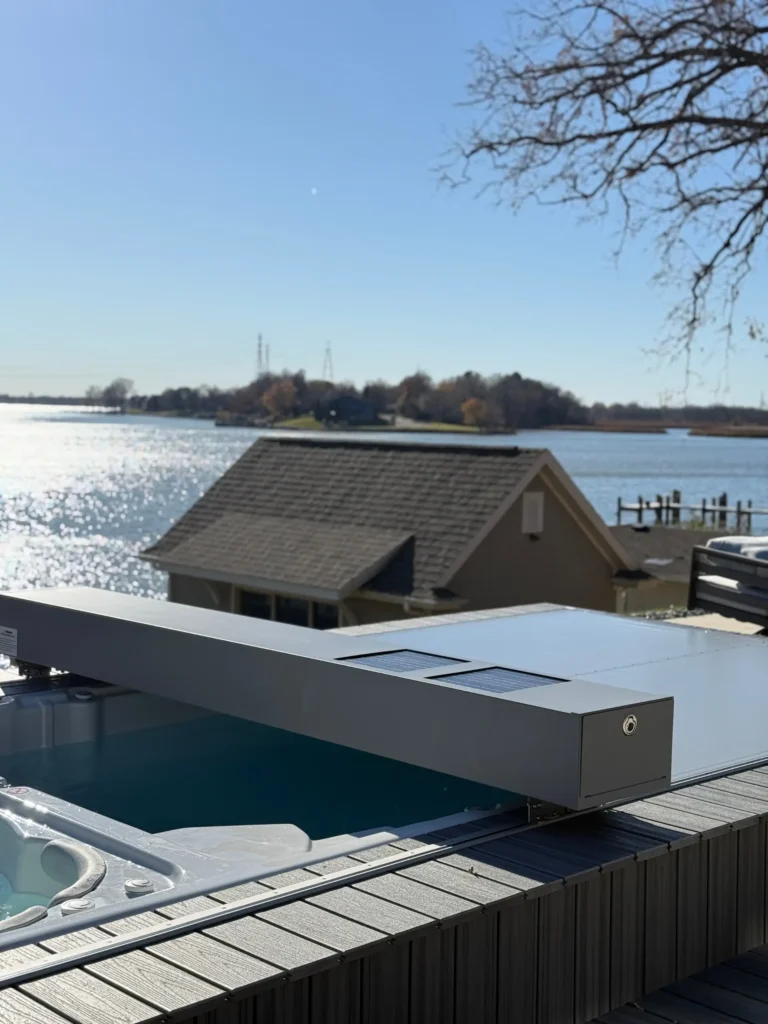
ASTM F1346 recognizes that not all covers are meant to function as a barrier to a child. It differentiates cover types, including power safety covers (motorized), manual safety covers, and covers not intended to be safety barriers.
Why this matters: the internet is full of listings that use “safety” as a synonym for “durable” or “secure.” ASTM’s definitions separate “this is a barrier intended to inhibit access” from “this is a cover.”
Protect your loved Ones!
A pool cover is the most efficient barrier against accidental drownings. Get your pool covered.

What ASTM F1346 actually requires
Below are the parts of the standard that are most useful for homeowners. This is not legal advice and it is not a substitute for product instructions. It is a practical guide to what you should verify.
1) Static load (weight support)
ASTM F1346 includes a static load requirement designed to support rescue conditions. The standard sets the test load at 485 lb for pools greater than 8 ft wide/diameter, and 275 lb for pools 8 ft or less.
Why it matters: If a product cannot credibly support load, it should not be represented as a safety barrier.
2) Perimeter deflection (edge access risk)
The standard addresses deflection at the perimeter so a child cannot gain access between the cover edge and the pool side.
Why it matters: Many “looks solid” covers fail where it matters most at the edge, where a gap becomes an entry point.
3) Surface drainage (standing water on top of the cover)
ASTM F1346 specifies that standing water should drain substantially from the cover within 30 minutes after normal rainfall stops (when used according to the manufacturer’s instructions).
Why it matters: Standing water on top of a cover creates a separate drowning hazard. A “safety cover” claim must take this seriously.
4) Openings and tear resistance (the “can this become a hole?” problem)
ASTM F1346 addresses openings and requires that openings not be forcible to a size that allows passage of the test object.
Why it matters: A safety cover must remain a barrier under real-world stress, not just under ideal conditions.
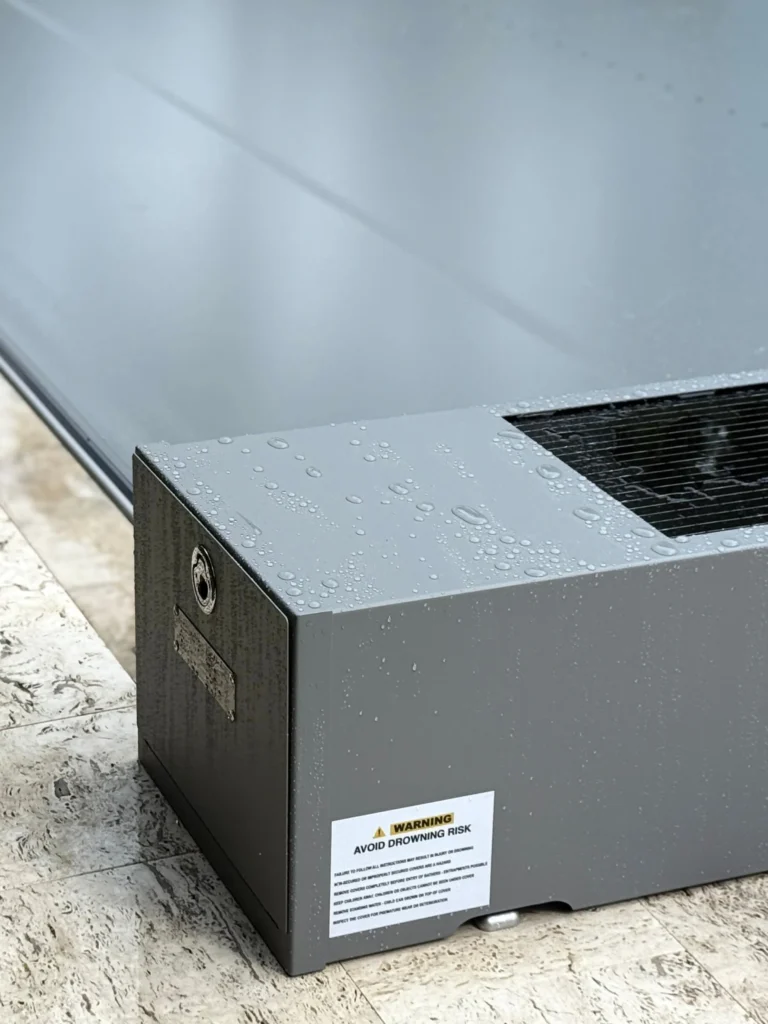
5) Marking and warning labels (verifiable without tools)
ASTM F1346 includes warning label elements and identification requirements (e.g., identifying the manufacturer/responsible party) and specific safety warnings.
Why it matters: Labels are one of the few things you can verify immediately, even before installation.
How to verify a real ASTM F1346 safety cover (homeowner checklist)
If you only read one section, read this. The goal is not to become an expert in standards. The goal is to avoid buying a product that uses “safety” as a marketing term.
Step 1: Ask for the exact claim in writing (and the revision)
A credible seller can state:
- the cover type (e.g., power safety cover), and
- the specific ASTM F1346 revision they claim to meet (for example, F1346-23).
Red flag: “ASTM certified” with no revision, no documentation trail, and no labeling evidence. ASTM restricts implying ASTM certification/approval without written confirmation from ASTM.
Step 2: Ask how the cover addresses the four “non-negotiables”
You want brief, direct answers to:
- Load support (static load requirement)
- Edge security (perimeter deflection and access prevention)
- Drainage (30-minute drainage expectation)
- Openings (resistance to forced enlargement)
Red flag: They respond with “it’s strong” or “it’s safe” but cannot connect that to any of the above.
Step 3: Verify labeling and identification (the easiest screening test)
Ask to see:
- the warning label(s), and
- identification of the manufacturer/responsible party.
Red flag: No labeling, missing responsible party identification, or warnings that do not address standing water and other hazards the standard expects to be communicated.
Step 4: Confirm the install/use assumptions
The standard’s intent relies on correct installation and use. Ask:
- Who installs it?
- What maintenance is required to keep it functioning as intended?
- What user steps are required to keep it safely secured?
Read more: Premium Pool Covers: How to Redefine your Pool Scapes
Verification table
What to verify | What “good proof” looks like | Red flags |
ASTM revision | They name the revision (e.g., F1346-23) and provide the claim in writing. | Vague “ASTM” mention with no revision or documentation. |
Cover category | They describe the cover as a safety barrier type (e.g., power safety cover where applicable). | “Protective cover” language that avoids safety-barrier definitions. |
Load support | They acknowledge ASTM’s static load requirement (485 lb or 275 lb depending on pool width). | “Holds weight” with no standard reference. |
Drainage | They explain how standing water is handled and reference the 30-minute drainage expectation. | “Water sits on top; just pump it later.” |
Edges/openings | They address edge gaps and opening resistance in practical terms. | Visible gaps, loose fit, or “it should be fine.” |
Labels/markings | They show warning labels and responsible party identification. | No warning labels or incomplete identification. |
ASTM wording | They do not imply “ASTM certified/approved” unless they can substantiate it per ASTM policy. | “ASTM approved/certified” used as a generic badge. |
Install/use plan | They provide clear install and user instructions. | No written instructions or unclear user responsibilities. |
Common marketing traps (and how to respond)
Trap 1: “Safety cover” without drainage discussion
If a cover is marketed as “safe” but the seller cannot explain how it avoids dangerous standing water on top, treat it as a warning sign. ASTM includes drainage performance expectations for a reason.
Trap 2: “ASTM certified” phrasing
ASTM’s own logo policy restricts implying ASTM certification/approval without written confirmation. If you see broad claims, ask for exact wording and proof.
Trap 3: “Heavy-duty” positioned as “child-safe”
Durability and safety-barrier performance are not the same. ASTM F1346 exists to define safety performance requirements and labeling not just toughness.
Read more: Pool Safety: How to Protect your Family
Why ASTM verification matters (beyond peace of mind)
It makes “safety” measurable
You are not buying a feeling. You are buying a barrier with defined performance expectations: load, openings, edge behavior, drainage, and warnings.
It supports safer household habits
The standard’s intent explicitly assumes correct installation and use. Verification pushes homeowners to ask the right questions about how the cover is used day-to-day.
It can also support efficiency goals (secondary benefit)
Even though ASTM is about safety and labeling, many homeowners care about operating costs. Credible public sources note:
- A pool cover can prevent up to 95% of evaporation.
- Uncovered pools can lose 12,000–31,000 gallons/year depending on climate.
Keep the hierarchy clear: safety first, efficiency second.
FREQUENTLY ASKED QUESTIONS
ASTM F1346 is a performance specification for safety covers and includes labeling requirements for pool, spa, and hot tub covers. When correctly installed and used, it is intended to reduce drowning risk by inhibiting access of children under five.
Yes. The standard includes safety cover categories that can include motorized (power) safety covers, alongside other cover types. The critical point is that “safety” claims should align with the standard’s performance and labeling expectations.
ASTM F1346 specifies static load test levels: 485 lb for pools over 8 ft wide/diameter, and 275 lb for pools 8 ft or less. These loads are tied to safety/rescue considerations.
The standard expects standing water to drain substantially from the cover within 30 minutes after normal rainfall stops, when the cover is used according to the manufacturer’s instructions. This is intended to reduce hazards created by pooled water.
Ask for the exact ASTM revision referenced (e.g., F1346-23), the cover category, and how the product addresses load support, drainage, edge security, and openings. Then verify warning labels and responsible party identification on the product.
Not necessarily. ASTM publishes standards and restricts implying a product is certified or approved by ASTM unless ASTM confirms that in writing. Treat vague “certified” language as a cue to ask for clearer documentation and labeling.
No. ASTM’s scope notes the intent assumes correct installation and use; it is a layer of protection, not a complete safety plan. Always follow local requirements and manufacturer instructions.
Labeling is part of ASTM F1346’s framework. Warning labels communicate the hazards that remain even with a cover especially the dangers of standing water on top and other misuse risks. Labels are also one of the easiest homeowner verification points.
The most common red flags are: no ASTM revision named, no explanation of drainage/edge security/openings, missing warning labels, and marketing language implying “ASTM certified/approved” without credible substantiation.
Ask what the quote assumes for deck work and drainage, how edge security is achieved on your pool shape, what user steps are required to keep the cover safely secured, and what maintenance is required to preserve intended performance.
